Products / Bag filters
A clean stack, from an NPC-empanelled maker.
Steamax designs and builds pulse jet bag filters for biomass-fired boilers and thermic fluid heaters. We are an NPC-empanelled vendor, and we hold particulate matter below 50 mg/Nm³ on biomass.
NPC-empanelled
for pulse jet bag filters on boilers, furnaces and thermic fluid heaters
150+ installations
on biomass boilers and heaters
300 kg/h to 20 TPH
steam boilers, plus thermic fluid heaters
Below 50 mg/Nm³
particulate matter on biomass
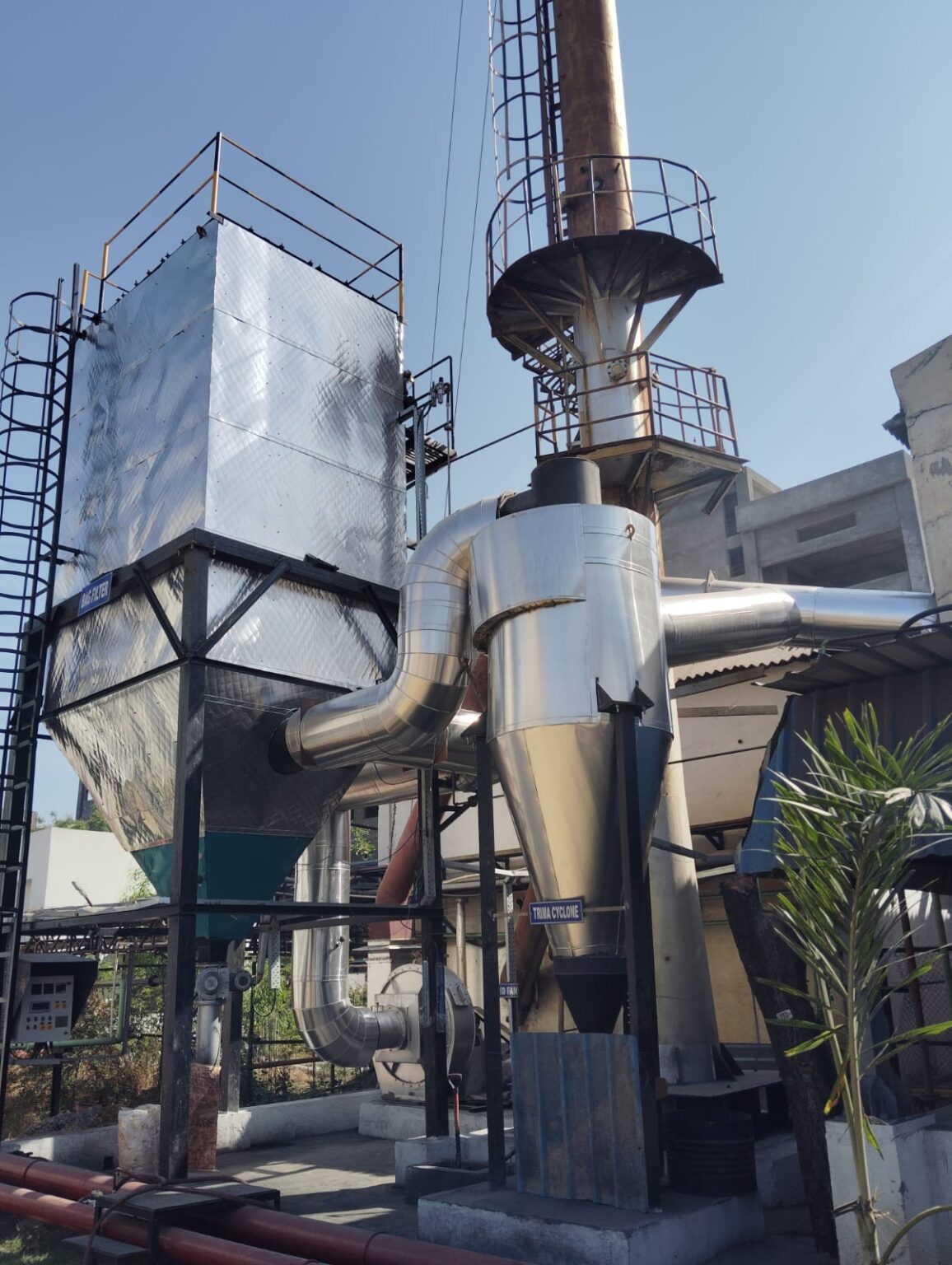
From boiler to chimney

- 1
- 2
- 3
- 4
- 5
- 1A cyclone takes out the coarse dust first.
- 2The pulse jet bag filter catches the fine dust on fibreglass bags with a PTFE membrane.
- 3A rotary air valve lets the dust out without letting air in.
- 4The ID fan draws the flue gas through the whole train.
- 5Clean gas leaves through the chimney, with particulate matter below 50 mg/Nm³ on biomass.
Empanelled by the National Productivity Council
The NPC Air Pollution Control Device Empanelment Scheme lists manufacturers whose devices have been found compliant with acceptability criteria under Central Pollution Control Board guidelines. Steamax’s pulse jet bag filter for boiler, furnace and thermic fluid heater flue gas has been empanelled under the scheme.
The assessment covers use in Delhi NCR currently and may soon be extended nationwide.
Verify with the National Productivity Council. The full certificate is available on request.
Issued to
Steamax Envirocare Private Limited
Scheme
NPC Air Pollution Control Device Empanelment Scheme
Device
Bag filter / baghouse, pulse jet
Applies to
Flue-gas emission control for boilers, furnaces and thermic fluid heaters
Certificate no.
NPC/ECAG/APCDES/EC/2026-27/013
Issued
27 May 2026
Valid up to
27 May 2028
What the empanelment obliges us to do
Certify the installation
We certify that the filter has been designed, installed and commissioned to meet the standards at your plant's full operating capacity.
Test the stack
Stack monitoring is carried out by an NABL-accredited laboratory.
Hand over the know-how
We pass on the technical know-how to run your boiler or heater and the filter so that they meet the norms.
Stand behind the performance
We are responsible for the filter performing to the specifications of PM below 50 mg/Nm3.
Biomass makes more dust than oil or gas. So we filter it.
Switching from oil or gas to biomass cuts fuel cost and fossil CO₂. It also puts more particulate matter into the flue gas, so the switch needs a filter built for it.
Compliance you can measure
Particulate matter held below 50 mg/Nm³ on biomass, confirmed by stack monitoring at full load.
Made for biomass flue gas
Fibreglass bags with a PTFE membrane, engineered for flue gas of 140 to 250°C, behind a cyclone that takes out the coarse dust. Built for briquettes, wood chips, pellets and other biomass fuels.
Sized for your plant
Designed and manufactured in-house for steam boilers from 300 kg/h to 20 TPH and for thermic fluid heaters.
How a pulse jet bag filter works
Dust is caught on fabric, and short bursts of compressed air knock it off again, one row of bags at a time. The filter cleans itself while it keeps running.
Inside the filter
Dusty gas enters below the bags. Dust stays on the outside of the fabric, and clean gas rises inside each bag and out to the fan and chimney.
A burst of compressed air fires down one bag. The dust cake drops into the hopper and leaves through the rotary valve, while the other bags keep filtering.
1
Dusty gas enters
Flue gas from the boiler or heater passes through a cyclone, then into the chamber below the bags.
2
The fabric catches the dust
Gas passes from the outside of each bag to the inside. Dust stays on the fabric and clean gas rises to the top.
3
Pulses clean the bags
When the pressure across the bags rises, a controller fires a short burst of compressed air down each row in turn.
4
Dust leaves sealed
The dust falls into the hopper and out through a rotary air valve, which stops air leaking in.
What is inside the system
Steamax has expertise in biomass-fired boilers and heaters. We design the complete flue gas filtration system, build it in-house and commission it, so one team is responsible for the whole clean-up train.
Cyclone
Takes out the coarse dust before it reaches the bags.
Pulse jet baghouse
Fibreglass bags with a PTFE membrane and a 5 micron rating, engineered for flue gas of 140 to 250°C.
Automatic pulse cleaning
Triggered by the pressure drop across the bags, with moisture-protected compressed air lines.
Rotary air valve
An air-sealed dust discharge, so the filter adds no extra load on your ID fan.
ID fan and ducting
Sized to your boiler or heater and to the pressure drop of the whole train.
ESP or wet scrubber, where needed
If a plant needs a different device, we supply that too, as on our 20 TPH ESP and thermic fluid heater scrubber projects.
150+ installations, across industries
Boilers from 300 kg/h to 20 TPH and thermic fluid heaters, in pharma, food and beverage, tyres, packaging and textiles.
A bag filter on its own, or as part of the switch to biomass
Whether you already burn biomass or are about to, Steamax can supply the filter, fit it, and run it for you if you want.
Add a bag filter
For a biomass boiler or heater that needs to meet the norms. We survey the site for space, ducting and fan capacity first, then design around them.
How you pay
You buy the filter. Add Steamax fuel supply, operations and ash and dust disposal whenever you want them.
Convert to biomass, filter included
Steamax converts your oil or gas boiler or thermic fluid heater to biomass with the OBR kit, and fits the air pollution control at the same time. See the OBR kit.
A conversion costs 60 to 70% less than a new biomass boiler, or nothing upfront under BOOT.
Steam as a service, compliance included
Under BOOT the bag filter is part of the plant Steamax owns. We supply the fuel, run the plant and dispose of the ash and collected dust.
How you pay
No capital outlay. Fuel, operators, disposal and upkeep are inside the steam or heat price.
BOOT means build, own, operate, transfer. See all the ways to switch for how it works across conversion, new boilers and existing plants.
Questions about bag filters
A pulse jet bag filter is an air pollution control device that cleans boiler flue gas by passing it through fabric filter bags. Dust collects on the outside of the bags, and short bursts of compressed air knock it off into a hopper while the filter keeps running. Biomass fuels produce far more fly ash than oil or gas, so a biomass-fired boiler or thermic fluid heater needs one to meet particulate limits. Steamax designs and builds pulse jet bag filters in-house for biomass steam boilers from 300 kg/h to 20 TPH and for thermic fluid heaters. They use fibreglass bags with a PTFE membrane, keep particulate matter below 50 mg/Nm³, and are empanelled by the National Productivity Council.
The National Productivity Council empanels manufacturers of air pollution control devices for installation and upgrading in industrial units in Delhi–NCR, under Central Pollution Control Board guidelines. Steamax's pulse jet bag filter for boiler, furnace and thermic fluid heater flue gas has been empanelled.
Which rules apply depend on where your plant is and what industry it is in. In Delhi-NCR, industries meeting CAQM's 50 mg/Nm³ limit are asked to use air pollution control equipment from vendors empanelled by the National Productivity Council, and only empanelled makers or approved institutions can certify an existing device as adequate. Outside NCR, the rules depend on your state pollution control board. Tell us where your plant is and we will tell you what applies.
Biomass-fired steam boilers from 300 kg/h to 20 TPH, and thermic fluid heaters. Recent projects include heaters of 20 to 30 lakh kcal/h in food and packaging plants.
Our bag filters are designed to hold particulate matter below 50 mg/Nm³ on biomass. The performance terms are written into your contract, and stack monitoring by an accredited laboratory at full capacity confirms them.
Yes. The empanelment covers flue gas from thermic fluid heaters as well as boilers and furnaces, and we have fitted filters on heaters in food and packaging plants.
Yes. We survey the site first, including the space available, the existing ducting and the capacity of your fan, and design the filter around them.
The dust drops into the hopper and leaves through a rotary air valve, which keeps air from leaking in. Under BOOT or an operating contract, Steamax also takes care of ash and dust disposal.
You can run it yourself, with the know-how handed over at commissioning. Or Steamax, under Steam-As-A-Service (SaaS) model,, can take on the operation, along with fuel supply and disposal, and you pay per tonne of steam.
50 mg/Nm³, under CAQM Direction No. 98 of 20 February 2026, for industrial boilers, thermic fluid heaters and furnaces. It replaced the earlier 80 mg/Nm³ limit, from 1 August 2026 for large and medium industries and 1 October 2026 for small and micro industries.
Tell us about your boiler or heater. We'll size the bag filter.
Share its size, what it burns and where the plant is. We will come back with next steps for a site survey.