
- This article explains Uttarakhand’s historical fuel restrictions, the approved fuel options listed in the state policy, and the potential role of biomass combustion technology in helping industries adapt.
Approved Fuels Under Uttarakhand’s Policy
The Uttarakhand Environment Protection and Pollution Control Board has published guidance on approved fuels for industrial use. The supplied policy document identifies the following fuel categories:- Liquefied Petroleum Gas (LPG)
- Liquefied Natural Gas (LNG)
- Low Sulphur Heavy Stock (LSHS)
- Biogas
- Coal
- Wood
- Agricultural biofuel
- Piped Natural Gas (PNG)
- High-Speed Diesel (HSD)
- Pine needles (locally known as pirul)
Key Requirements for Industrial Fuel Use
The policy document linked below outlines requirements for using petcoke, furnace oil, and approved alternatives. The original policy communication included these provisions:1. Fuel Transition Deadline
Industries using petcoke and furnace oil were required to transition to permitted alternatives by March 2024, as specified in the policy.2. Restrictions on New Industries
The policy also addressed the use of petcoke and furnace oil by new industrial units.3. Environmental Permissions
Industries must obtain the applicable environmental permissions and consent to establish and operate. Fuel selection should also comply with the conditions imposed on the individual facility. Because regulatory directions can change, industries should verify the current position directly with the relevant authorities before investing in new equipment.
Biomass: An Alternative for Petcoke and Furnace Oil
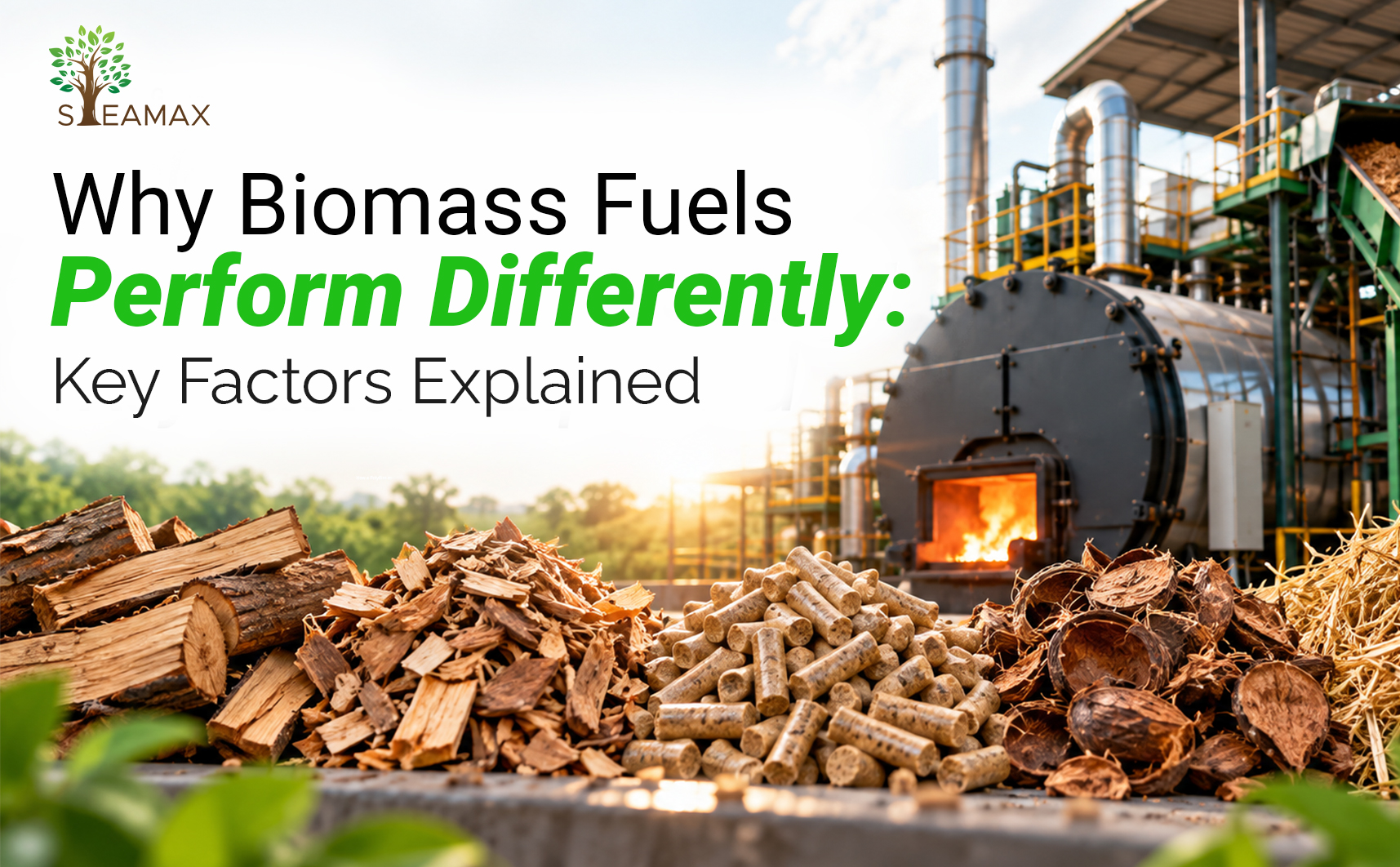
For industries looking beyond conventional fossil fuels, biomass can provide another source of process heat. Biomass fuels may be produced from agricultural residues, wood waste, and agro-industrial by-products. Their suitability depends on calorific value, moisture, ash content, particle size, availability, and cost. However, switching to biomass isn’t simply a matter of changing the fuel. Existing boilers may require modifications to their combustion chambers, feeding systems, and ash-handling arrangements. That’s where Steamax’s Oil-to-Biomass Retrofit (OBR) Kit comes in.Steamax OBR Kit: Supporting the Transition to Biomass
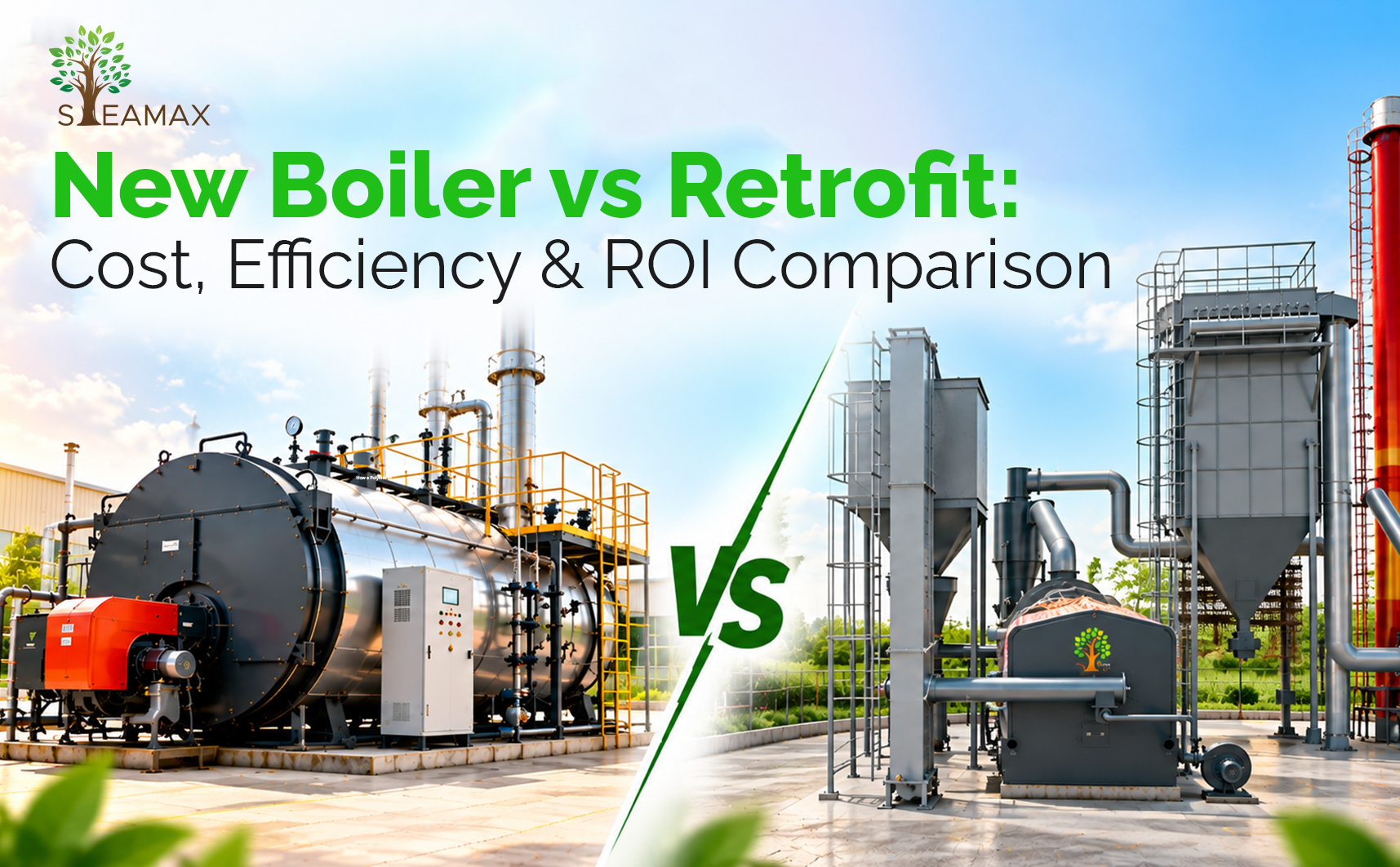
The OBR Kit is designed to help suitable existing oil-fired boiler systems transition to biomass combustion. Depending on the installation, retrofitting may offer an alternative to replacing the entire boiler system.1. Automatic Fuel Feeding
The system includes an automatic biomass-feeding arrangement that controls fuel delivery to the combustion chamber. This can help maintain a more consistent fuel supply and reduce manual handling.2. Combustion Management
Proper combustion requires a suitable balance of fuel, air, temperature, and residence time. The OBR system is designed to support controlled biomass combustion and improve operating consistency.3. Ash Handling
Biomass combustion produces ash that must be collected and removed. An appropriate ash-handling arrangement can make routine operation and cleaning more manageable.4. Potential Operating Cost Savings
Biomass may offer cost advantages over conventional fuels in suitable applications. Steamax reports potential fuel-cost savings of up to 50% in certain installations. Actual savings depend on delivered fuel prices, calorific value, boiler efficiency, consumption, and operating conditions.5. Emission-Control Options
Steamax can provide equipment such as cyclone separators, bag filters, and scrubbers, depending on the application. These systems can help control selected pollutants, particularly particulate matter. Actual emissions must be measured to establish whether the installation meets the applicable regulatory limits. Biomass combustion is not pollution-free and still produces carbon dioxide and other emissions. For industries looking to transition to cleaner energy, biomass fuel presents an ideal alternative to fossil fuels. Steamax has developed Astillas, a renewable biofuel designed to meet high environmental standards.
Key Features of Astillas:
- High Calorific Value: With a calorific value of 4500 Kcal/kg, Astillas burns more efficiently than many other fuels.
- Low Moisture and Ash Content: Astillas contain less than 10% moisture and less than 2% ash, ensuring a cleaner and more efficient burn.
- Environmentally Friendly: Astillas produces no black or acidic smoke and reduces CO2 emissions compared to coal, petcoke, and furnace oil.
Moving Towards Responsible Industrial Energy
Uttarakhand's restrictions on petcoke and furnace oil highlight the need to choose fuels that meet environmental and regulatory requirements. For suitable industrial applications, biomass can offer an alternative to conventional fossil fuels. However, successful adoption requires more than changing the fuel source. It depends on consistent fuel quality, compatible combustion equipment, effective emission controls, and compliance with current regulations. Steamax supports industries through its OBR Kit and Astillas biomass fuel.
To discuss your boiler requirements and explore a possible biomass transition, visit the Steamax website or contact the team.
Phone: +91 93151 24803
Email: info@steamaxindia.com
3 Comments
Thank you for the information, it will help me improve my knowledge. https://www.usbusinessdirectorylistings.com/listing/auslots-org/
Thank you very much for the detailed information, it helped me a lot. https://www.pinterest.com/brogaardstougaard30/
Thank you very much for the useful material, it will be useful to me at work. https://www.findabusinesspro.com/general-business-1/pinupca