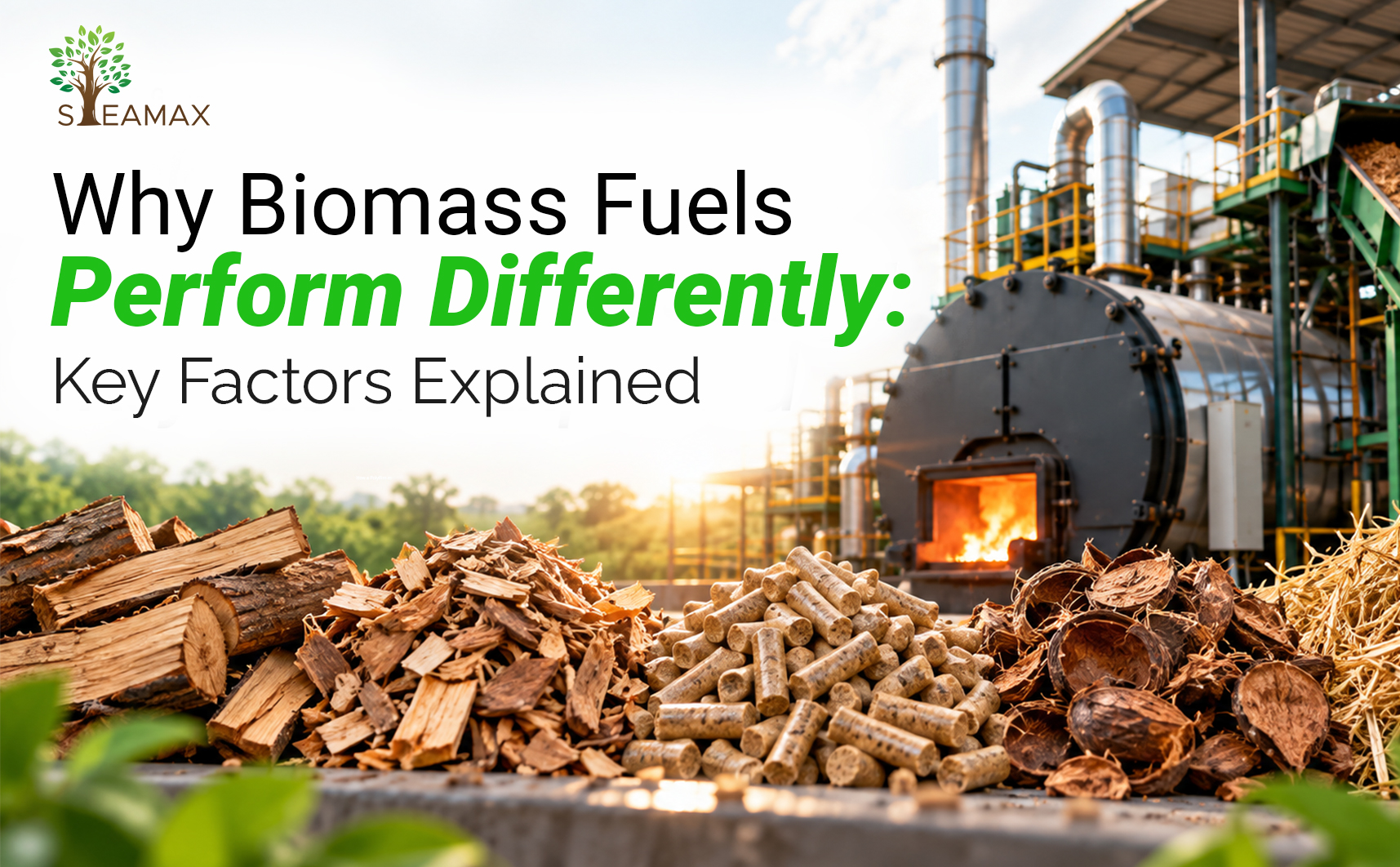
Two biomass fuels can look similar yet behave completely differently inside a boiler. One Fuel may produce stable combustion, good heat output, and manageable ash. Another may require more Fuel, create excessive ash, or cause clinker formation.
So, what makes the difference?
It comes down to the Fuel’s physical and chemical characteristics and how well they match the boiler’s combustion system. For industries shifting from coal, furnace oil, LPG, or gas to biomass, understanding this difference is essential. Choosing a biomass fuel based only on its price per tonne can lead to unexpected operating costs.
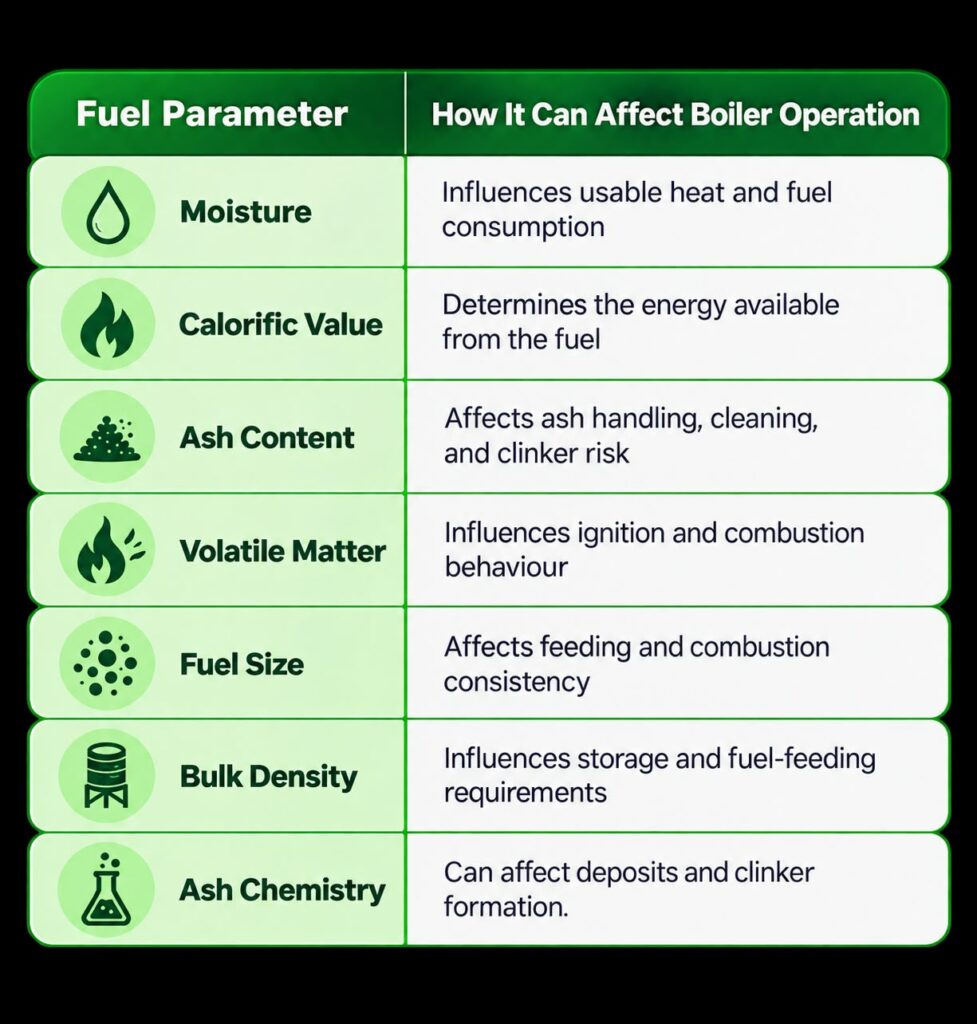
What Determines Biomass Fuel Performance?
1. Moisture Content
Moisture is one of the first things to check when comparing biomass fuels. When wet biomass enters the furnace, part of the available heat evaporates the water in the Fuel.
That means less useful heat is available for the actual process.
Higher moisture can therefore result in:
- Higher fuel consumption
- Difficult ignition
- Less stable combustion
- Lower effective heat output
2. Calorific Value
Calorific value tells us how much heat a unit quantity of Fuel can provide. A fuel with a higher usable calorific value can generally provide more energy per kilogram.
But there’s an important catch. Don’t compare calorific value alone.
Moisture, ash content, combustion efficiency, and fuel handling also influence the actual cost of generating useful steam or heat.
3. Ash Content
After biomass burns, the non-combustible portion remains as ash.
A high-ash fuel naturally creates more material that needs to be removed from the boiler.
This can increase:
- Ash handling requirements
- Cleaning frequency
- Maintenance work
- Risk of deposits
- Disposal requirements
For example, a fuel with lower ash content may cost more per tonne but still prove more economical because less Fuel and ash have to be handled.
4. Ash Chemistry Matters
Here’s where biomass fuel comparison gets more interesting.
Two fuels may both contain 10% ash, but that doesn’t mean their ash will behave in the same way.
Minerals such as silica, potassium, sodium, calcium, and magnesium can influence ash behaviour at high temperatures.
Depending on the Fuel, these minerals can contribute to:
- Ash deposits
- Slagging
- Clinker formation
- Fouling of heat-transfer surfaces
5. Fuel Size
Biomass comes in different shapes and sizes. Pellets are relatively uniform, while chips, agricultural residues, and other biomass fuels can vary more.
If the Fuel contains too many oversized particles or fines, the handling system may struggle to maintain consistent feeding.
This can result in uneven combustion and fluctuations in boiler operation.
6. Bulk Density
A tonne of one biomass fuel doesn’t necessarily occupy the same volume as a tonne of another.
Bulk density affects:
- Bunker capacity
- Conveyor sizing
- Storage requirements
- Fuel feeding
- Transportation
7. Different Fuels Need Different Combustion Conditions
This is one of the biggest reasons why changing biomass fuel can change boiler performance.
A boiler’s combustion system needs the right combination of:
Fuel + Air + Temperature + Residence Time
If the fuel changes, you may also need to adjust combustion conditions.
Airflow, fuel-feeding rate, furnace temperature, and other operating parameters may need optimisation for the new Fuel.

The Cheapest Biomass Fuel May Not Be the Cheapest to Use
Industries sometimes make this mistake. Suppose Fuel A costs less per tonne than Fuel B.
It may seem like the obvious choice.
But if Fuel A has:
- Higher moisture
- Lower calorific value
- Higher ash
- More clinker
- Greater handling requirements
then the actual cost of producing steam or heat could be higher.
A better comparison looks at the cost per unit of useful energy, along with handling and maintenance requirements.
How to Choose the Right Biomass Fuel
Before finalising a biomass fuel, industries should evaluate a representative fuel test report.
Important parameters include:
- Moisture
- GCV/NCV
- Ash content
- Volatile matter
- Fixed carbon
- Fuel size
- Bulk density
- Ash characteristics
It’s also useful to conduct a practical assessment of how the Fuel behaves in the actual boiler.
Final Takeaway
One biomass fuel can perform very differently from another because biomass isn’t a standardised fuel. Moisture, calorific value, ash, fuel size, bulk density, and ash chemistry all influence what happens inside the boiler.
That’s why successful biomass conversion starts with understanding the Fuel—not simply purchasing the cheapest available material.
Not sure which biomass fuel is right for your boiler?
Steamax helps industries evaluate biomass fuel characteristics, optimise combustion, and develop fuel-handling and boiler solutions around actual plant requirements.
Talk to Steamax to find the right biomass strategy for your plant.