Summary
- Bag filter compartment isolation is an important part of safe and controlled maintenance in industrial air pollution control systems.
- Multi-compartment bag filters allow maintenance teams to isolate a specific section while other compartments may continue operating, depending on the system design and operating conditions.
- The article explains how proper isolation helps reduce exposure to hot flue gases and accumulated dust, supports filter bag inspection and replacement, and can reduce the need to shut down the entire filtration system for certain maintenance tasks.
Bag filter maintenance often involves working around accumulated dust, hot surfaces, moving equipment, and flue gas. So, before technicians open a compartment or inspect filter bags, properly isolating that section is critical to safe maintenance.
Bag filter compartment isolation lets maintenance teams work on one section while keeping the rest of the filtration system operating.
It’s a simple concept, but it can make routine maintenance much safer and more controlled.
What Is Bag Filter Compartment Isolation?
A multi-compartment bag filter divides the filtration area into separate sections or compartments.
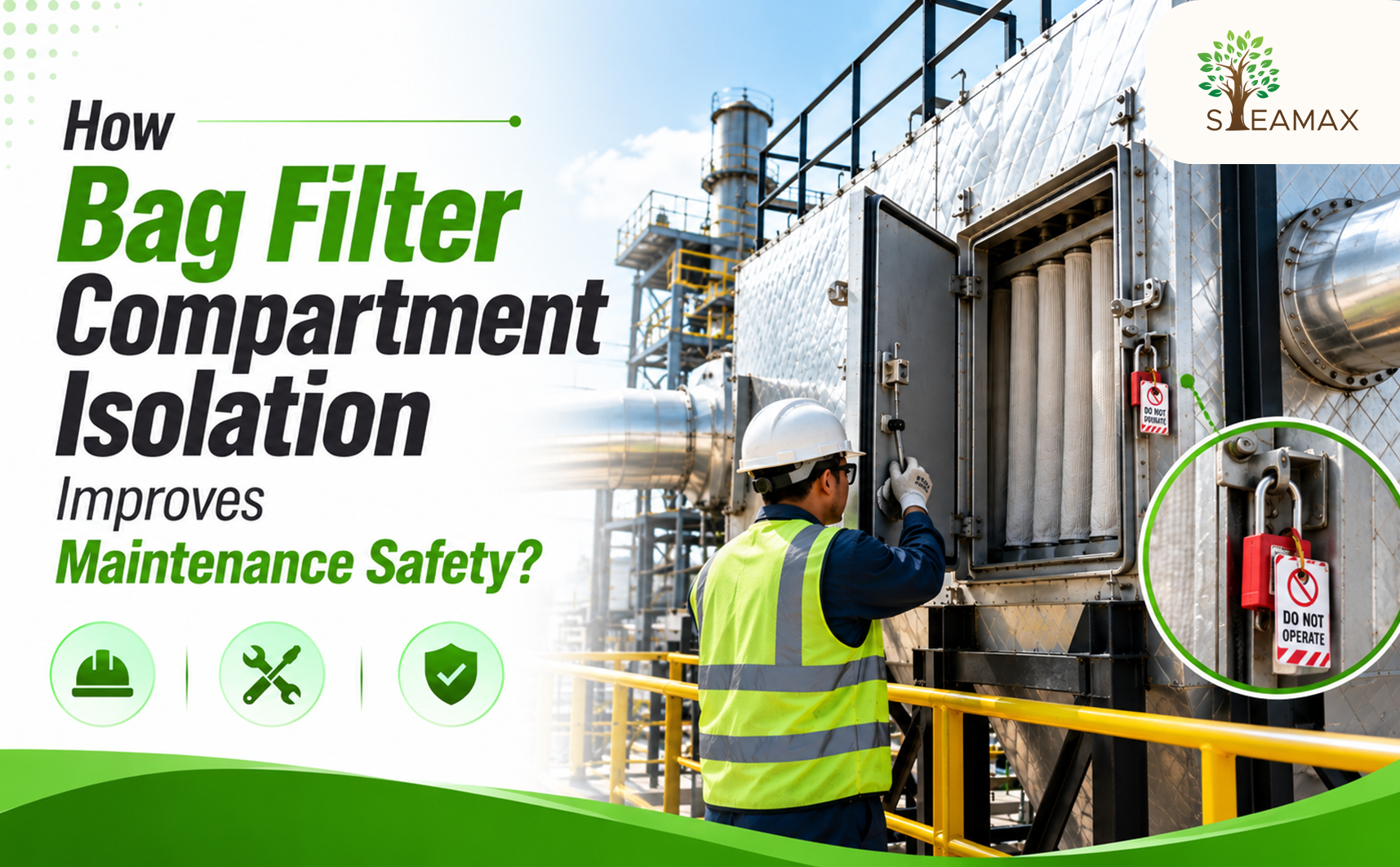
Isolation means separating the compartment under maintenance from the active gas flow using the appropriate isolation arrangements according to the equipment design and plant safety procedure.
This creates a controlled maintenance zone while the other compartments continue their filtration duty.
Why Is Bag Filter Compartment Isolation Important?
Opening a bag filter compartment without proper isolation can expose workers to residual dust, hot gases, or unexpected airflow. Proper isolation helps create a safer working environment by controlling what enters the compartment before maintenance begins.
It also gives the maintenance team a clearly defined area to work on rather than treating the entire APCD as one operating unit.
1. Reduces Exposure to Flue Gas
Flue gas can contain hot gases and particulate matter. Before entering or opening a compartment, properly isolate and make safe the relevant section according to the plant’s established procedure.
This helps prevent unwanted flue gas movement into the maintenance area.
2. Makes Filter Bag Maintenance More Controlled
Filter bags are consumable components and eventually require inspection or replacement.
With compartment-wise isolation, maintenance teams can focus on a specific section rather than disturbing the entire bag filter system.
This makes inspection and replacement work more organised and easier to manage.
3. Helps Reduce Unplanned Exposure to Dust
Dust accumulation inside a bag filter is unavoidable. The challenge is controlling worker exposure during maintenance.
Properly isolating the compartment before opening it helps establish a controlled work area.
4. Supports Maintenance Without Shutting Down the Entire System
One of the biggest advantages of a multi-compartment design is operational flexibility. Depending on the system design and required operating conditions, a single compartment can be taken out of service while the remaining compartments continue operating.
This can reduce the need for a complete APCD shutdown for certain maintenance activities.
Isolation Must Be More Than Closing a Damper
This is an important point.
Maintenance safety doesn’t depend on a single action.
Before work begins, follow the plant’s approved isolation and lockout/tagout procedures. Identify, isolate, and verify relevant energy sources and equipment as required by the site’s safety system.
Depending on the installation, this may involve:
- Gas-flow isolation
- Electrical isolation
- Mechanical isolation
- Cooling or waiting periods
- Dust removal
- Verification of safe conditions
What Operators Should Check Before Maintenance
Before opening a compartment, the maintenance team should confirm that the approved site procedure has been completed.
Important checks may include:
- Correct compartment identified
- Required isolation completed
- Isolation verified
- Relevant equipment stopped or isolated
- Temperature and atmospheric conditions checked as required
- Dust conditions assessed
- Work permit completed where applicable
- Maintenance personnel briefed
Looking for an industrial bag filter system designed around your plant's dust characteristics, operating conditions, and maintenance requirements?
Connect with Steamax India to discuss a suitable air pollution control solution.
Explore Steamax Bag Filters
Contact Steamax India
Visit Steamax India
Email: info@steamaxindia.com
Phone: +91 93151 24803