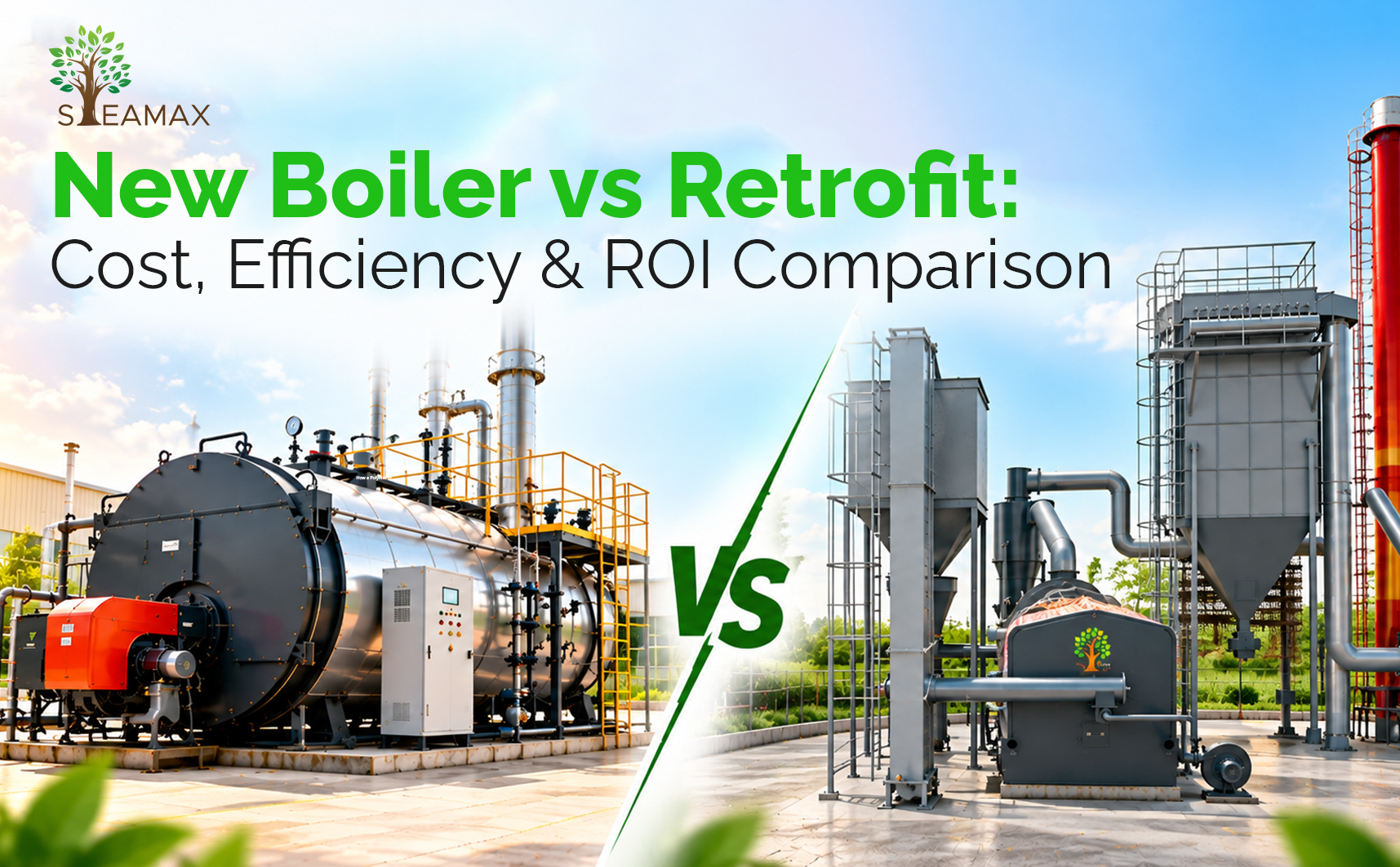
When an existing boiler starts becoming expensive to operate, the first thought is often, “Maybe it’s time for a new boiler.”
Sometimes, that’s absolutely the right decision. But not always.
If the existing boiler has a suitable pressure rating, heat-transfer surfaces, and usable mechanical structure, retrofitting the system can sometimes deliver the required fuel conversion, efficiency improvement, and emission-control upgrades without replacing the entire asset.
The real question isn’t simply new boiler vs retrofit. It’s which option gives your plant the better combination of investment, operating cost, reliability, and long-term performance.
What Does a Boiler Retrofit Actually Involve?
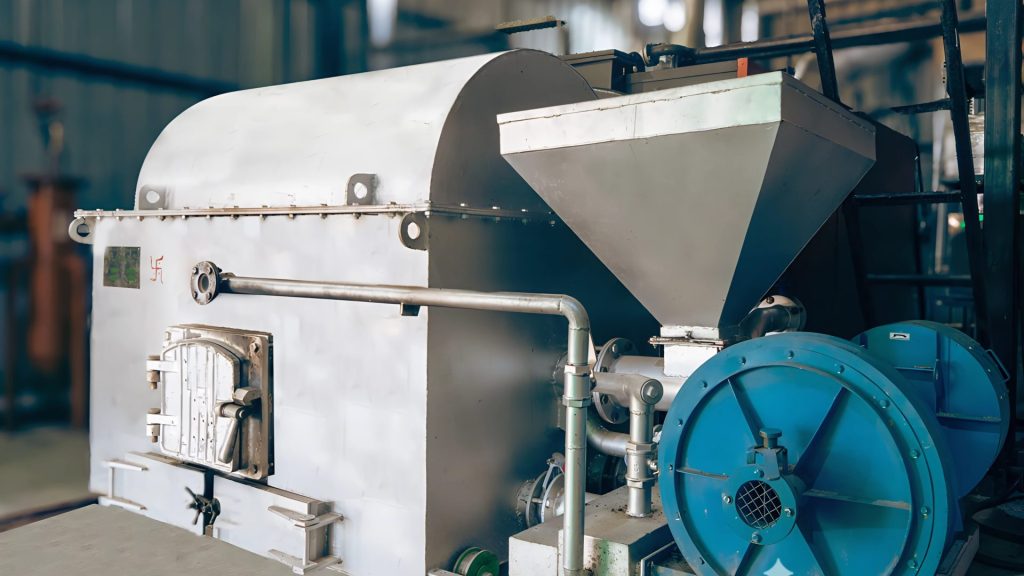
A retrofit means upgrading or modifying an existing boiler to meet a new operating requirement.
Depending on the application, this could involve changes to:
- Burner or combustion system
- Fuel feeding system
- ID and secondary fans
- Control panel
- Fuel and ash handling
- Air Pollution Control Devices
- Ducting and related plant equipment
For example, Steamax has proposed retrofitting existing gas-fired thermic fluid heaters for biomass operation using a GBR kit, including a new biomass burner, ID fan, secondary fan, control modifications, fuel handling, and bag filter system.
So, a retrofit isn’t simply “changing the burner.“ It’s a modification of the system around the new fuel and operating conditions.
1. Start With CAPEX, But Don’t Stop There
A new boiler generally involves a larger equipment purchase and may also require civil work, piping, utilities, fuel handling, electrical work, and other supporting infrastructure.
A retrofit can potentially use a significant portion of the existing infrastructure, reducing the amount of new equipment required.
A proper comparison should include:
- Equipment cost
- Civil and structural work
- Installation
- Piping and ducting
- Electrical modifications
- Fuel handling
- APCD requirements
- Commissioning
- Expected downtime
2. Calculate the Payback Period
This is where the comparison gets much more interesting.
If a retrofit substantially reduces fuel cost, the savings can sometimes recover the investment quickly.
In one Steamax biomass retrofit proposal, total CAPEX was ₹ 1.15 crore, against projected annual savings of about ₹1.83 crore, for a calculated payback of around 8 months under the stated operating assumptions.
Of course, every plant is different.
Fuel price, operating hours, boiler load, biomass quality, efficiency, and maintenance costs can all change the actual payback. That’s why you should calculate ROI using your plant’s real operating data.
3. Don’t Ignore Existing Equipment Condition
This is perhaps the most important question when evaluating a retrofit.
Is the existing boiler mechanically suitable for another operating cycle?
Look at areas such as:
- Pressure parts
- Furnace
- Tubes and coils
- Refractory
- Fans
- Pumps
- Controls
- Structural condition
- Existing fuel-handling equipment
If the core equipment is in poor condition, a retrofit may not make economic sense.
On the other hand, a sound existing system can provide a strong foundation for an upgrade.
4. Look at Efficiency After the Project
A retrofit should have a clear performance objective.
If you’re changing from fossil fuel to biomass, for example, the combustion system, fuel feeding, air distribution, and ash handling must be designed around the new fuel.
In the Steamax proposal, the expected operating efficiency on Net Calorific Value ****was 85% for Astillas, with the system designed to use Astillas and sawdust pellets as fuel options.
The important question is:
What useful heat or steam will the plant actually get from every unit of fuel? That’s a much better metric than looking at fuel price alone.
5. Downtime Can Change the Economics
A new boiler installation can involve significant site work, including foundations, piping, erection, electrical connections, commissioning, and integration with the existing process.
A retrofit also requires downtime, but the extent depends heavily on what you’re modifying.
Before deciding, estimate:
- Shutdown duration
- Production loss
- Installation period
- Commissioning time
- Temporary operating arrangements
New Boiler vs Retrofit: What Should You Compare?
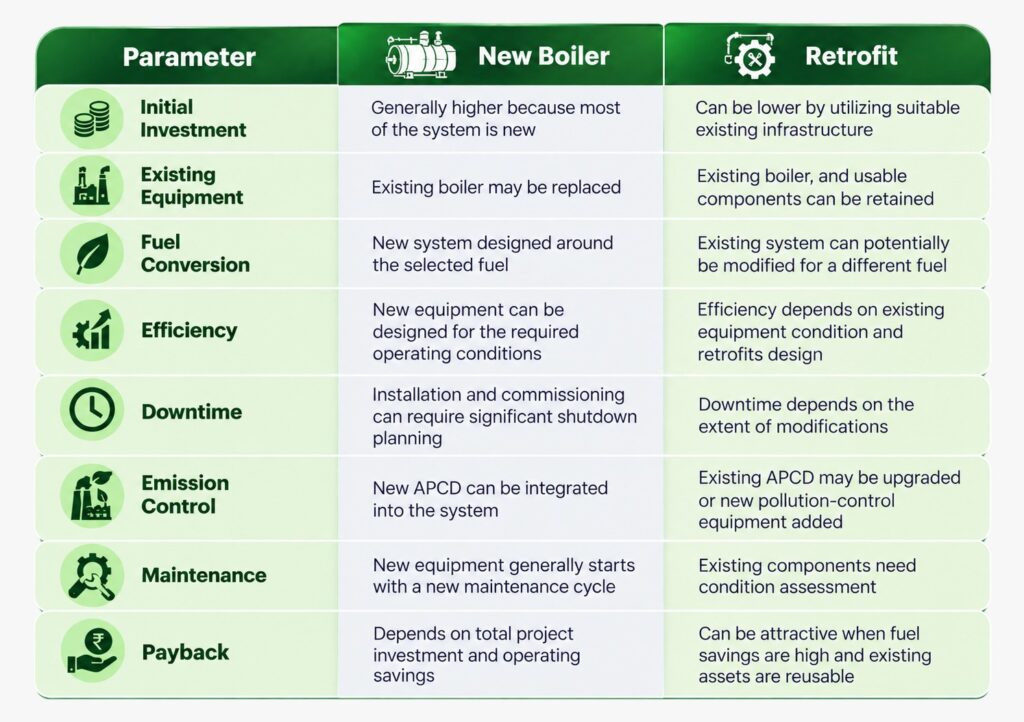
Final Takeaway
First, understand the condition of the existing equipment. Then compare complete CAPEX, fuel economics, efficiency, downtime, emissions, maintenance, space, and payback.
Not sure whether your plant needs a new boiler or a retrofit? Steamax evaluates the existing system, fuel economics, combustion requirements, emission control, and project economics to help industries choose the right approach.
Talk to Steamax before making your next boiler investment.