
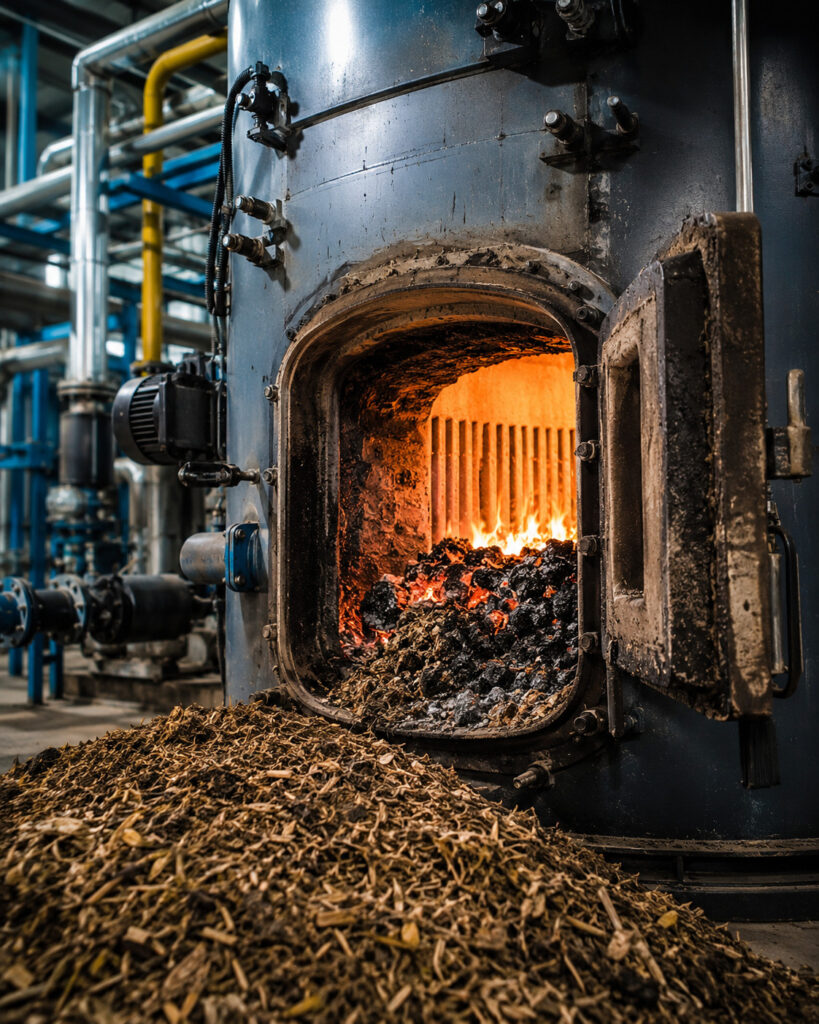
Many biomass boiler operators first notice clinker formation as a small operational nuisance. But over time, it turns into a much larger problem. Steam pressure starts fluctuating. Fuel consumption increases. Ash handling becomes difficult. Operators need to stop the system more frequently for cleaning. At the centre of all this is clinker formation — the development of hard, fused ash masses inside the furnace, grate, or combustion bed due to high-temperature ash melting.
It is one of the most common operational challenges in biomass-fired systems, especially when combustion conditions and fuel quality are not properly controlled. The good news? Most clinker problems are preventable once the root causes are understood.
What Exactly Is Clinker Formation?
Clinkers are hard, glass-like masses formed when ash particles melt and fuse inside the combustion zone.
It usually happens when:
- The furnace temperature becomes too high
- Ash melting temperature is low
- Fuel contains tough minerals
- Combustion becomes uneven
Once formed, clinkers restrict airflow and disturb combustion stability, reducing overall boiler efficiency.
1. Furnace Temperature Exceeds Ash Melting Point
One of the most common reasons behind clinker formation is excessive furnace temperature.
Every biomass fuel has an ash fusion temperature. When the furnace temperature exceeds this limit, ash becomes sticky and eventually forms solid slag deposits.
This problem is common in fuels like:
- Rice husk
- Mustard husk
- Bagasse
- Agro-waste briquettes
In many cases, operators unknowingly increase draft or air supply, causing localised overheating inside the furnace.
2. High Potassium and Sodium Content in Biomass
Certain biomass fuels naturally contain high levels of alkali metals, such as:
- Potassium (K)
- Sodium (Na)
These minerals significantly reduce ash melting temperature, making ash softer and stickier during combustion.
It is especially common in:
- Crop residues
- Agro biomass
- Low-grade biomass fuels
As a result, ash starts accumulating and forms hard clinker deposits.
3. High Silica Content in Fuel
Some fuels contain high silica levels, particularly rice husk and sand-contaminated biomass.
Silica reacts with alkali metals during combustion, forming low-melting compounds that quickly harden into glass-like clinkers. This type of clinker is usually very difficult to remove and can severely affect furnace airflow.
4. Improper Air Distribution Inside the Furnace
Combustion air distribution plays a major role in clinker prevention.
If air is unevenly distributed:
- Some areas become excessively hot
- Some areas remain under-combusted
- Localised ash melting begins
This issue is very common in:
- Manual fuel feeding systems
- Poor grate designs
- Improperly tuned FBC boilers
Stable combustion requires balanced airflow across the entire combustion zone.
5. Excessive Furnace Temperature Due to Overfiring
Trying to increase steam generation by overfiring the boiler often creates the perfect condition for clinker formation.
It usually happens because of:
- Excess primary air
- High-calorific fuel mixing
- Poor automation control
The result is aggressive combustion and ash fusion inside the furnace.
6. Fuel Moisture Imbalance
Both extremely dry and excessively wet fuel can create combustion problems. Very dry biomass burns rapidly, raising the local furnace temperature suddenly.
On the other hand, very wet fuel creates unstable combustion zones, incomplete burning, and sticky ash deposits. Maintaining controlled fuel moisture is critical for stable boiler performance.
7. Non-Uniform Fuel Size
Fuel consistency directly affects combustion quality.
When biomass pieces are uneven:
- Smaller particles burn too quickly
- Larger particles remain partially burnt
- The furnace temperature becomes unstable
This creates areas where ash partially melts, forming clinker deposits.
Uniform fuel preparation significantly improves combustion stability.
8. Sand, Soil, and Foreign Material Contamination
Poor fuel handling and open-yard storage often introduce:
- Sand
- Stones
- Metallic particles
- Soil contamination
These contaminants increase mineral content inside the furnace and accelerate clinker formation.
This issue is especially common in low-quality briquettes and improperly stored biomass.
9. Poor Bed Material Management in FBC Boilers
In Fluidised Bed Combustion (FBC) systems, bed conditions are extremely important.
Problems such as:
- Incorrect sand particle size
- Ash accumulation
- Rising bed temperature
can cause bed agglomeration and, eventually, severe clinker formation.
Regular monitoring and bed maintenance are essential for stable operation.
10. Improper Fuel Mixing
Mixing incompatible fuels without understanding combustion chemistry can lead to serious ash-fusion issues.
For example:
- Coal mixed with high-potassium biomass
- Pet coke mixed with agro waste
It can sharply reduce ash fusion temperature and increase slagging tendency.
Fuel blending must always be planned carefully.
How Clinker Formation Impacts Boiler Performance
Clinker formation affects much more than just ash handling.
It can lead to:
- Reduced boiler efficiency
- Choking of the grate or bed
- Increased shutdown frequency
- Higher ID fan load
- Steam pressure fluctuations
- Refractory damage
- Increased emissions
Over time, these issues significantly increase operating costs.
How to Prevent Clinker Formation in Biomass Boilers
Preventing clinker formation requires a combination of fuel management, combustion control, and operational discipline.
Fuel Management
- Maintain uniform fuel size
- Control fuel moisture
- Avoid contaminated biomass
- Test ash fusion characteristics
Combustion Optimization
- Ensure proper air distribution
- Control furnace temperature
- Use automated fuel feeding systems
Operational Best Practices
- Remove ash regularly
- Monitor furnace hot spots
- Maintain proper bed conditions in FBC systems
System Improvements
- Improve the grate design
- Optimize furnace volume
- Ensure proper combustion residence time
The Real Root Cause of Clinker in Most Biomass Boilers
In practical industrial operations, clinker formation usually comes down to five major factors:
- High-potassium biomass
- Poor combustion control
- Excess furnace temperature
- Sand or soil contamination
- Non-uniform fuel quality
Fixing these areas alone can significantly reduce clinker-related problems.
Final Thoughts
Clinker formation is not just an ash problem—it’s a combustion efficiency problem.
If ignored, it slowly increases fuel consumption, maintenance frequency, downtime, and operational instability.
The key is to focus on:
- Better fuel quality
- Stable combustion
- Proper air management
- Consistent boiler operation
In biomass systems, minor combustion issues eventually lead to significant operational losses.
To explore practical biomass combustion and boiler optimisation solutions, visit: https://steamaxindia.com/