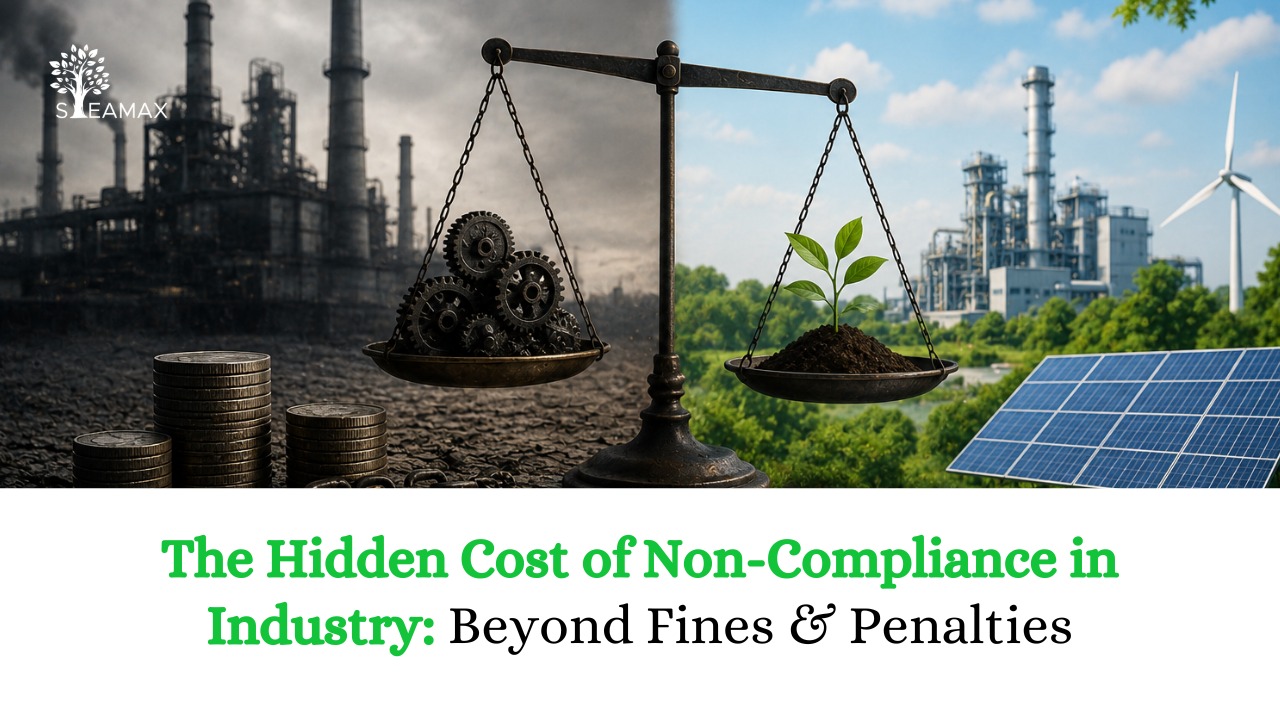
When industries think about non-compliance, the first thing that comes to mind is usually penalties or fines. But in reality, fines are often the smallest part of the problem.
The true cost of non-compliance builds quietly—through operational disruptions, lost business opportunities, and long-term financial damage. And by the time it becomes visible, the impact is already significant. So, the real question is not “What is the penalty?”
It is “What else does it cost your business?”

1. Production Shutdowns: The Most Immediate Impact
One of the biggest risks is forced shutdown.
Regulatory authorities can:
- Suspend operations
- Cancel licenses
- Issue closure notices
Even a short shutdown can lead to:
- Missed production targets
- Delayed deliveries
- Loss of customer trust
For many industries, a few days of downtime can cost far more than any regulatory fine.
2. Loss of Business and Contracts
Today, compliance is not just a regulatory requirement—it’s a business requirement.
Many clients, especially large corporations and export buyers, expect:
- Environmental compliance
- Emission transparency
- ESG alignment
Non-compliant units may face:
- Cancellation of contracts
- Disqualification from tenders
- Reduced business opportunities
In competitive markets, this can directly affect revenue growth.
3. Rising Operational Costs
If systems are not meeting environmental standards, they are usually:
- Burning more fuel than required
- Operating with poor combustion
- Losing energy through inefficiencies
It leads to:
- Higher fuel consumption
- Increased maintenance
- Lower overall productivity
4. Emergency Capex and Unplanned Expenses
When the issues are ignored for too long, industries are forced into last-minute upgrades.
It usually results in:
- Higher capital costs
- Rushed decisions
- Poor system selection
Instead of planned investment, companies end up spending more under pressure, with less time to evaluate the right solution.
5. Reputation and Brand Impact
Reputation is often overlooked—but it matters.
It can lead to:
- Negative publicity
- Loss of credibility with stakeholders
- Reduced trust among customers and partners
In today’s market, where sustainability is gaining importance, brand perception can directly influence business growth.
6. Increased Regulatory Scrutiny
Once a plant is flagged for non-compliance, it is often subject to frequent inspections and monitoring.
It creates:
- Operational pressure
- Administrative burden
- Constant risk of further action
Instead of focusing on production, teams spend more time managing compliance issues.
Why Non-Compliance Is a Strategic Risk
Non-compliance is no longer just a legal issue. It is a business risk that affects:
- Profitability
- Operations
- Market position
- Long-term sustainability
The cost is not always visible immediately—but it builds over time.
The New Approach: Proactive Compliance
Instead of reacting to notices or penalties, industries can benefit from a proactive approach:
- Regular system audits
- Efficient combustion and fuel management
- Proper emission control systems
- Continuous monitoring and optimization
Final Thoughts
Fines and penalties are just the surface. The real cost of non-compliance lies beneath—in lost production, higher costs, and missed opportunities. Industries that treat compliance as a priority don’t just avoid risk.
They build stronger, more efficient, and more competitive operations. Because in today’s environment, compliance is an investment in stability and growth.
To explore reliable and efficient solutions, visit: https://steamaxindia.com/