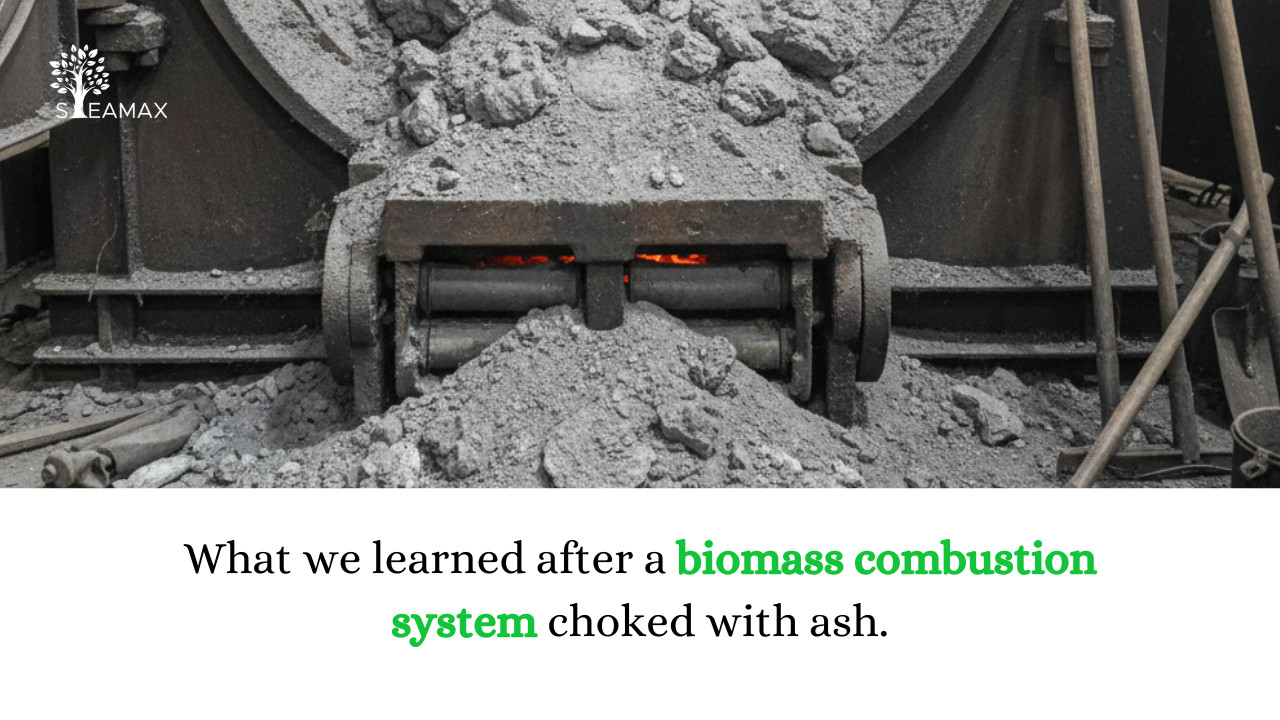
At first, everything seemed normal. The boiler was producing steam, operators were managing the load, and there were no alarms or breakdowns. But behind the scenes, the system was slowly choking. Fuel consumption kept increasing. Ash handling became a daily struggle. Operators spent more time adjusting air and fuel settings just to maintain stable steam pressure. Eventually, the truth surfaced: the biomass combustion system was overloaded with ash, and its performance had been quietly deteriorating for weeks.
This experience offered more than just a maintenance fix; it became an eye-opener on how biomass systems truly behave, setting the stage for the deeper investigation that followed.

What Actually Went Wrong Inside the System
The root issue was not a single failure, but rather a combination of overlooked factors that allowed ash to accumulate across the combustion and gas path.
As it gets accumulate:
- Airflow through the furnace became restricted.
- The combustion temperature dropped.
- Unburnt fuel increased
- The draft balance was disturbed.
Lesson 1: Ash Is Not Just a Waste Product
In this case:
- Fine ash started settling on grates and refractory.
- Sticky ash caused partial blockages.
It became an active obstacle, not just a by-product. Once airflow was compromised, efficiency dropped sharply.
Lesson 2: Fuel Chemistry Matters More Than Fuel Price
The biomass being used met basic procurement specs, but its ash content and ash fusion characteristics were never fully evaluated.
As operating conditions changed:
- Ash began sintering at furnace temperatures.
- Clinkers formed more frequently.
- Manual cleaning increased
Lesson 3: Air Distribution Cannot Compensate for Ash Buildup
Operators tried to manage the problem by increasing the air and adjusting dampers. While this helped temporarily, it also introduced new issues.
Excess air:
- Lowered furnace temperature
- Increased flue gas losses
- Reduced combustion efficiency
Lesson 4: Early Warning Signs Were There — But Ignored
Looking back, the warning signs were clear:
- Rising fuel consumption without higher steam output
- Increasing clinker formation
- Unstable steam pressure
- More operator intervention
How the Ash buildup Issue Was Corrected?
The solution wasn’t a major rebuild. It involved:
- Reviewing fuel ash characteristics
- Improving ash removal frequency and pathways
- Correcting combustion air distribution
- Cleaning fouled heat-transfer and gas paths
Once airflow is restore, steam output stabilizes and fuel consumption dropped back to expected levels.
Final Takeaway
A biomass system rarely fails overnight. It degrades slowly when ash, airflow, and fuel behaviour are not align. The signs are subtle, but the cost is real.
If your plant is burning more biomass than expected, struggling with clinkers, or relying heavily on manual intervention, ash may already be controlling your system — not the other way around.
Understanding and managing is not maintenance work. To explore practical solutions for improving biomass combustion visit: https://steamaxindia.com/