

If you’ve ever seen molten ash forming hard, glassy clinkers at the bottom of your combustion chamber, you’re dealing with a typical industrial headache—ash fusion. In simple terms, ash fusion temperature (AFT) is the temperature at which the ash from burned fuel begins to soften, melt, and eventually fuse. Using the wrong fuel with a low ash fusion temperature can cause significant damage to your boiler. You’ll face issues such as clinker formation, reduced heat transfer, blocked grates, and increased downtime that you can afford.
Therefore, when selecting a fuel, consider not only its calorific value but also its ash fusion behaviour.
What Is Ash Fusion Temperature?
Ash Fusion Temperature (AFT) is the point at which fuel ash starts to:
- Deform
- Start to melt
- Flow like a liquid
It’s usually tested under standardised lab conditions and includes four key stages:
- Initial Deformation Temp – when ash starts to soften
- Softening Temp – ash begins to slump or deform noticeably
- Hemisphere Temp – ash blob looks like a hemisphere
- Flow Temp – ash becomes fully liquid and spreads out
AFT is typically expressed in degrees Celsius (°C), and the higher the value, the better it is for boiler performance.
Why Low Ash Fusion Fuels Cause Big Problems
Here’s what happens when you use a fuel with a low AFT (say, below 1,000°C):
- Ash melts inside the furnace
- It fuses to the grates or boiler tubes
- Clinkers form, reducing combustion efficiency
- Frequent shutdowns are needed to clean or de sludge
Factors That Influence Ash Fusion Behaviour
Ash fusion is not just about fuel type—it’s also about the mineral content in the ash, such as:
- Silica (SiO₂) – High silica = lower AFT (more clinker)
- Alumina (Al₂O₃) – Increases AFT (good)
- Iron, Sodium, Potassium – Tend to lower AFT and cause slagging
It is why some fuels, despite having low ash content, still cause clinker issues—it’s about what’s in the ash.

How to Choose the Right Fuel (With Ash Fusion Temperature in Mind)
When selecting a biomass fuel for your boiler, here’s what you should evaluate:
- Check Lab Reports: Look for ash content and ash fusion temperature in your fuel certificate.
- Consider Boiler Type & Design Temperature: If your combustion chamber operates at 1,000–1,100°C, you require fuel with an AFT higher than that.
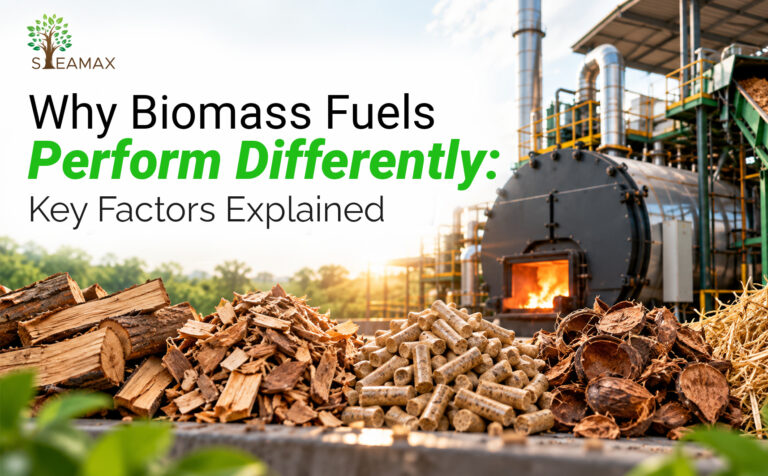
- Fuel Mixing Strategy: If you’re forced to use low-AFT fuels, such as rice husk, blend them with high-AFT biomass to reduce risk.
- Watch Out for Ash Build-Up: Use bag filters or cyclones, but prevention is always better than a cure.
Final Thoughts: Don’t Let Ash Bring You Down
In biomass boilers, the ash fusion temperature is often the silent culprit behind many headaches, from reduced efficiency to shutdowns and increased manual labour.
Make smarter choices by:
- Constantly checking AFT in lab reports.
- Choosing high-AFT, low-ash fuels for long-term efficiency
- Using blends when necessary
- Retrofitting your system to handle more challenging fuels
After all, a clean, efficient boiler starts with the proper fuel, and ash fusion temperature is your first clue.
I’m boiler operator first class please call 8299604473
Thank You for contacting us. We will get in touch with above number.