In any industrial boiler system—especially those operating on biomass—the method of fuel feeding into the combustion chamber is crucial. Too little fuel? You won’t generate enough heat. Too much at once? You’ll choke the flame, create excess smoke, or spike emissions. Traditionally, many industries still rely on manual feeding. But here’s the problem: manual feeding system is inconsistent, labour-intensive, and prone to human error. That’s where auto fuel feeding comes in—not just as a convenience but as a game-changing solution to ensure consistency, safety, and efficiency in operations.
The Problem with Manual Fuel Feeding System
Manual fuel feeding might seem simple, but in practice, it introduces a host of operational issues:
- Inconsistent fuel quantity per batch
- Irregular feeding intervals
- Operator fatigue or negligence
- Delayed responses during combustion changes
- Increased risk of accidents and exposure to high-heat zones
These issues don’t just lead to poor combustion—they waste fuel, increase emissions, and ultimately lower your boiler’s overall efficiency.
What Is Auto Fuel Feeding System?
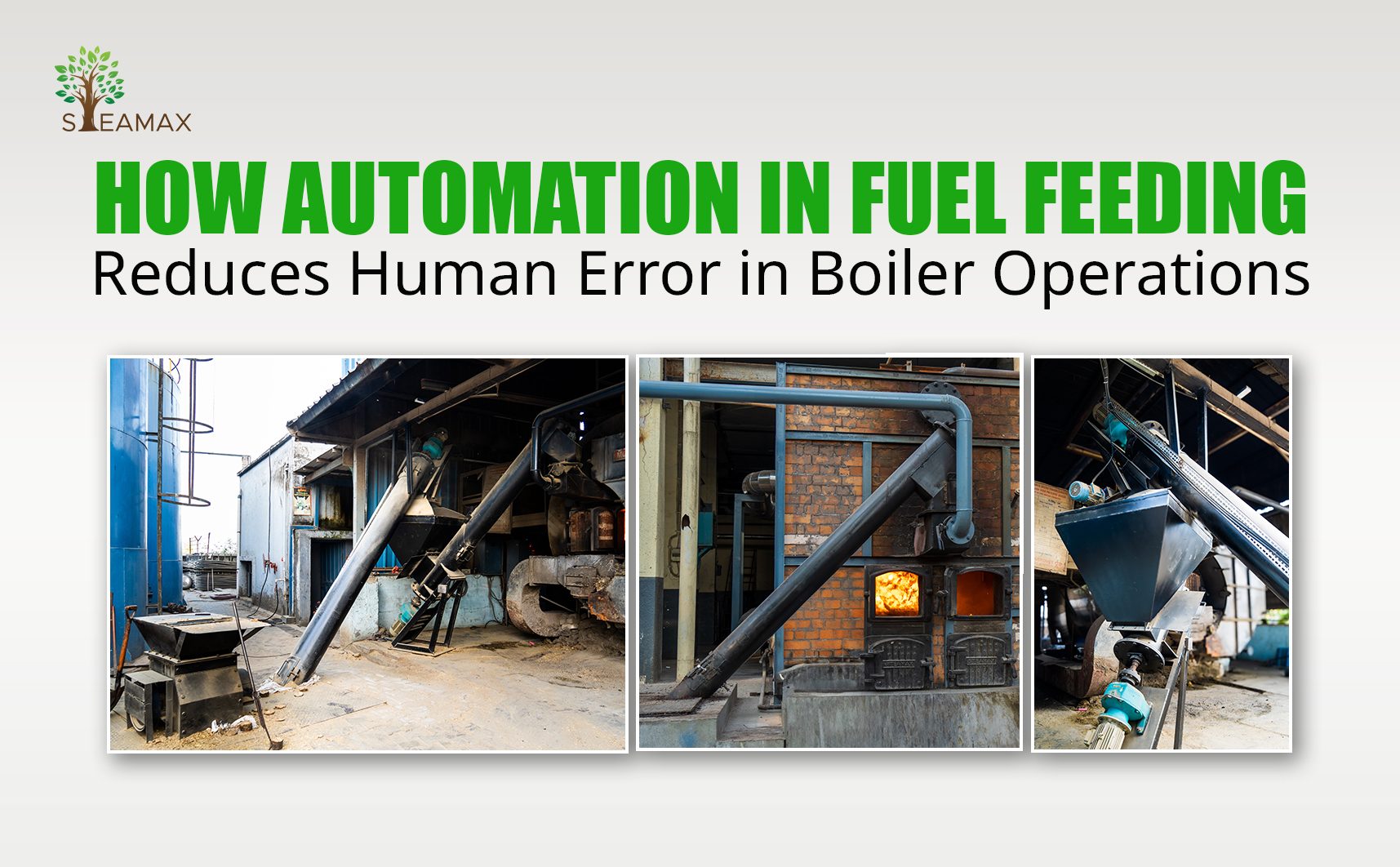
An auto fuel feeding system is a mechanical setup designed to continuously or intermittently supply biomass or solid fuels into a boiler with minimal human intervention. These systems include:
- Hopper and screw conveyors
- Hydraulic or pneumatic feeding mechanisms
- Sensors and PLC-based control systems
- Variable-speed drives for controlled flow
The system can be programmed to maintain a constant fuel supply based on load, ensuring optimal combustion at all times.

How Auto Fuel Feeding Reduces Human Error?
Here’s where automation shines:
1. Consistent Fuel Supply
Automation ensures precise and uniform feeding rates, eliminating the issues of under- or over-fueling that often occur with manual operation.
2. Load-Based Control
Automated systems can adjust the feed rate based on real-time boiler demand, whereas a human operator would react with a delay.
3. Fewer Operational Interruptions
Auto fuel feeding reduces downtime caused by manual errors, such as fuel bridging, delayed feeding, or inconsistent fuel input.
4. Safety Enhancement
With reduced human interaction near hot zones or moving parts, the risk of burns, injuries, and exposure to harmful emissions goes down significantly.
5. Improved Combustion & Lower Emissions
When combustion is consistent, fuel burns cleaner. That means:
- Less CO formation
- Fewer unburnt particles
- Lower particulate emissions
Real-World Benefits: A Case Study Snapshot
A food processing unit in Karnataka transitioned from manually feeding briquettes to using Astillas (woody biomass) with a Steamax Auto Fuel Feeding Kit. The results?
- 15.8% reduction in monthly fuel cost
- Smoother operation with fewer shutdowns
- Improved heat transfer and product quality
- Reduced operator dependency and safety risks
The plant now enjoys stable boiler performance and consistent energy output, all thanks to automation.
Final Thoughts
Human error in boiler operations is not just a safety concern—it’s a business loss. Whether it’s inconsistent feeding, delayed reactions, or fatigue-related mistakes, the cost adds up.
By switching to auto fuel feeding, industries not only boost efficiency and reduce emissions but also free up workforce for higher-value tasks. It’s a win-win for production, safety, and sustainability.