If your boiler is consuming more fuel, requiring frequent cleaning, or struggling to maintain stable steam, clinker formation could be one of the reasons.
Many operators treat clinkers as a routine maintenance issue, but they’re often a sign that something isn’t right inside the furnace. Poor fuel quality, uneven combustion, or incorrect operating conditions can gradually lead to the formation of hard ash deposits that affect both efficiency and reliability.
The good news is that most clinker problems can be prevented once you understand their causes.
What Is Clinker Formation?
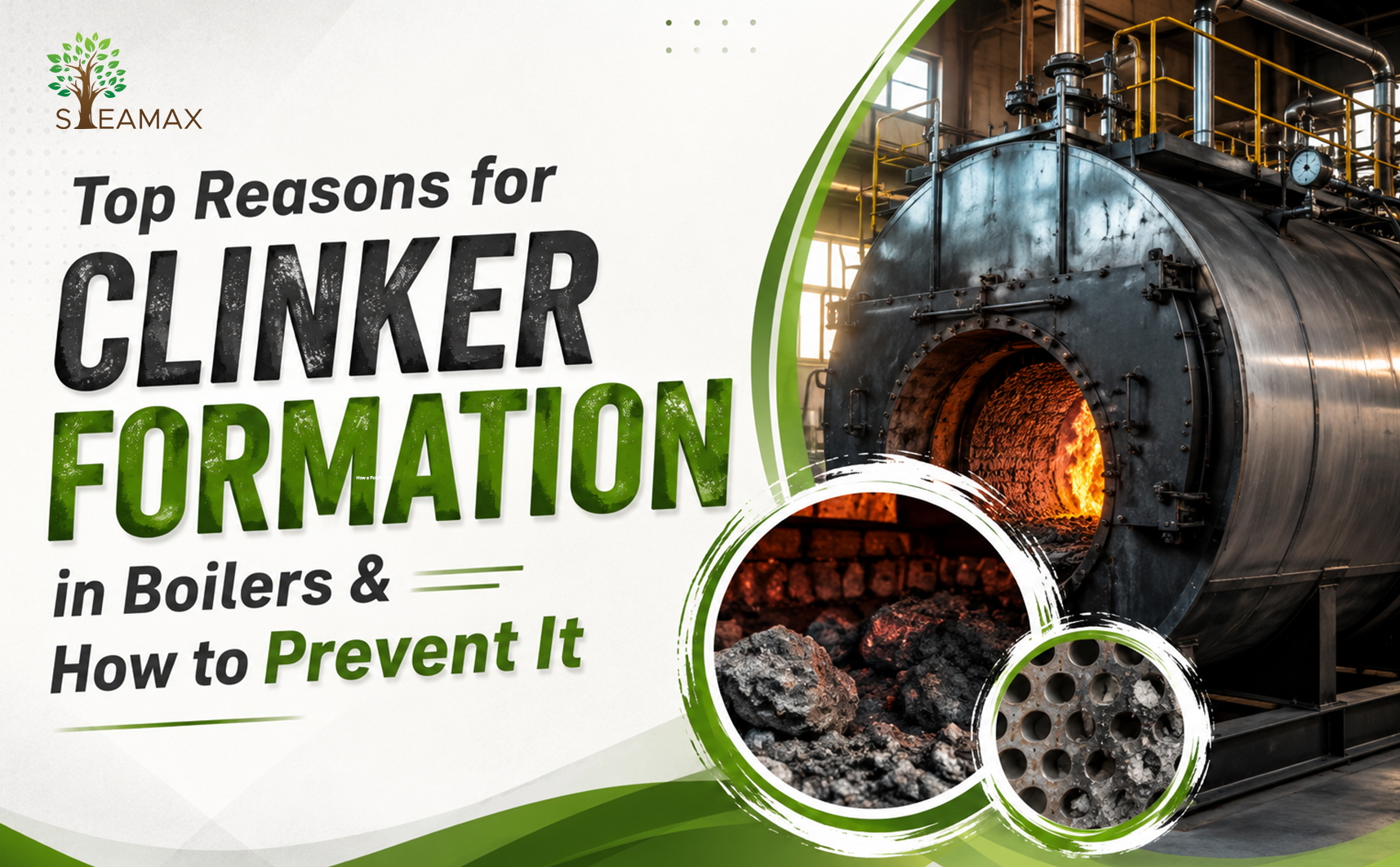
Clinkers are hard, fused masses of ash that form inside a boiler furnace when ash particles melt and stick together under high temperatures.
As these deposits grow, they begin to block airflow, interfere with combustion, and make ash removal more difficult. Over time, they reduce boiler efficiency and increase maintenance requirements.
1. Poor Fuel Quality
One of the biggest reasons for clinker formation is inconsistent fuel quality. Biomass containing high levels of ash, dirt, sand, or other contaminants is more likely to produce slag in the furnace.
Different batches of fuel can also behave differently, making combustion less stable.
Testing fuel before use helps reduce these problems.
2. High Furnace Temperature
Every fuel has an ash melting temperature.
If the furnace operates above this limit, ash becomes soft and sticky before turning into hard clinker deposits.
This usually happens because of:
- Overfiring
- Excess combustion air
- Improper temperature control
Maintaining the correct furnace temperature is essential for preventing ash fusion.
3. High Potassium and Silica Content
Certain biomass fuels naturally contain higher levels of minerals such as potassium and silica. These minerals lower the ash melting point and increase the chances of clinker formation.
Fuels such as rice husk and other agricultural residues are more likely to experience this issue if combustion is not properly controlled.
4. Improper Air Distribution
Combustion depends on the correct balance between fuel and air.
If airflow is uneven:
- Some areas become too hot.
- Other areas receive insufficient oxygen.
These localised hot spots create ideal conditions for clinker formation.
Proper air distribution ensures more uniform combustion across the furnace.
5. Incorrect Fuel Moisture
Fuel that is too dry burns very quickly, creating high local temperatures. Fuel with excessive moisture burns unevenly, leading to unstable combustion and sticky ash deposits.
Maintaining the recommended moisture level helps achieve consistent combustion and reduces clinker formation.
6. Non-Uniform Fuel Size
When fuel particles vary significantly in size, combustion becomes uneven. Larger pieces burn slowly, while smaller particles burn rapidly.
This creates temperature variations inside the furnace and increases the possibility of ash melting.
Uniform fuel sizing improves combustion efficiency and reduces clinker buildup.
7. Sand and Foreign Material in Biomass
Improper storage and handling often introduce sand, soil, stones, and other foreign materials into the fuel.
These impurities increase the mineral content entering the furnace and contribute to slag formation.
Keeping biomass clean before feeding it into the boiler is a simple but effective preventive measure.
How Clinker Formation Affects Boiler Performance
Ignoring clinker formation can lead to several operational problems, including:
- Higher fuel consumption
- Reduced boiler efficiency
- Blocked airflow
- Frequent shutdowns for cleaning
- Increased maintenance costs
- Steam pressure fluctuations
- Damage to refractory and grates
The longer the problem continues, the greater the impact on plant performance.
How to Reduce Clinker Formation
Preventing clinker formation requires a combination of good fuel management and proper boiler operation.
Some practical steps include:
- Use consistent, good-quality biomass.
- Maintain the correct fuel moisture.
- Ensure uniform fuel sizing.
- Balance combustion air properly.
- Monitor furnace temperature regularly.
- Clean ash deposits before they build up.
- Inspect the combustion system periodically.
Final Thoughts
Clinker formation is more than just an inconvenience. It is often an early warning sign that combustion conditions need attention. By focusing on fuel quality, combustion control, and routine monitoring, industries can reduce fuel consumption, improve boiler efficiency, and minimise unplanned shutdowns.
So, are you experiencing frequent clinker formation in your boiler?
Steamax helps industries improve combustion performance through biomass optimisation, automated fuel feeding, boiler retrofitting, and combustion audits.
Contact Steamax today to optimise your boiler performance.