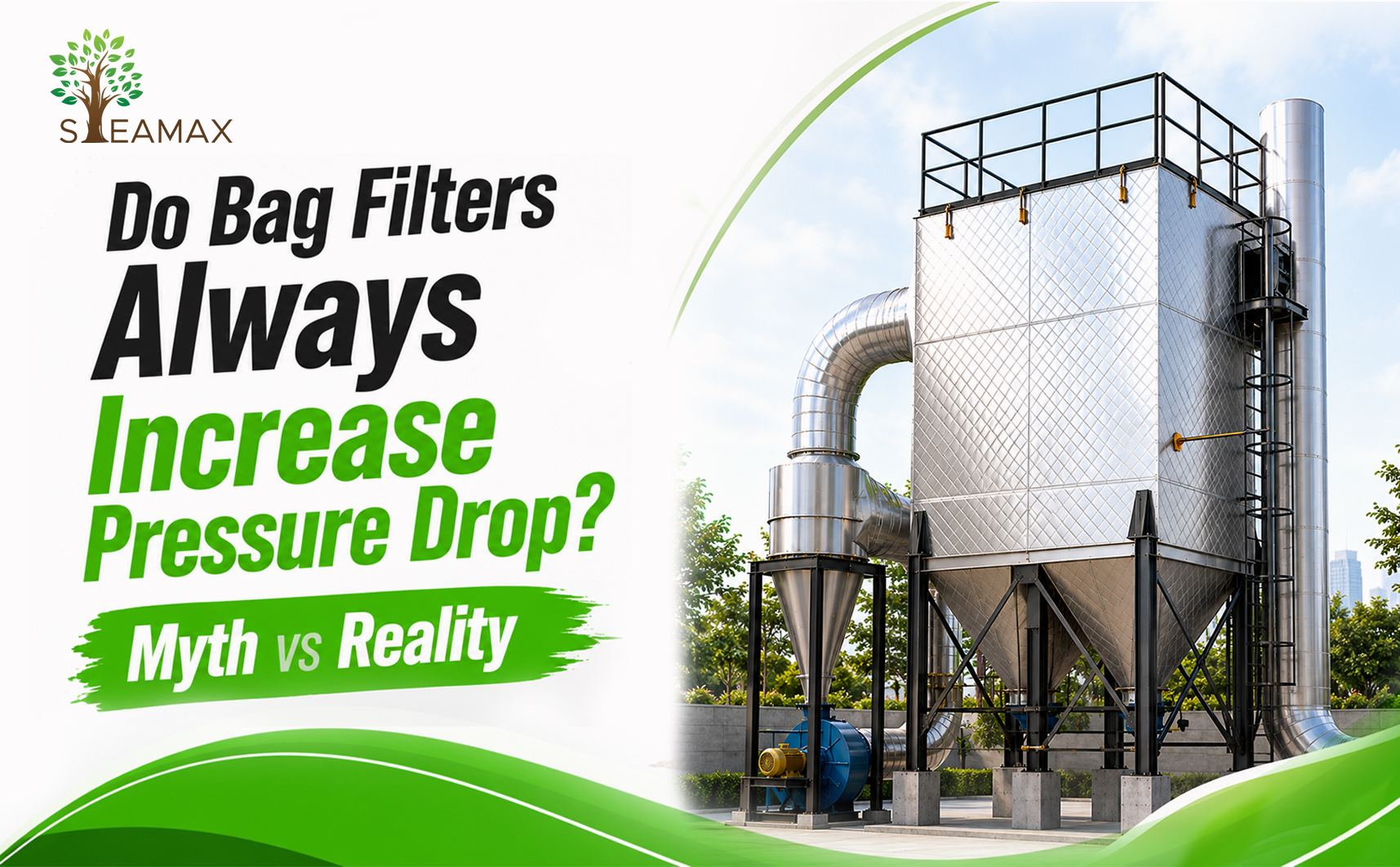
When industries consider installing a bag filter, one concern often comes up:
“Won’t it increase pressure drop and make the boiler less efficient?” It’s a common belief, but it doesn’t tell the full story.
Yes, every Air Pollution Control Device (APCD) creates some resistance to flue gas flow. However, a properly designed bag filter does not create excessive pressure drop. In fact, many pressure-related problems are caused by poor system design, improper operation, or lack of maintenance—not by the bag filter itself.
Understanding the difference can help industries make better decisions when upgrading their emission control systems.
Myth: Bag Filters Always Create High Pressure Drop
Many people assume that because flue gas passes through filter bags, the system will always consume more fan power and reduce boiler performance.
This assumption often leads industries to avoid the most suitable APCD for their application.
The reality is quite different.
A modern bag filter is engineered to maintain an optimum pressure drop while delivering high particulate removal efficiency. When designed correctly, it supports both compliance and efficient boiler operation.
What Is Pressure Drop?
Pressure drop is the resistance that flue gas experiences as it moves through the boiler, ducts, and pollution control equipment.
Every component in the flue gas path contributes to pressure loss, including:
- Boiler tubes
- Economizers
- Ducting
- Cyclones
- Dampers
- Bag filters
The objective is not to eliminate pressure drop—that is impossible.
The goal is to keep it within the design range so that the system operates efficiently without overloading the ID fan.
What Actually Causes High Pressure Drop?
If a bag filter experiences unusually high pressure drop, the root cause is usually elsewhere.
- Poor Bag Filter Sizing
A bag filter that is too small for the gas flow forces air through the filter media at a higher velocity.
This increases resistance and reduces filtration efficiency. Proper sizing is one of the most important design considerations.
- Incorrect Air-to-Cloth Ratio
The air-to-cloth ratio determines how much gas passes through each square metre of filter media.
If this ratio is too high, pressure drop increases and filter bag life decreases. Selecting the correct filtration area helps maintain stable operation.
- Inefficient Pulse Cleaning
Pulse jet cleaning removes accumulated dust from the filter bags.
If cleaning cycles are not optimised:
- Dust builds up
- Airflow becomes restricted
- Pressure drop gradually rises
Modern pulse jet systems automatically maintain clean filter surfaces, helping to keep pressure drop under control.
- Improper Hopper Design
Collected dust must leave the system quickly.
If ash accumulates inside the hopper, it can re-enter the airflow and increase resistance inside the bag filter.
Efficient hopper evacuation is essential for stable operation.
- Poor Fuel Quality
Biomass with high ash content or excessive moisture produces more dust and sticky particles.
This causes filter bags to load faster and increases pressure drop over time. Using consistent, good-quality fuel helps maintain APCD performance.
How a Well-Designed Bag Filter Controls Pressure Drop
Key design factors include:
- Correct air-to-cloth ratio
- Uniform gas distribution
- Optimised filter bag selection
- Efficient pulse jet cleaning
- Proper hopper design
- Balanced ID fan operation
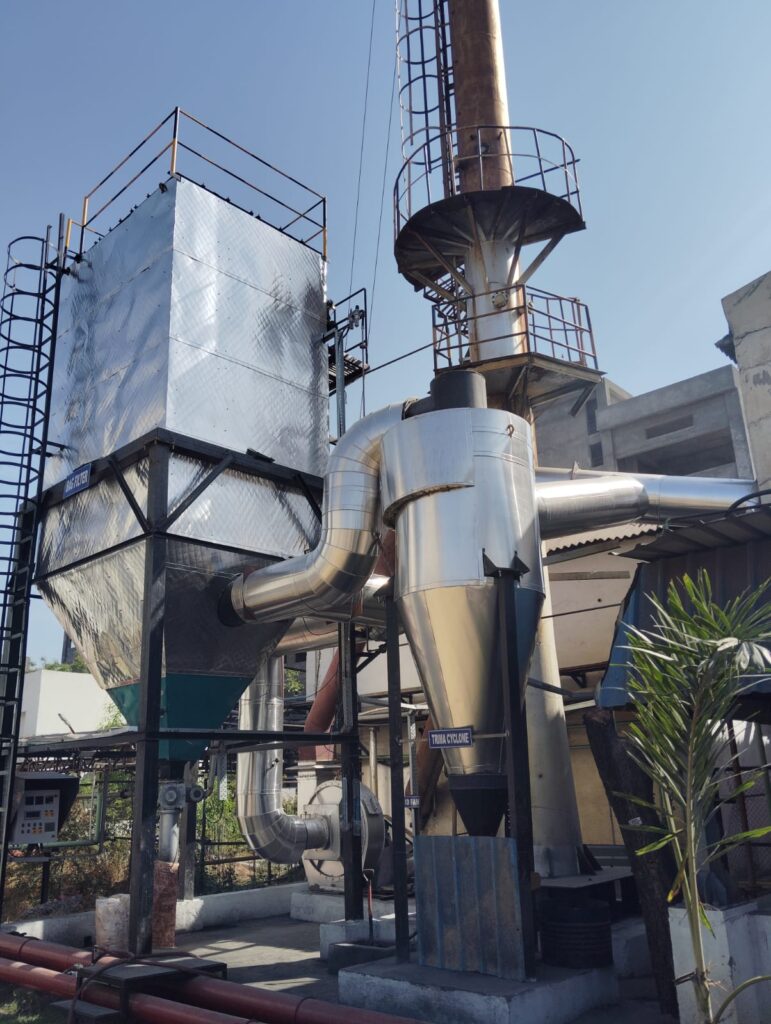
How Steamax Designs Bag Filter for Better Performance
At Steamax, every bag filter is engineered according to the plant’s actual operating conditions rather than using a standard design.
Key considerations include:
- Gas flow rate analysis
- Flue gas temperature
- Dust loading characteristics
- Air-to-cloth ratio optimization
- Pressure drop management
- Pulse jet automation
- ID fan synchronisation
Final Thoughts
The idea that bag filters always increase pressure drop is one of the most common myths in industrial emission control.
The reality is that pressure drop depends on engineering, not just equipment. So, are you looking for a bag filter that delivers high efficiency without unnecessary pressure losses?
Contact our team to find the right APCD solution for your plant. https://steamaxindia.com/