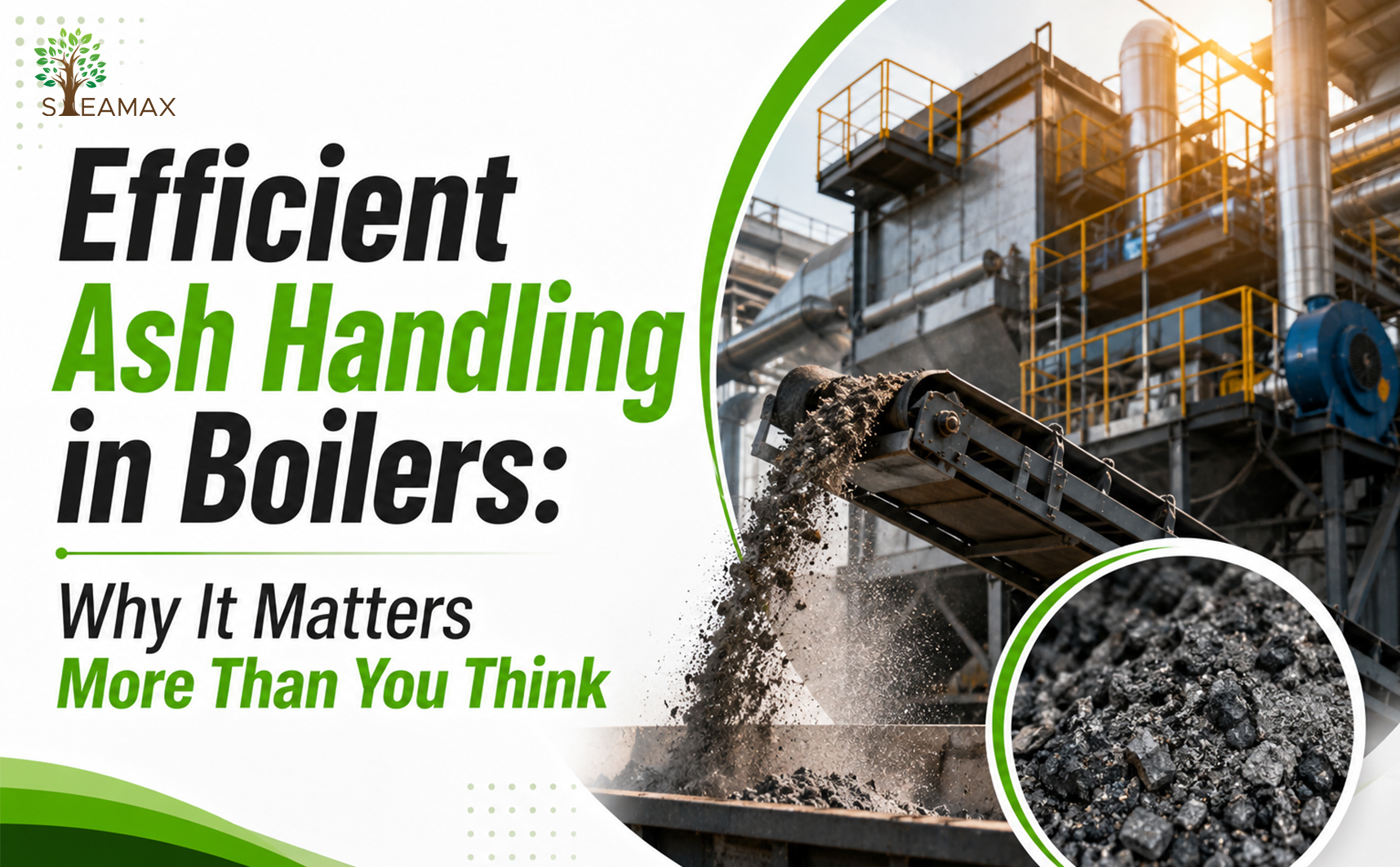
Every biomass- or solid-fuel-fired boiler produces ash. While it’s a natural result of combustion, the way ash is handled can have a major impact on boiler performance. Many industries focus on combustion efficiency and fuel quality but overlook ash handling until problems begin to appear. Accumulated ash can restrict airflow, increase maintenance, reduce heat transfer, and even lead to unplanned shutdowns. An efficient ash handling system doesn’t just remove waste—it helps the entire boiler operate more reliably and efficiently.
Why Efficient Ash Handling Is Important
Ash handling is not simply about disposing of combustion residue. It plays a vital role in maintaining stable boiler operation.
When ash is removed efficiently, it helps:
- Maintain smooth combustion
- Prevent clinker buildup
- Improve heat transfer
- Reduce equipment wear
- Keep emissions under control
Problems Caused by Poor Ash Handling
When ash is allowed to accumulate inside the system, it creates several operational challenges.
Some of the most common problems include:
- Choked grates and air passages
- Reduced combustion efficiency
- Frequent clinker formation
- Higher fuel consumption
- Increased maintenance requirements
- Boiler downtime for manual cleaning
- Higher particulate emissions
Where Ash Is Generated in a Boiler System
Ash is produced at different stages of the combustion process, and each type requires proper handling.
- Bottom Ash
Bottom ash collects at the base of the furnace or grate. It is generally heavier and consists of larger ash particles. Regular removal is essential to maintain airflow and stable combustion.
- Fly Ash
Fly ash consists of fine particles carried with the flue gas.
It is captured by Air Pollution Control Devices (APCDs) such as:
- Cyclones
- Bag Filters
- Electrostatic Precipitators (ESPs)
What Makes an Efficient Ash Handling System?
An effective ash handling system is designed to remove ash continuously or at regular intervals without interrupting boiler operation.
Key components may include:
- Ash hoppers
- Screw conveyors
- Drag chain conveyors
- Rotary airlock valves
- Ash collection bins
How Good Ash Handling Improves Boiler Performance
- Stable Combustion
Timely ash removal keeps combustion air passages clear, allowing fuel to burn more efficiently.
- Reduced Clinker Formation
Ash accumulation increases the chances of fused ash deposits. Regular removal helps reduce clinker formation and improves furnace operation.
- Lower Maintenance
Automatic ash removal minimises manual cleaning and reduces maintenance downtime.
- Better Heat Transfer
Clean furnace surfaces and heat exchange areas improve thermal efficiency and reduce fuel consumption.
- Longer Equipment Life
Removing abrasive ash promptly helps protect grates, conveyors, fans, and other equipment from unnecessary wear.
Automation Makes Ash Handling More Reliable
Many modern boiler plants are replacing manual ash removal with automated systems.
Automation offers several advantages:
- Continuous ash evacuation
- Reduced manual labour
- Improved workplace safety
- Consistent boiler operation
- Lower chances of operational interruptions
For high-capacity biomass boilers, automation also improves plant productivity by reducing operator dependency.
Best Practices for Efficient Ash Handling
A few simple practices can significantly improve ash handling performance:
- Use good-quality biomass with consistent ash characteristics.
- Inspect ash conveyors and hoppers regularly.
- Prevent ash buildup before it becomes a blockage.
- Ensure rotary airlock valves and screw conveyors operate smoothly.
- Monitor ash generation trends to identify combustion issues early.
- Schedule routine maintenance for ash handling equipment.
Why the Right System Design Matters
Every boiler generates ash differently depending on:
- Fuel type
- Ash content
- Boiler capacity
- Combustion technology
- Operating conditions
A system designed for one application may not perform well in another. That’s why ash handling should be designed as part of the complete boiler system—not treated as an afterthought.
Final Thoughts
Ash is one of the most overlooked aspects of boiler performance. While it may seem like a routine housekeeping task, it directly influences combustion efficiency, maintenance requirements, equipment life, and emission control.
Looking to improve your boiler’s performance with a reliable ash handling solution?
Steamax designs integrated ash handling systems that support efficient combustion, cleaner operations, and long-term boiler reliability.
Contact Steamax today to discuss the right solution for your plant. Visit https://steamaxindia.com/