
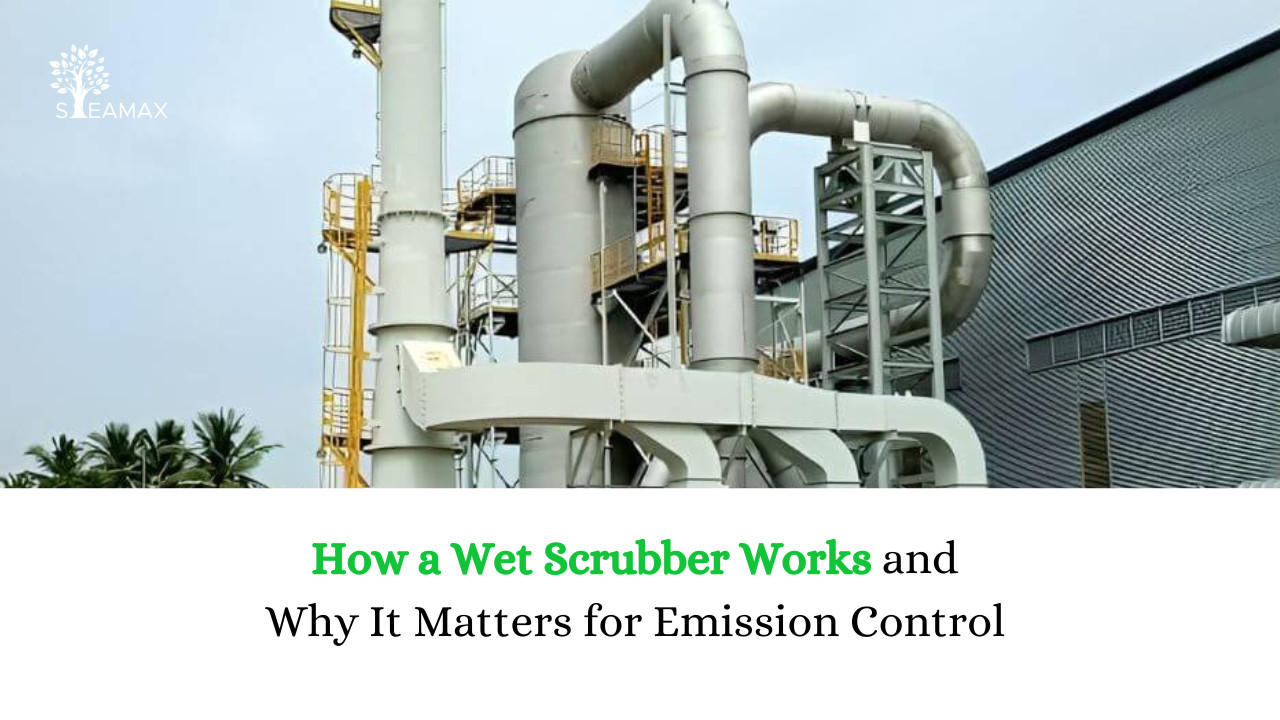
Industrial plants rarely struggle with production alone. The bigger challenge is controlling what leaves the stack. Dust, acidic vapors, and process fumes must be managed carefully to meet emission norms and avoid operational risks. While technologies like bag filters and electrostatic precipitators handle dry particulate effectively, wet scrubbers are especially useful when gases, sticky particles, or high-temperature streams are involved. To understand their importance, we need to first look at how they actually work.
Wet Scrubber Principle: How It Works
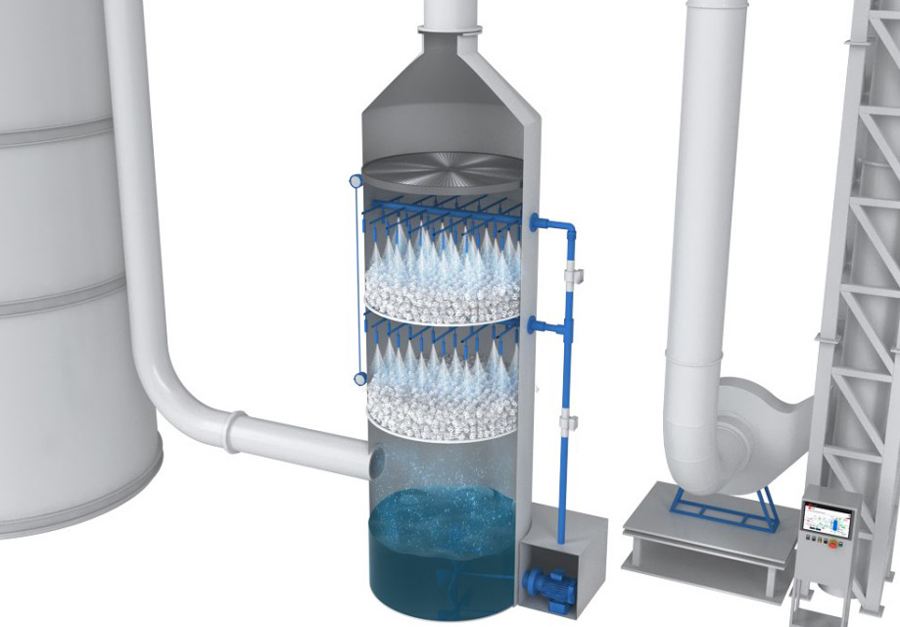
The working principle of a wet scrubber is straightforward. It removes pollutants from flue gas by bringing the gas stream into close contact with a liquid, usually water or a chemical solution.
When polluted flue gas enters the scrubber:
- The flue gas is sprayed or passed through a liquid mist.
- Dust particles collide with liquid droplets and get trap.
- Acidic gases dissolve or react with the scrubbing liquid.
- The clean gas exits through the top, while the contaminated liquid collects for treatment.
Types of Wet Scrubbers Used in Industry
Depending on the nature of pollutants and required efficiency, different wet scrubber designs are used.
Common types include:
- Venturi scrubbers – Highly effective for fine particulate removal
- Spray tower scrubbers – Suitable for gas absorption and moderate dust loads
- Packed bed scrubbers – Ideal for removing acidic gases
- Cyclonic scrubbers – Combine centrifugal action with liquid contact
The selection depends on particle size, gas composition, temperature, and emission limits.
Applications of Wet Scrubbers
Wet scrubbers are widely used across multiple industries where both particulate and gaseous pollutants are present.
Key applications include:
- Biomass-fired boilers
- Coal-fired thermal units
- Chemical processing plants
- Steel and foundry operations
- Fertiliser and pharmaceutical industries
- Waste incineration systems
They are particularly useful where:
- Flue gas contains acidic components like SO₂ or HCl
- Dust is sticky or combustible
- Gas temperature needs to be reduce before further treatment
Why Wet Scrubbers Are Important for Biomass and Solid Fuel Systems
In biomass combustion systems, ash content can be high, and particulate characteristics may vary depending on fuel type. In such cases, wet scrubbers provide an additional level of control.
They help in:
- Controlling fine particulate emissions
- Reducing visible stack emissions
- Cooling flue gases before discharge
- Supporting compliance with pollution control norms
However, proper design is essential to avoid issues such as excessive water consumption and slurry-handling problems.
Significance of Wet Scrubbers in Emission Compliance
With tightening environmental regulations, industries must demonstrate consistent performance in controlling emissions. Wet scrubbers play an important role in meeting particulate and gaseous emission limits.
Their significance lies in:
- Reliable removal efficiency
- Ability to handle variable gas conditions
- Simultaneous dust and gas absorption
- Improved stack visibility
In many cases, wet scrubbers are installed either as standalone systems or in combination with other pollution control equipment to achieve stricter norms.
Advantages and Limitations
Advantages:
- Effective for both particles and gases
- Suitable for high-temperature streams
- Reduces explosion risk in certain dust applications
- Flexible design options
Limitations:
- Generates wastewater that requires treatment.
- Higher maintenance compared to dry systems
- Potential corrosion issues
Understanding both sides helps industries choose the right emission control approach.
Final Thoughts
Wet scrubbers remain a practical solution for industries dealing with complex emission streams. Their ability to remove particulate matter and absorb harmful gases makes them valuable in sectors where dry systems alone are not sufficient.
When properly designed and maintained, a wet scrubber not only helps achieve compliance but also ensures safer and cleaner plant operations.
To explore suitable emission control solutions for your plant, visit: https://steamaxindia.com/