In biomass boiler operations, most attention is given to fuel costs, boiler design, or emission control. But one of the most overlooked factors affecting efficiency is how the fuel is fed into the furnace. Whether fuel is loaded manually or delivered through an automated feeding system directly impacts combustion stability, steam pressure consistency, fuel consumption, and operator dependency. Many plants continue with manual feeding because it feels simple and familiar. However, as production demands increase and efficiency targets tighten, automated fuel feeding is becoming a practical necessity rather than a luxury. Understanding the difference between manual and automated fuel feeding helps industries make smarter operational decisions.
What Is Manual Fuel Feeding?
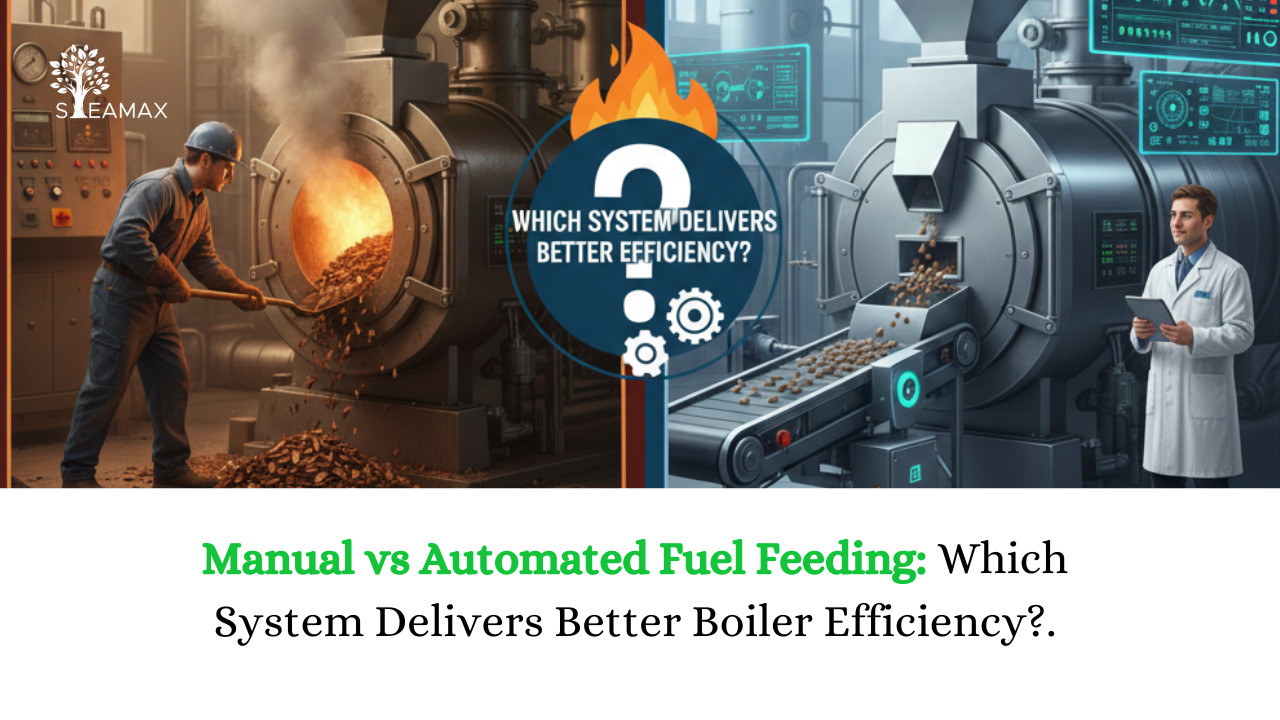
Manual fuel feeding involves physically loading biomass into the furnace. Operators control the quantity and frequency based on visual judgment and steam demand.
This method is still common in small and medium biomass systems, especially in older installations.
Typical Characteristics of Manual Feeding:
- Fuel added at inconsistent intervals
- Dependent on operator experience
- Uneven fuel bed formation
- Higher chances of overfeeding or underfeeding
- Excess air through Open gates
While manual systems appear low-cost initially, they often introduce inconsistencies that affect overall combustion efficiency.
Challenges with Manual Fuel Feeding
Manual feeding works only when operators are highly attentive and combustion conditions remain stable. In real plant environments, this is rarely the case.
Common issues include:
- Fluctuating steam pressure
- Irregular combustion temperature
- Higher unburnt fuel in ash
- Increased clinker formation
- Greater fuel consumption per ton of steam
- High labor dependency
When fuel is dumped in batches, the furnace alternates between excess fuel and fuel shortage. This cycle reduces efficiency and increases thermal stress on the boiler.

What Is Automated Fuel Feeding?
Automated fuel feeding systems use mechanical equipment such as screw feeders, conveyors, or hydraulic pushers to deliver biomass continuously and in controlled quantities.
The system is often integrated with combustion controls to adjust fuel flow in response to steam demand and furnace conditions.
Key Features of Automated Feeding:
- Continuous and uniform fuel supply
- Controlled feed rate
- Integrated with air and draft systems
- Reduced human intervention
Why Automated Fuel Feeding Improves Boiler Efficiency
The main advantage of automation is consistency. A stable fuel supply leads to stable combustion.
With automated feeding:
- The fuel bed remains uniform
- Furnace temperature stays steady
- Air–fuel ratio can be optimised
- Steam pressure fluctuations reduce
- Excess air requirement decreases
It directly improves boiler efficiency and lowers fuel consumption per kilogram of steam generated.
In practice, automated systems often reduce biomass consumption by 5–15% compared to manual operations, depending on plant conditions.
Impact on Steam Quality and Production Stability
In industries like food processing, textiles, chemicals, and pharmaceuticals, consistent steam pressure is critical. Manual feeding often results in pressure spikes and drops, requiring operators to adjust air settings continuously.
Automated feeding supports:
- Stable steam generation
- Better process control
- Lower operator stress
- Improved production planning
Over time, this operational stability translates into lower maintenance and fewer emergency interventions.
Cost Perspective: Is Automation Worth It?
Many plants hesitate due to the upfront investment in automated feeding systems. However, the evaluation should consider:
- Fuel savings up to 15% (On biomass)
- Fuel savings up to 50% (vs Fossil fuel with OBR kit)
- Reduced downtime
- Lower clinker formation and
- Automated (optional) ash handling
- Decreased maintenance
- Improved boiler lifespan
Final Thoughts: Consistency Drives Efficiency
In biomass combustion, consistency is everything. Even high-quality fuel and well-designed boilers cannot perform efficiently if feeding is irregular.
Manual feeding may seem economical initially, but automated fuel feeding delivers measurable benefits in fuel savings, combustion stability, steam quality, and safety.
For plants aiming to control steam costs and improve operational reliability, automation is a strategic decision.
To explore biomass boiler solutions with optimized fuel feeding systems, visit: orangered-antelope-537718.hostingersite.com