For most industries, steam is essential—but the way it is financed and managed is changing. Traditionally, setting up a steam system meant investing crores of rupees upfront in boiler, fuel-handling systems, pollution-control equipment, and infrastructure. While this approach gave control, it also locked capital into non-core assets.
Today, CFOs are asking a different question: Why invest heavily in generating steam when you can pay for it as a utility? This shift is driving interest in the pay-per-use steam model, where industries move from capital-intensive ownership to predictable monthly operating costs.
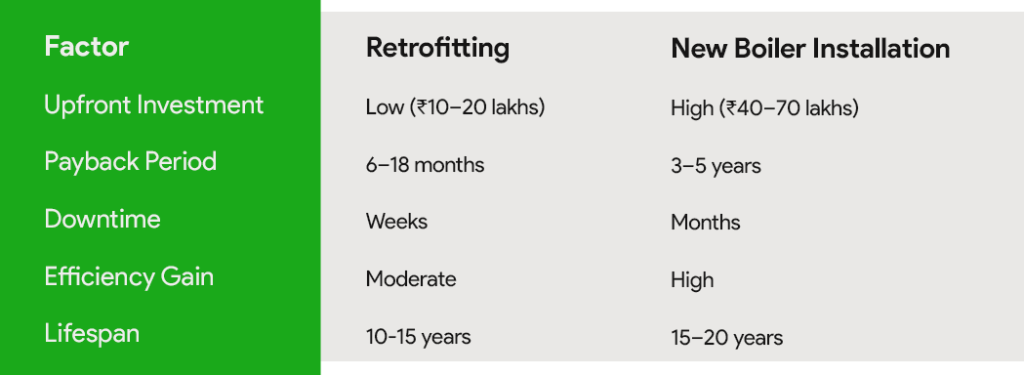
The Boiler Problem: Heavy Capex and Uncertain Returns
Installing and operating a boiler system is not just expensive—it is complex and uncertain.
1. Huge Upfront Investment
A typical industrial steam setup requires:
- Boiler system and auxiliaries
- Fuel storage and handling infrastructure
- Pollution control systems (bag filters, scrubbers)
- Civil and utility integration
It often translates into multi-crore capital expenditure, impacting cash flow and borrowing capacity.
2. ROI Uncertainty
Even after investing heavily, returns are not always predictable.
- Fuel prices fluctuate
- Efficiency depends on operation and maintenance
- Downtime affects production
- Regulatory changes can require additional investment
What looks viable on paper can become uncertain in real operations.
The Shift: From Ownership to Utility Thinking
In many cases, industries have already adopted utility-based models for electricity, water, and compressed air. Steam is now following the same path.
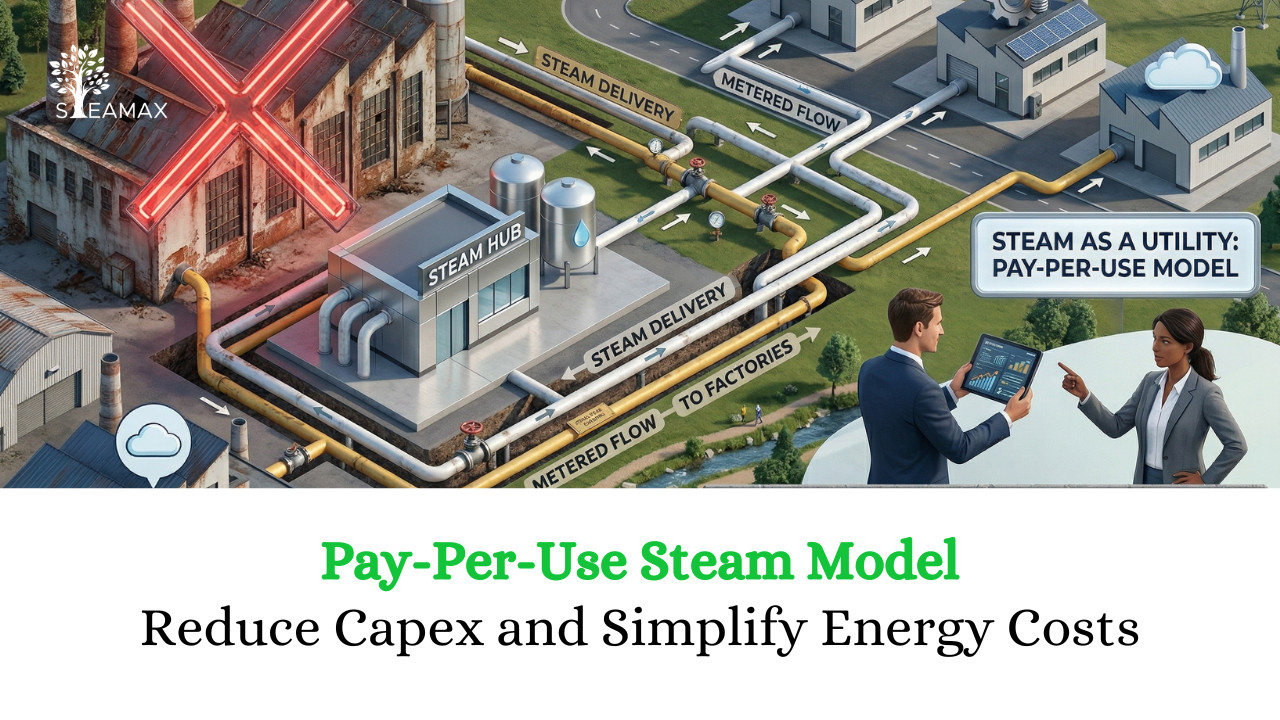
Instead of owning and managing the entire system, companies are outsourcing steam generation and paying based on actual usage.
It is where the pay-per-use steam model comes in.
Steamax’s Solution: Pay-Per-Use Steam Model
Under this model:
- We install and operate the steam system
- The industry pays only for the steam consumed
- Responsibility for performance, maintenance, and compliance.
It converts steam from a capital expense into a predictable operating expense (OPEX).
Key Benefits for CFOs and Decision Makers
1. Zero or Minimal Capex
No need to block capital in boilers and related infrastructure. Funds can be redirected toward core business expansion.
2. Predictable Monthly Costs
Instead of variable fuel and maintenance expenses, companies get a clear, fixed or indexed steam cost.
It improves:
- Budgeting accuracy
- Financial planning
- Cost control
3. No Ownership Burden
Operating a boiler involves:
- Skilled workforce
- Maintenance planning
- Spare management
- Compliance monitoring
With a service model, these responsibilities shift to the provider.
4. Reduced Operational Risk
Experts handle performance risks, fuel management, and system reliability. It reduces:
- Downtime risk
- Efficiency losses
- Unexpected repair costs
5. Built-In Compliance and Efficiency
Modern service providers integrate:
- Efficient combustion systems
- Emission control technologies
- Regular monitoring and optimisation
It ensures the system remains compliant and efficient without additional effort from the plant.
How It Works in Practice
- The provider assesses steam demand and plant conditions
- A customised steam generation system is installed
- Operations and maintenance are fully managed
- The plant is billed based on actual steam consumption
This approach aligns cost directly with usage, making it easier to scale operations.
Is This the Future of Industrial Boiler Steam?
Not every plant will switch immediately, but the direction is clear.
As industries aim to become more efficient and flexible, utility-based models for steam are likely to become more common, just as power purchase agreements in electricity have.
The question is no longer whether this model works.
It is whether holding on to heavy capex still makes financial sense.
Final Thoughts
Moving from a multi-crore investment to a simple monthly steam bill is not just a financial shift—it is a strategic one.
For CFOs, it means:
- Better capital allocation
- Lower risk exposure
- Greater cost predictability
In a competitive environment, freeing up capital while ensuring reliable operations can make a significant difference.
To explore flexible steam solutions and pay-per-use models, visit: orangered-antelope-537718.hostingersite.com