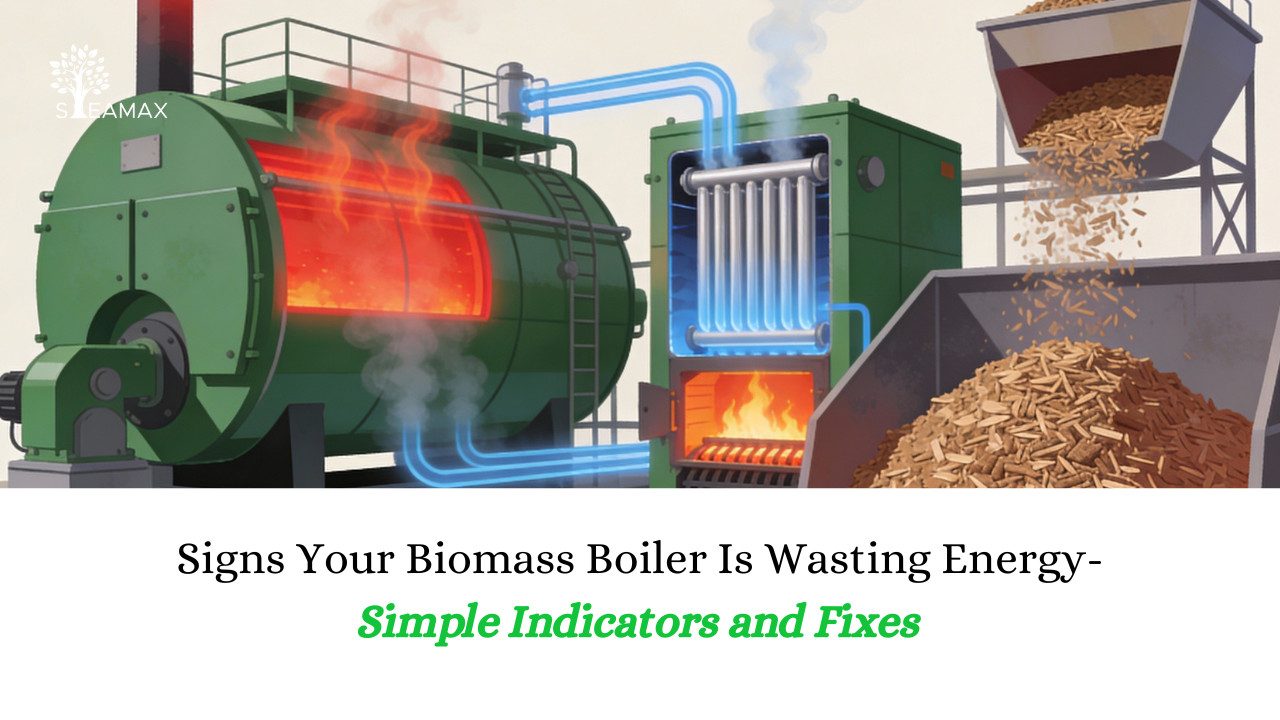
Many plants assume the boiler is fine as long as steam production continues. But biomass boiler can waste significant energy without apparent signs of failure. You won’t always see alarms or breakdowns. Instead, energy loss shows up slowly — in higher fuel bills, more ash, unstable steam pressure, and increased operator intervention. If you’ve been burning more biomass than usual, something in the system isn’t operating as efficiently as it should.
Here are the practical and easy-to-spot indicators that your biomass boiler is quietly wasting energy.
1. Higher Fuel Consumption Without Increased Steam Output
This is the clearest warning sign. If your monthly biomass consumption is rising but steam production remains the same, your boiler is losing efficiency.
Possible causes include:
- Poor fuel quality
- Incorrect air distribution
- Worn-out grate or furnace parts
- Dirty heat-exchange surfaces
A well-tuned boiler should maintain steam output without requiring extra fuel.
2. Frequent Steam Pressure Fluctuations
If your operators constantly adjust air settings or fuel feed to maintain pressure, the boiler is struggling to burn the fuel properly. Consistent steam pressure indicates stable combustion.
3. Clinkers Appearing More Often
Clinkers are solid, hardened masses of ash that form when combustion conditions are not correct. While occasional clinkers are regular, daily or frequent formation is a clear sign of poor combustion.
Clinkers restrict air flow, reduce furnace temperature, and force the boiler to burn more biomass to maintain output.
4. Unburnt Fuel and Excess Ash in the Furnace
If you notice more ash than usual — especially dark or partially burnt particles — your fuel is not burning completely. Incomplete combustion results in direct energy loss and higher operational costs.
This also increases ash-handling effort and reduces boiler availability.
5. High Stack Temperature
A consistently high stack temperature (above 220–250°C) indicates that a large portion of the heat is escaping through the chimney rather than being used to generate steam.
Common reasons include:
- Fouled tubes
- Poor heat transfer
- Imbalanced draft
Reducing stack temperature by even 30–40°C can significantly improve efficiency.
6. Soot Buildup on Tubes and Heat Transfer Surfaces
Soot acts like insulation. Even a thin layer can reduce heat transfer efficiency and force the boiler to consume more biomass to maintain steam load.
Regular cleaning and inspection can recover a meaningful amount of lost efficiency.
7. Weak or Unstable Flames
If the flame inside the furnace looks weak, uneven, or unstable, your biomass is not burning efficiently. This usually happens due to incorrect air settings, inconsistent feeding, or variation in fuel quality.
A healthy biomass flame should be stable and evenly spread across the grate.
How Steamax Helps Improve Boiler Efficiency
Steamax supports plants with practical, on-ground solutions such as:
- Combustion and performance optimisation
- Automated fuel feeding systems for consistent combustion
- Bag filters and draft corrections for smooth flue gas flow
- Fuel quality testing (moisture, ash, calorific value, and more)
- Clinker reduction strategies
- Efficiency audits and flue gas analysis
Don’t Allow Small Inefficiencies to Become Expensive
Biomass boilers rarely lose efficiency overnight. Instead, minor issues slowly accumulate until your plant begins paying more for the same amount of steam.
If you’ve noticed any of these signs, it’s time to take a closer look. The good news?
These losses can be corrected through proper tuning, routine maintenance, and appropriate fuel-handling practices. To schedule a quick boiler performance check or explore optimization solutions, visit : orangered-antelope-537718.hostingersite.com