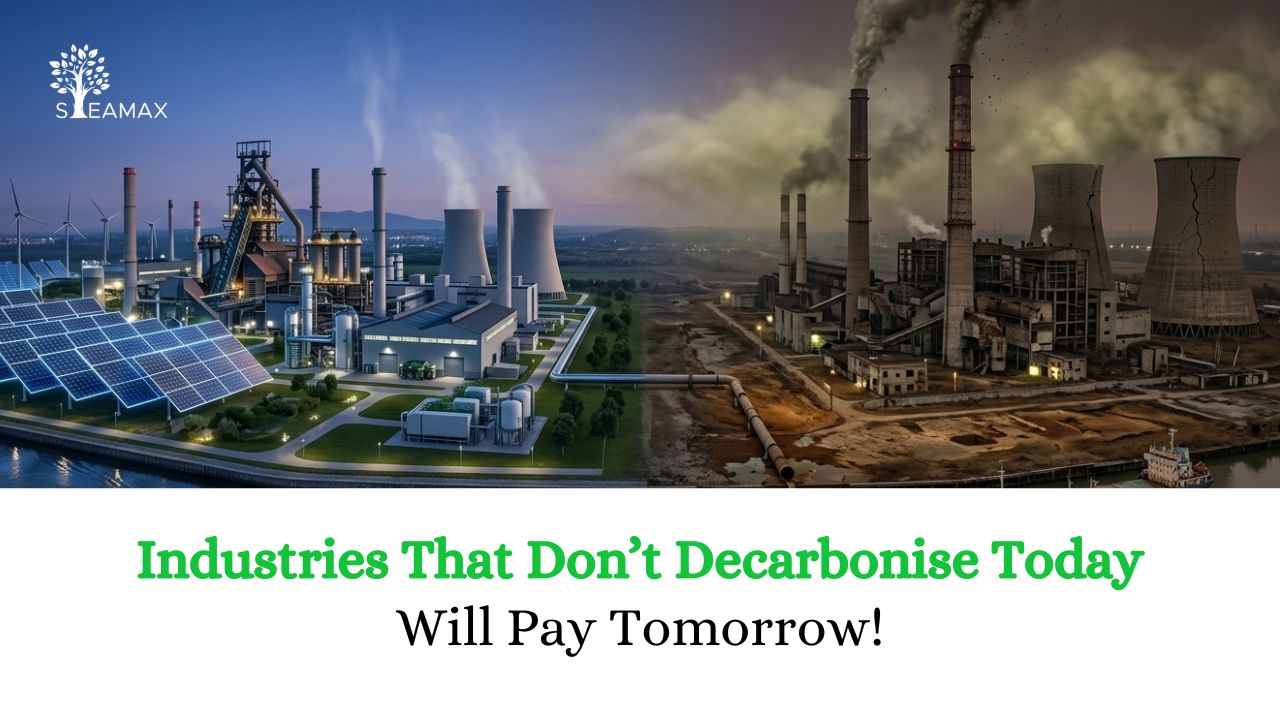
For years, decarbonization was seen as a long-term environmental goal—important, but not urgent. That thinking is changing fast. Today, decarbonization is directly linked to cost, market access, and business survival. Global markets are tightening regulations, and companies that delay action may soon find themselves paying more—not just in fuel costs, but in taxes, penalties, and lost opportunities. The real question is no longer “Should we decarbonize?” It is “What happens if we don’t?”
The Rising Risk of Carbon Taxes
One of the biggest shifts happening globally is the introduction of carbon pricing mechanisms. Countries are increasingly implementing systems where industries must pay for their carbon emissions.
These include:
- Carbon taxes on fuel usage
- Emission trading systems
- Border carbon adjustments on imported goods
For export-oriented industries, this creates a serious cost risk.
Products manufactured using carbon-intensive energy may become more expensive in international markets, reducing competitiveness.
Export Restrictions Are Becoming Real
Global buyers and regulators are no longer focusing only on product quality. They are also evaluating how products are made. Many international markets now expect:
- ESG (Environmental, Social, Governance) compliance
- Transparent emission reporting
- Sustainable manufacturing practices
Industries that fail to meet these expectations may face:
- Limited access to export markets
- Rejection from global supply chains
- Loss of long-term contracts
For export-driven units, this is not a future risk—it is already starting to happen.

Decarbonization as a Branding Advantage
Sustainability is becoming a market-facing advantage. Global buyers are actively looking for suppliers who can demonstrate:
- Lower carbon footprint
- Cleaner production processes
- Commitment to sustainability goals
Industries that adopt cleaner energy solutions early can position themselves as:
- Preferred suppliers
- ESG-compliant partners
- Future-ready manufacturers
This is where decarbonization moves from being a cost to becoming a business opportunity.
What Decarbonize Looks Like in Practice?
Decarbonization does not always mean complete system replacement. In many cases, it starts with practical steps such as:
- Transitioning to lower-carbon or renewable fuels
- Improving combustion efficiency
- Retrofitting existing boilers and systems
- Reducing energy wastage
These steps gradually reduce emissions while maintaining operational stability
Final Thoughts
Industries that delay decarbonization may not feel the impact immediately. But over time, the cost of inaction will show up in multiple ways—higher expenses, reduced market access, and increased regulatory pressure.
On the other hand, those who act early will be better prepared, more competitive, and more resilient. Because in the coming years, decarbonization will not be optional. It will be expected.
To explore practical pathways toward cleaner and more efficient industrial energy systems, visit: orangered-antelope-537718.hostingersite.com