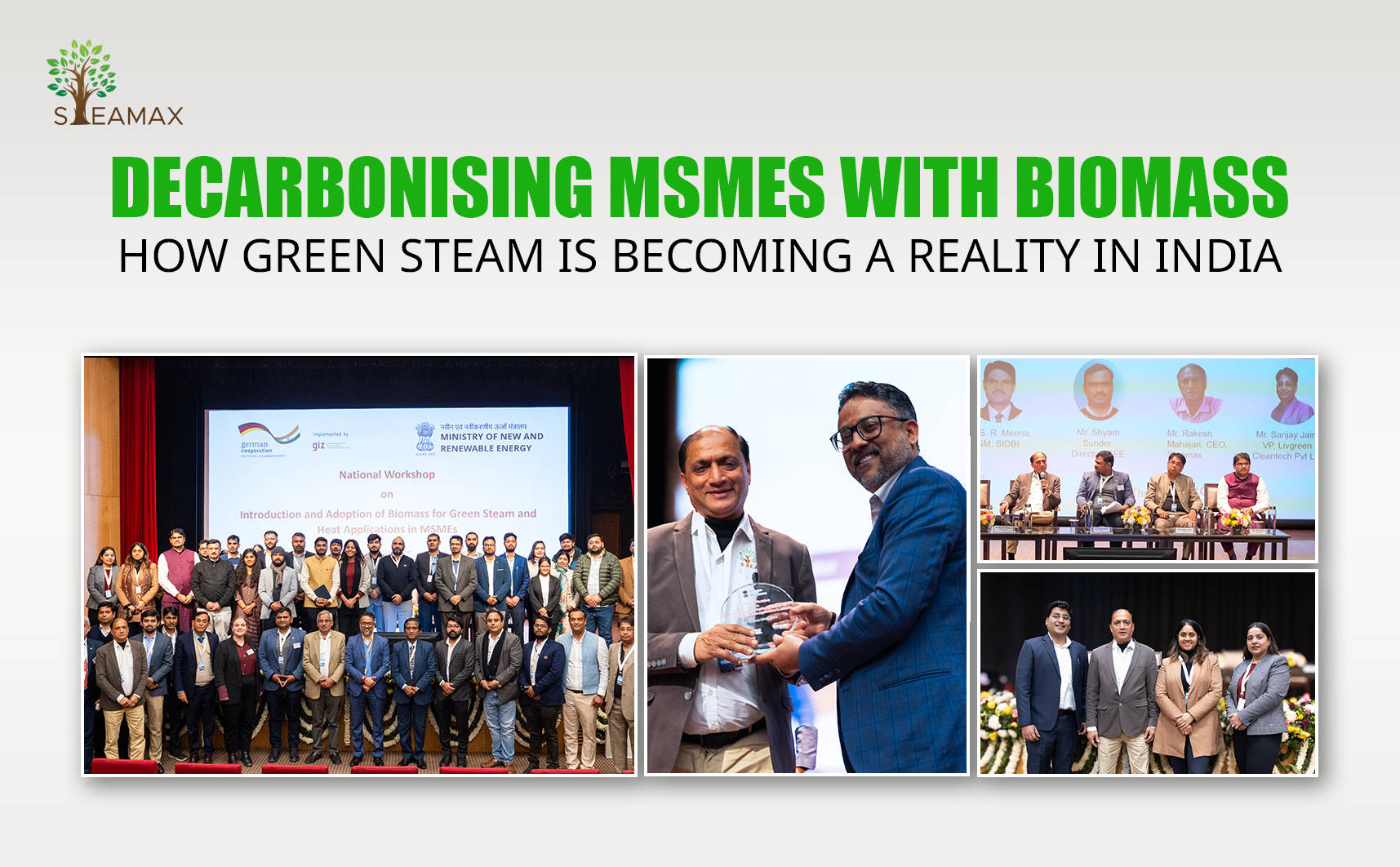
India’s push toward industrial decarbonization is no longer limited to large corporations. The focus is now firmly on Micro, Small, and Medium Enterprises (MSMEs) — the backbone of Indian manufacturing and a major consumer of industrial steam and heat. This shift gained renewed momentum at the Workshop on “Introduction and Adoption of Biomass for Green Steam and Heat Applications in MSMEs”, held on 16 January 2026 at MNRE, New Delhi, in collaboration with GIZ. The event reinforced a clear message: biomass-based green steam is no longer a pilot idea — it is a scalable, deployable solution for Indian MSMEs today.
The Workshop also saw the release of the report “Decarbonizing MSMEs: Use of Biomass for Green Steam and Heat Application”, outlining practical pathways to reduce fossil fuel dependence in industrial process heating.
Why MSMEs Are at the Centre of India’s Green Heat Transition
MSMEs account for nearly 25% of India’s total industrial energy consumption. Across sectors such as textiles, food processing, chemicals, foundries, metallurgy, and engineering goods, steam and heat form the backbone of daily operations.
Yet many MSMEs still rely on coal, furnace oil, and other high-carbon fuels. This dependence is not due to lack of intent, but practical challenges such as:
- Existing legacy boiler infrastructure
- Tight cost structures
- Fear of production disruption
- Limited access to proven alternatives
With fuel price volatility, stricter environmental regulations, and growing pressure from global supply chains, MSMEs are now actively seeking cleaner, reliable, and cost-stable energy options. Biomass fits squarely into this requirement.
Biomass and Green Steam: A Practical Alternative to Fossil Fuels
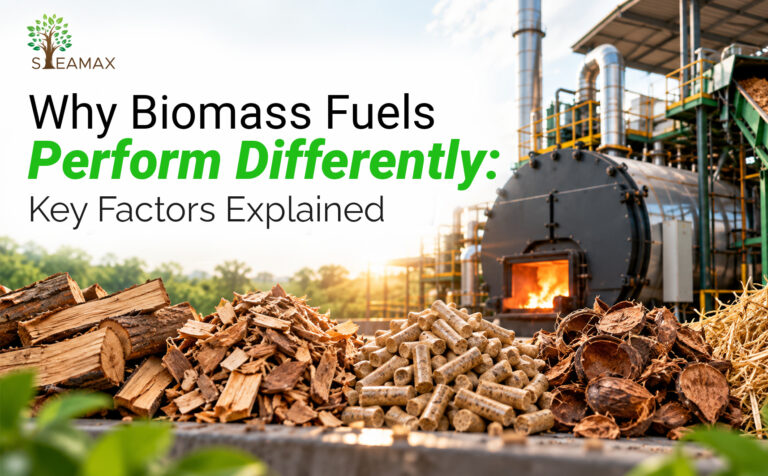
Biomass has emerged as one of the most viable renewable options for industrial steam and heat. When sourced and used correctly, it offers a near-carbon-neutral replacement for fossil fuels — in some cases, allowing 100% substitution.
Beyond emissions reduction, it delivers tangible operational benefits:
- Lower and more predictable fuel costs
- Reduced exposure to global fuel price fluctuations
- Utilisation of agricultural and forestry residues
- Contribution to cleaner air and reduced stubble burning
Significantly, the conversation around biomass is evolving. It is no longer limited to just pellets and briquettes. Industry discussions now recognise that biomass is a category of engineered fuels and systems, designed to suit different boiler technologies and operating conditions.
Turning Policy into Practice: The Industry Perspective
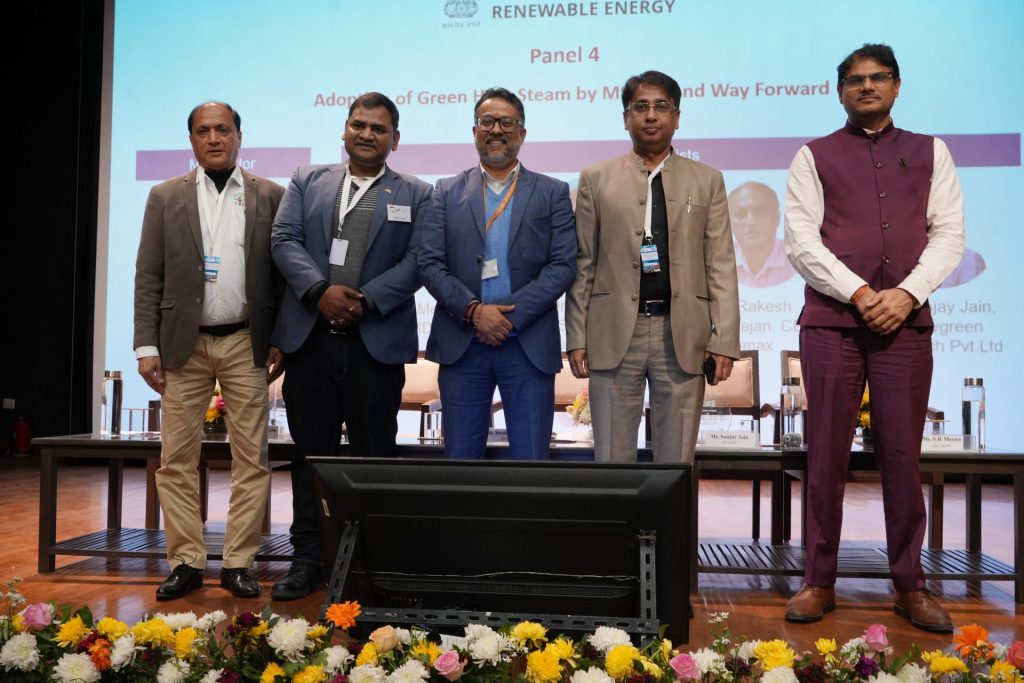
During the Workshop, Mr Rakesh Mahajan, Managing Director, Steamax, who participated in the panel discussion for the topic Adoption of Green Heat & Steam by MSMEs and Way Forward emphasize that decarbonization will succeed only if solutions work reliably, not just on policy slides.
For MSMEs, technology adoption must be:
- Fast to implement
- Economically sensible
- Low risk to operations
- Scalable over time
Retrofitting Existing Boilers: The Most Practical Route Forward
One of the strongest takeaways from the discussion was the importance of retrofitting existing fossil-fuel-fired boilers.
Instead of asking MSMEs to replace entire boiler systems, the focus is on converting coal- or oil-fired boilers to biomass operation. This approach allows plants to:
- Avoid high capital expenditure
- Continue using existing infrastructure
- Minimise production downtime
- Achieve immediate fuel cost saving and co2 reduction.
Rethinking Biomass Fuel: Beyond Pellets and Briquettes
Another important insight from the Workshop was the need to move beyond a narrow definition of biomass fuel.
While pellets and briquettes remain essential, they are not the only solution. Biomass can be engineered in different formats to improve combustion stability, fuel flexibility, and system compatibility.
An example highlighted was Astillas, a patented biomass fuel designed to address common challenges faced by MSMEs, such as:
- Inconsistent fuel quality
- Supply variability
- Combustion instability
Astillas is engineered to offer:
- Consistent calorific value
- Stable combustion behavior
- Compatibility with a broader range of boilers
- Improved confidence for continuous operations
Building a Scalable Biomass Ecosystem
The Workshop also highlighted the need for a broader ecosystem to support biomass adoption at scale, involving:
- Farmers and FPOs
- Biomass aggregators and digital marketplaces
- Financial institutions and green financing mechanisms
- Technology providers and R&D institutions
Decarbonization is not a single-technology challenge. It requires coordination across the value chain — from fuel sourcing to system performance.
Final Takeaway
Decarbonising MSMEs is not about forcing change; it is about enabling it. Biomass-based green steam offers a rare combination of environmental responsibility, economic sense, and operational practicality. By focusing on retrofitting, fuel innovation, and integrated system design, MSMEs can move toward cleaner energy while strengthening their long-term resilience.