As emission norms become stricter, industries are paying much closer attention to their Air Pollution Control Devices (APCDs). For biomass-fired boilers, the challenge is not simply controlling dust. The system must handle varying fuel quality, fluctuating boiler loads, fine particulate matter, and long operating hours while consistently meeting regulatory limits. Recently, industry discussions have increasingly focused on two technologies: Pulse Jet Bag Filters and Tubular Wet ESPs.
While both technologies are used for particulate control, they operate very differently and have varying levels of complexity, operating costs, and long-term reliability.
The real question for plant operators is not which technology sounds more advanced, but which one delivers compliance and operational performance over the long run.
Why Biomass Boilers Create Emission Challenges
Biomass fuels generate significant amounts of fly ash and fine particulate matter.
These particles are often lightweight and difficult to capture efficiently.
At the same time, biomass combustion can introduce additional challenges such as:
- Variable moisture content
- Alkali-rich ash
- Fluctuating combustion conditions
- Changing dust loading
It makes APCD selection a critical engineering decision rather than a simple equipment purchase.
What CAQM Direction No. 98 Means for Industries
The Commission for Air Quality Management (CAQM) has introduced stricter particulate emission requirements for industries operating in NCR.
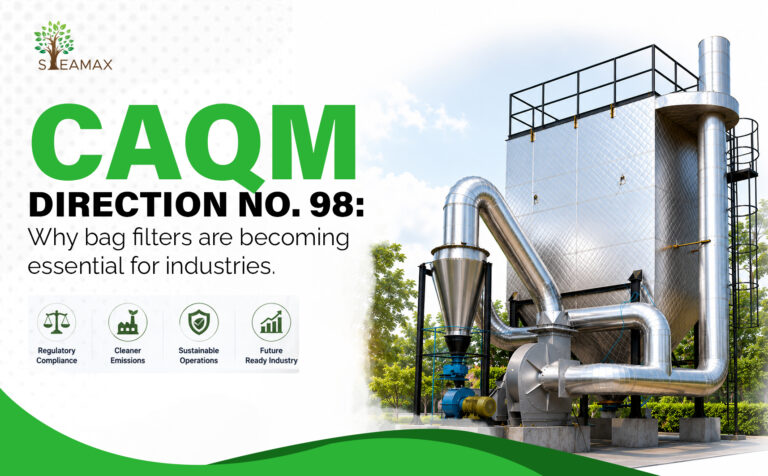
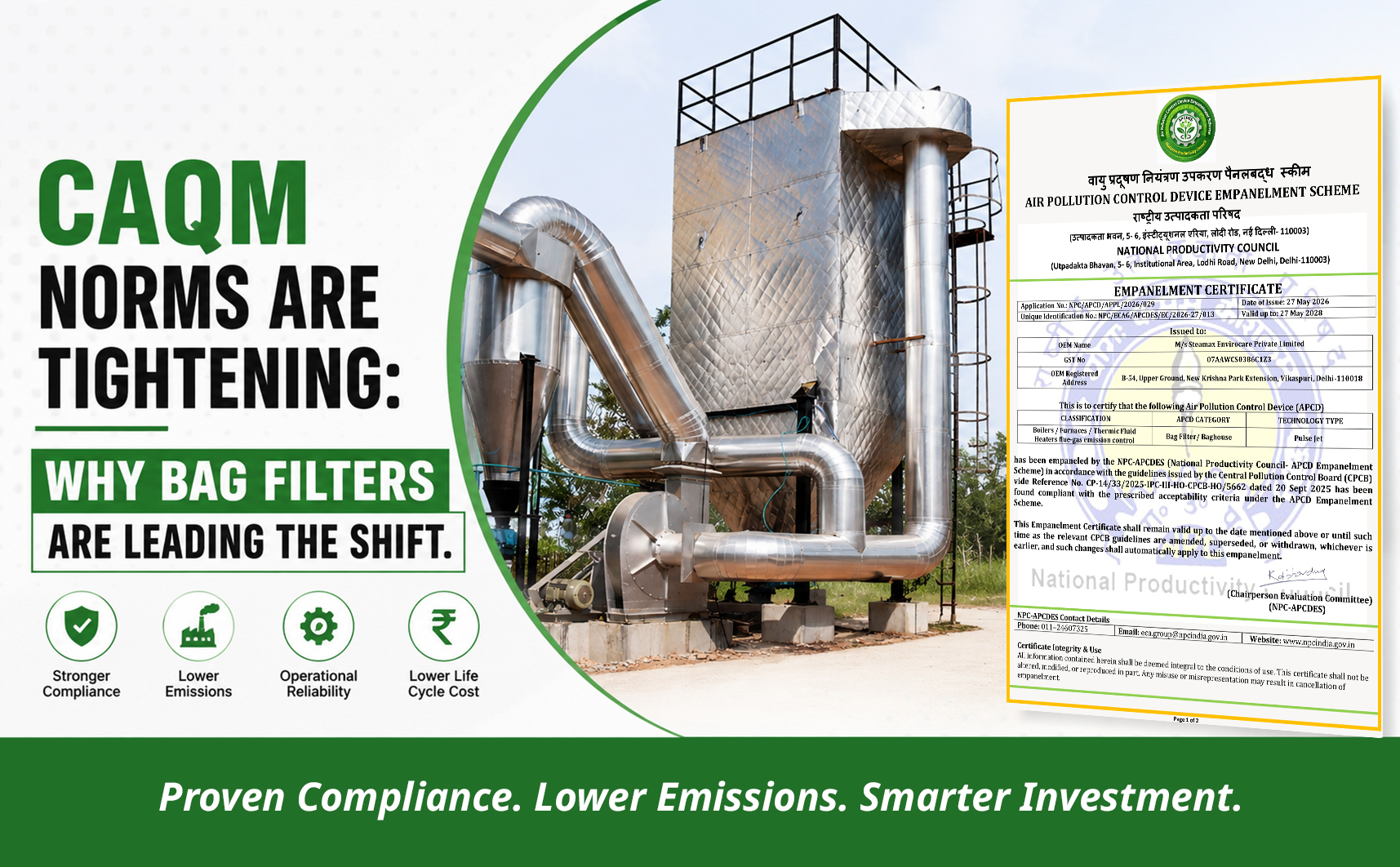
The direction focuses on achieving particulate matter emissions below 50 mg/Nm³ and highlights fabric filters as one of the most suitable technologies for controlling emissions from boilers and furnaces.
This is significant because it reflects recommendations from independent technical evaluations rather than equipment vendors alone.
For industries planning long-term compliance strategies, this emphasizes the selection of proven particulate control technologies.
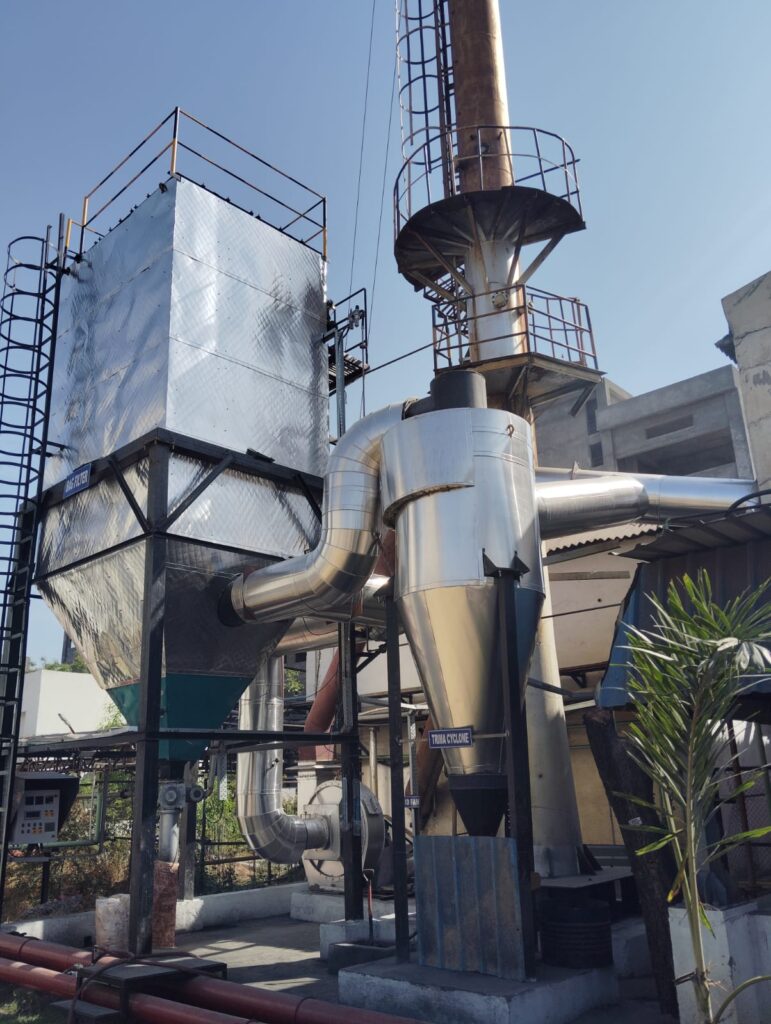
Why Pulse Jet Bag Filters Continue to Lead Biomass Applications
Bag filters have become one of the most widely adopted APCDs for biomass-fired boilers for a simple reason: they consistently deliver high particulate removal efficiency.
A properly designed Pulse Jet Bag Filter equipped with PTFE membrane bags can achieve particulate removal efficiencies of about 99% while effectively capturing PM10 and PM2.5 particles.
For industrial operators, this summarises into:
- Reliable compliance performance
- Better fine dust collection
- Stable operation across varying boiler loads
- Lower risk of emission exceedances
Most importantly, bag filters can consistently achieve emission levels below 50 mg/Nm³ when properly engineered.
The Biggest Advantage: A Simpler System
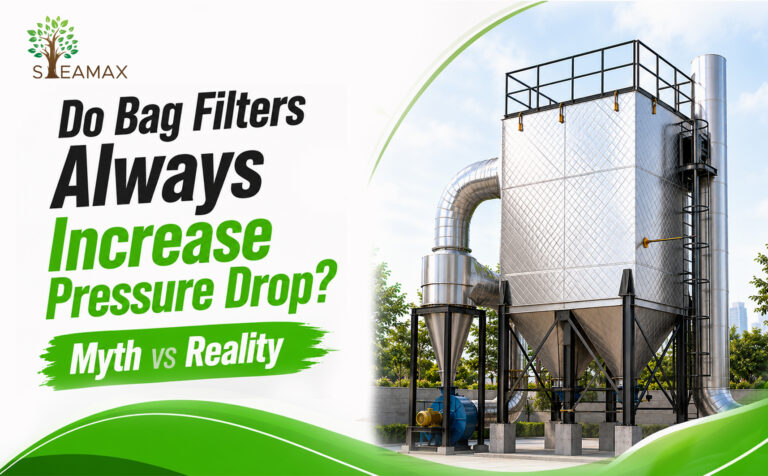
One reason many industries prefer bag filters is operational simplicity. A bag filter is fundamentally a dry collection system.
There is no need for:
- Water circulation systems
- Spray nozzles
- Sludge handling systems
- Continuous water treatment
- High-voltage collection equipment
Where Wet ESP Systems Face Operational Challenges
Wet ESP technology can provide particulate control under specific operating conditions. However, biomass applications introduce several practical challenges that industries should evaluate carefully.
One of the most common concerns is nozzle scaling and choking.
Biomass ash contains compounds such as:
- Potassium
- Sodium
- Calcium
These materials can accumulate on spray nozzles and internal surfaces, gradually reducing washing efficiency and collection performance. Over time, this can increase maintenance requirements and affect system reliability.
Other operational challenges may include:
- Sludge generation and disposal
- Corrosion management
- High-voltage electrical maintenance
- Pump and circulation system upkeep
- Multiple subsystem dependencies
Unlike dry filtration systems, Wet ESP performance depends on several systems working correctly at the same time.
Looking Beyond Equipment Cost
When comparing APCDs, industries often focus on initial cost or simplified operating cost comparisons.
However, the more important metric is life-cycle cost.
For example, a Wet ESP may require ongoing expenses related to:
- Water circulation
- Pump operation
- Sludge handling
- Nozzle cleaning
- Scaling removal
- Corrosion management
These costs are sometimes overlooked during initial evaluations.
Bag filters, on the other hand, eliminate many of these cost categories because they operate as dry systems without water-based collection processes.
It is one reason many biomass boiler operators find bag filters attractive from both maintenance and cost-management perspectives.
How Steamax Designs Bag Filters for Long-Term Performance
At Steamax, bag filters are not treated as standard products. Each system is engineered around actual operating conditions.
Key design considerations include:
- Air-to-Cloth Ratio Optimisation- Proper sizing improves filtration efficiency and extends bag life.
- Flue Gas Analysis- Gas temperature and flow characteristics influence system design and media selection.
- Pressure Drop Management- Optimized pressure drop reduces fan power consumption and operating costs.
- Pulse Jet Cleaning Systems- Automated cleaning maintains filtration performance without interrupting operation.
- Efficient Hopper Design- Reliable ash evacuation helps prevent dust accumulation and operational issues.
- ID Fan Integration- Balanced airflow ensures stable APCD performance across varying loads.
Bag Filters Are Becoming a Strategic Investment
The discussion around APCDs is changing.
Industries are no longer evaluating emission control equipment solely to satisfy current regulations.
They are investing in systems that offer:
- Compliance confidence
- Operational reliability
- Lower maintenance complexity
- Future scalability
- Long-term cost control
Final Thoughts
Choosing an APCD should never be based on marketing claims alone. It should be based on engineering, operational reliability, compliance performance, and total life-cycle value.
For biomass-fired boilers, Pulse Jet Bag Filters continue to demonstrate strong particulate-control performance, operational simplicity, and proven compliance. They are widely recognized as among the most suitable technologies for achieving particulate emission limits below 50 mg/Nm³.
Ready to upgrade your emission control system? Contact Steamax today for a detailed APCD assessment.
Connect with Steamax: www.steamaxindia.com