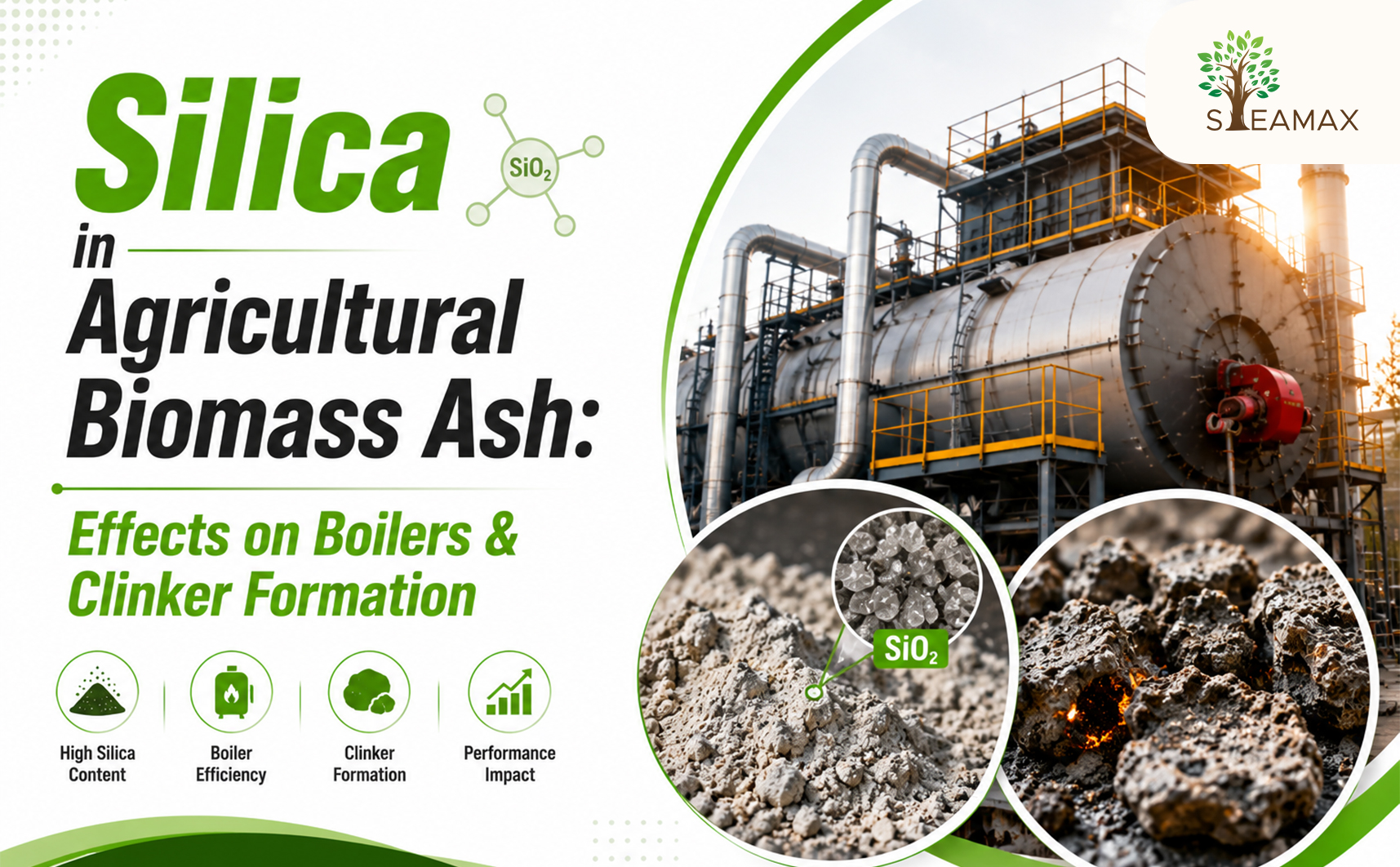
Agricultural biomass can look like a simple fuel, but its ash chemistry can be surprisingly complex. Materials such as rice husk, straw, bagasse, and other crop residues contain different amounts of minerals. Among them, silica can strongly influence how ash behaves inside a biomass boiler.
When silica interacts with other minerals during combustion, it can affect ash melting, deposits, clinker formation, and ultimately boiler performance. That’s why understanding silica in biomass ash isn’t just a chemistry exercise. It can help operators make better fuel and combustion decisions.
What Is Silica and Where Does It Come From?
Silica is primarily silicon dioxide (SiO₂), a naturally occurring mineral found in soil and plants.
Agricultural residues can contain significant amounts of silica, although the level varies considerably depending on:
- Type of biomass
- Soil conditions
- Cultivation practices
- Plant part being used
- Contamination during harvesting and storage
Rice husk, for example, is well known for its relatively high silica content.
This means that two biomass fuels can have very different ash characteristics even when their calorific values are similar.
Why Silica Matters in Biomass Ash
During combustion, it can interact with minerals such as potassium, sodium, calcium, and magnesium. These reactions can influence the temperature at which ash begins to soften, melt, or become sticky.
This matters because sticky ash can attach itself to:
- Grates
- Furnace surfaces
- Heat-transfer surfaces
- Fluidised-bed material
The Connection Between Silica and Clinker Formation
One of the biggest concerns associated with ash chemistry is clinker formation.
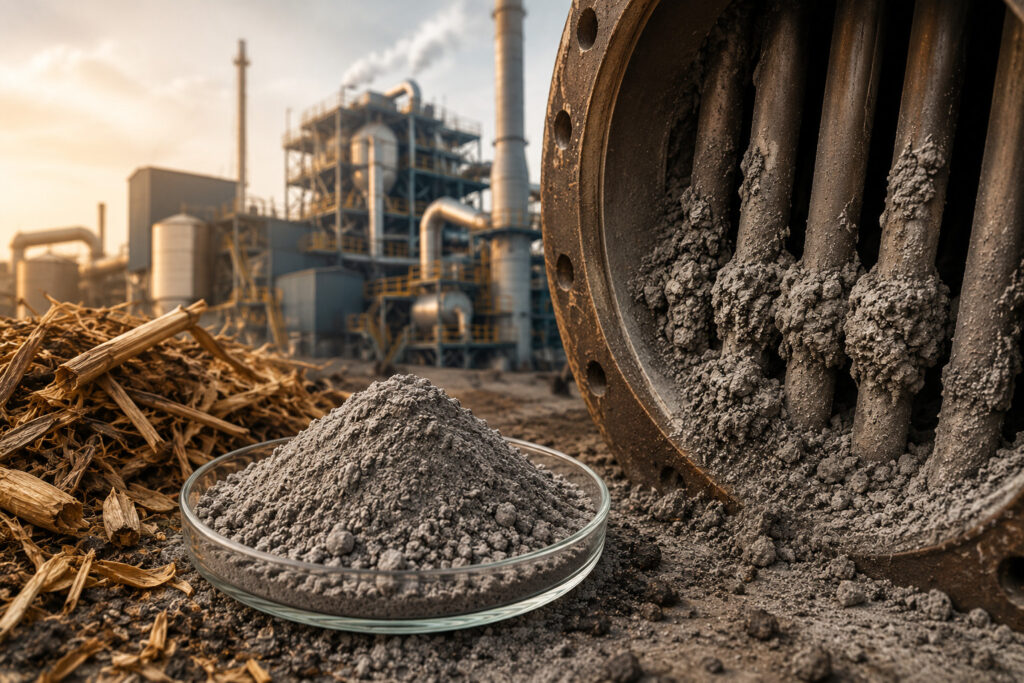
Clinkers are hard, fused masses created when ash particles soften and stick together at high temperatures.
In some biomass fuels, silica can combine with alkali metals and other minerals to form compounds that melt at lower temperatures than the original ash components.
Once the ash becomes sticky, particles can join together and eventually form larger, harder deposits.
That’s why total ash content alone isn’t enough. The ash’s chemical composition also matters.
Silica, Potassium and the Ash Chemistry Equation
This is where things get interesting.
Agricultural biomass can contain both silica and alkali metals such as potassium and sodium.
Under high-temperature combustion conditions, these minerals can interact and form compounds that influence ash melting behavior. This is why two fuels with similar ash percentages can behave very differently inside the same boiler.
For operators, the important question isn’t simply:
“How much ash does this fuel contain?”
It should be:
“What is this ash made of, and how will it behave at furnace temperature?”
How Silica Can Affect Boiler Performance
Changes in ash behaviour can eventually show up as practical operating problems.
For example, excessive deposits may cause:
- Restricted airflow
- Reduced heat transfer
- Increased cleaning frequency
- Higher maintenance requirements
- Unstable combustion
- Increased risk of clinker-related shutdowns
How Can Industries Manage Silica-Related Ash Problems?
The answer isn’t necessarily to avoid every high-silica biomass fuel.
Instead, industries should understand the fuel before using it and operate the boiler accordingly.
Test the Fuel Before Procurement
A proper biomass fuel analysis can provide information about:
- Ash content
- Silica content
- Calorific value
- Moisture
- Ash fusion characteristics
Control Furnace Temperature
Operating at unnecessarily high temperatures can increase the risk of ash melting and deposit formation. Proper temperature control is therefore an important part of clinker prevention.
Maintain Consistent Fuel Quality
Frequent changes in fuel chemistry can make combustion difficult to control. Consistent fuel quality makes it easier to maintain stable operating conditions.
Avoid Soil and Sand Contamination
Agricultural biomass can pick up soil and sand during harvesting, transportation, and storage.
These materials add minerals to the fuel and can further change ash behaviour. Good storage and handling practices can therefore make a real difference.
Why Ash Testing Should Be Part of Fuel Selection
A biomass procurement decision based only on price per tonne can create problems later.
A cheaper fuel may produce more ash, create more deposits, or require additional cleaning and maintenance. Assessing ash chemistry before procurement helps industries evaluate the fuel’s true operating cost, not just its purchase price.
This is particularly important for biomass fuels with naturally high mineral content.
Final Thoughts
Silica is only one part of agricultural biomass ash chemistry, but it can significantly influence how ash behaves inside a boiler.
Its interaction with potassium, sodium, calcium, and other minerals can affect ash melting behaviour and contribute to deposit and clinker formation under unsuitable combustion conditions.
Not sure how your biomass fuel’s ash chemistry could affect boiler performance?
Steamax helps industries evaluate biomass fuels, optimise combustion, and develop practical solutions for clinker and ash-related challenges. For more information visit www.steamaxindia.com