
Summary
- Cashew shells, Cashew Nut Shell Liquid (CNSL), and Cashew Deoiled Cake (DOC) contain valuable energy but can present challenges involving smoke, handling, and combustion performance.
- This blog explains these challenges and introduces Steamax Astillas, a biomass fuel with a specified calorific value above 4,200 kcal/kg, ash content below 2%, and moisture content below 10%.
- It also covers fuel suitability, potential cost benefits, environmental considerations, and the importance of checking fuel specifications before switching.
Cashew processing produces more than edible nuts. It also generates shells and byproducts for industrial applications, including energy generation. However, burning untreated cashew materials can create challenges with smoke, fuel handling, and combustion performance.
Steamax addresses this opportunity with Astillas, a biomass fuel made using selected materials, including cashew byproducts. Its specified calorific value, moisture content, and ash content make it an option for industries evaluating alternatives to conventional fuels.
What Is the Potential of Cashew Shells?
Cashew shells are a significant part of the raw cashew fruit and contain valuable energy. During processing, two important byproducts may be obtained: Cashew Nut Shell Liquid (CNSL) and Cashew Deoiled Cake (DOC).
- Cashew Nutshell Liquid (CNSL): A dark, oily liquid extracted from cashew shells. It has industrial applications in resins, coatings, and friction materials.
- Cashew Deoiled Cake (DOC): The solid residue remaining after much of the CNSL has been extracted from the shells.
The calorific value of cashew-derived materials depends on their composition, processing method, moisture, and test basis. The figures in the article—5,600 kcal/kg for shells, 8,000 kcal/kg for CNSL, and 4,500 kcal/kg for DOC.
Challenges of Using Cashew Byproducts as Fuel
Despite their energy potential, untreated cashew materials may not perform consistently in industrial combustion systems.
1. Smoke and combustion performance: Residual oil and other combustible compounds can affect smoke formation. Actual emissions depend on fuel composition, combustion temperature, air supply, and burner design.
2. Chemical and handling risks: CNSL can irritate the skin. Workers should follow the applicable safety data sheet and use suitable protective equipment when handling CNSL or materials contaminated with it.
3. Furnace and refractory compatibility: Fuel composition and combustion conditions can affect deposits, corrosion, and refractory life. Compatibility should be assessed for the specific fuel and equipment rather than assumed from the fuel name alone.
4. Inconsistent fuel quality: Variations in moisture, particle size, residual oil, and ash content can affect feeding, combustion stability, and useful heat output.
Watch this video about cashew shell handling.
Steamax Astillas: A Biomass Fuel Alternative
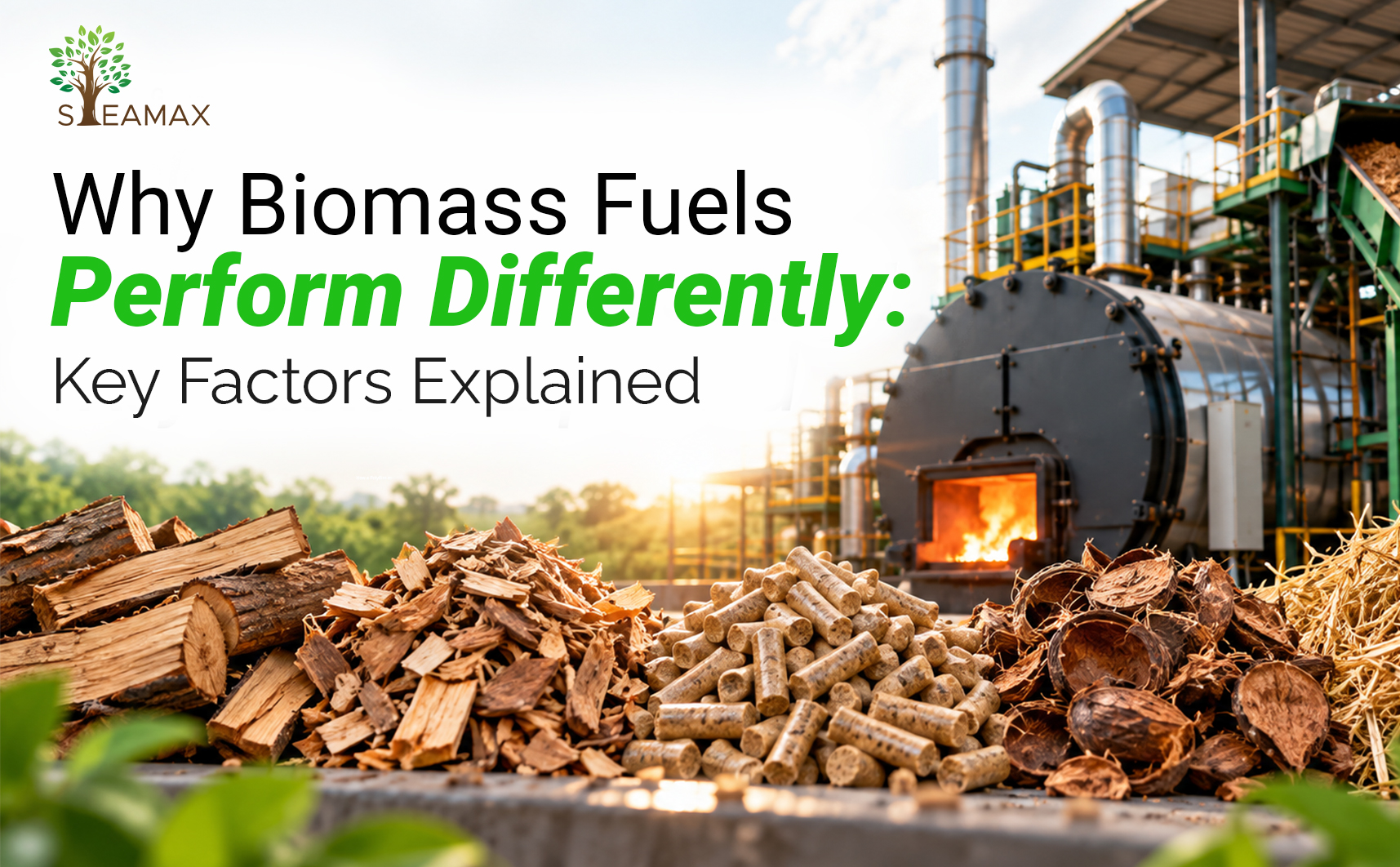
Steamax developed Astillas as a biomass fuel blend using selected materials, which may include cashew shells, de-oiled cashew cake, sawdust, groundnut shells, and seasoned wood chips.
According to the product specifications provided by Steamax, Astillas offers:
- Calorific value: More than 4,200 kcal/kg.
- Ash content: Less than 2%.
- Moisture content: Less than 10%.
These specifications help industries assess whether Astillas suits their heating equipment. Actual performance and emissions will depend on the delivered fuel, combustion system, operating conditions, and verified test results.
How Astillas Can Help Industrial Users
- Controlled fuel specifications: A defined calorific value, moisture level, and ash limit make it easier to evaluate the fuel against process requirements. Buyers should request current laboratory reports for the supplied batch.
- Potentially easier fuel handling: Consistent particle size and suitable packaging can simplify storage and feeding. Steamax should confirm the available packaging and handling arrangements for each order.
- Fuel-cost evaluation: A biomass fuel may reduce operating costs, but savings aren’t automatic. Before switching, compare delivered fuel prices, useful heat output, consumption, ash disposal, and equipment efficiency.
- Environmental considerations: Biomass can replace coal, petcoke, diesel, or wood, but it isn’t automatically emissions-free. A fair comparison should consider direct combustion emissions, fuel properties, operating conditions, and—where relevant—the fuel’s lifecycle emissions.
Frequently Asked Questions
DOC is the solid residue left after extracting much of the oil from cashew shells. CNSL is the oily liquid extracted during processing and has several industrial uses.
Steamax specifies a calorific value of more than 4,200 kcal/kg.
No fuel is described as smokeless. Smoke emissions depend on fuel composition, burner design, combustion conditions, and maintenance.
It may, depending on the existing fuel, local prices, equipment efficiency, and useful heat delivered. A site-specific comparison is the best way to estimate savings.
Turn Biomass Byproducts into a Practical Fuel Option
Cashew shells and their byproducts have potential beyond conventional processing uses, but their suitability as fuel depends on composition, handling, and combustion performance. Steamax Astillas offers industries a biomass fuel option with stated specifications of over 4,200 kcal/kg calorific value, less than 2% ash, and less than 10% moisture.
To discuss fuel suitability, specifications, or supply, contact Steamax at +91 93151 24803 or visit the Steamax contact page.