
Summary:
- This article explains the key characteristics of a good biomass fuel, practical steps for selecting one, and the specifications that make Astillas worth considering for suitable industrial applications.
Transitioning to greener energy involves more than simply replacing fossil fuels. The real challenge is choosing a biomass fuel that delivers reliable heat, works with your equipment, and makes economic sense.
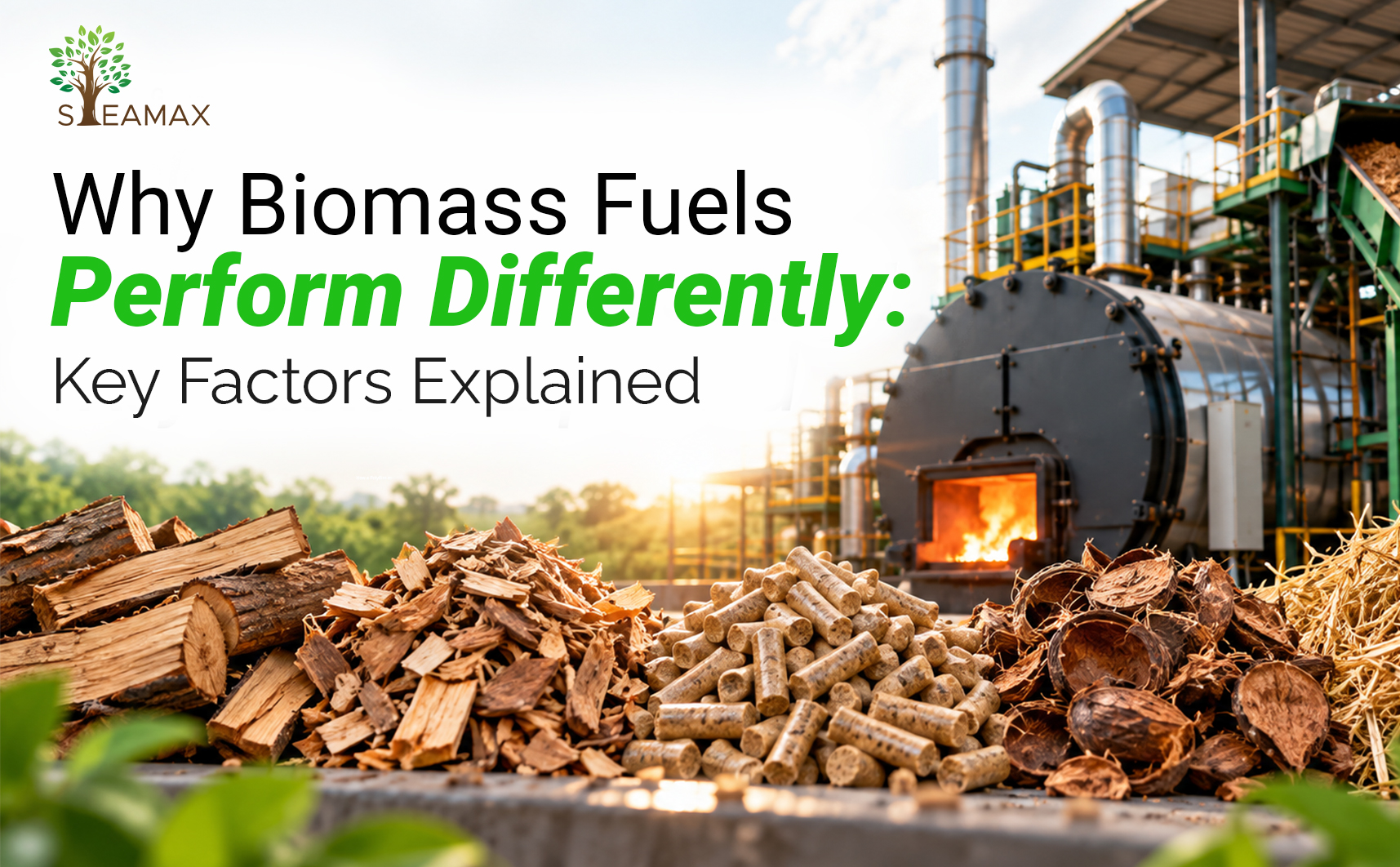
With options such as wood chips, pellets, briquettes, sawdust, and agricultural residues available, how do you decide which one is right for your operation?
The answer lies in understanding a few important fuel characteristics. Calorific value, moisture, ash content, bulk density, availability, and equipment compatibility all influence performance. Let’s look at what makes a good biomass fuel and how to select one for your industrial heating system.
What Makes an Ideal Biomass Fuel?
No single biomass fuel is perfect for every application. The right choice depends on your heating requirements, fuel-handling system, boiler or furnace design, and local fuel availability.
However, several characteristics can help you assess fuel quality.
1. High Calorific Value
Calorific value measures how much heat a fuel releases during combustion. A higher value generally means more energy can be obtained from each kilogram of fuel.
For industrial users, this can influence fuel consumption, storage requirements, and operating costs. Always compare calorific values on the same basis, such as gross calorific value (GCV) or net calorific value (NCV) and check the samples’ moisture content.
2. Low Moisture Content
Moisture content plays an important role in biomass combustion. When fuel contains excess water, part of the available heat is used to evaporate that moisture instead of producing useful heat.
High-moisture fuel may also create handling and combustion challenges. Choosing properly dried biomass can help improve combustion stability and thermal performance.
3. Low Ash Content
Ash is the residue left after biomass burns. Fuels with lower ash content generally produce less residue, reducing ash-handling requirements and cleaning frequency.
However, ash quantity isn’t the only consideration. Its chemical composition and melting behaviour can affect slagging, fouling, and deposits inside combustion equipment.
4. Suitable Bulk Density
Bulk density describes the mass of fuel contained in a given volume. It affects transportation, storage capacity, and the amount of fuel an automatic feeding system must handle.
Low bulk density isn’t automatically better. A denser fuel can be easier to transport and store, while a less dense fuel may require more storage space. The best choice depends on the equipment and supply chain.
5. Reliable and Sustainable Sourcing
A good biomass fuel should be available consistently and come from responsibly managed sources.
Before selecting a supplier, check:
- Whether the feedstock is locally available.
- Whether quality remains consistent between batches.
- Whether the supply can meet your daily consumption.
- Whether sourcing and transportation are environmentally responsible.
A Practical Guide to Selecting the Right Biomass Fuel
Once you understand the basic properties, use these steps to narrow down your options.
- Understand your application: Identify the required steam or heat output, operating hours, and process temperature.
- Check fuel specifications: Compare calorific value, moisture, ash, bulk density, and particle size. Ask suppliers for recent laboratory test reports.
- Compare available fuel types: Assess wood chips, pellets, briquettes, sawdust, and agricultural residues based on local availability, delivered cost, and quality.
- Check equipment compatibility: Confirm the fuel suits your boiler, furnace, burner, grate, and feeding arrangement. A fuel that performs well in one system may not work efficiently in another.
- Evaluate the complete cost: Don’t compare fuels only by price per kilogram. Consider useful heat delivered, transportation, storage, handling, ash disposal, and equipment requirements.
- Review environmental performance: Biomass combustion still produces carbon dioxide and can release particulate matter and other pollutants. Its overall environmental impact depends on feedstock sourcing, processing, transport, combustion quality, and emissions-control equipment.
Steamax Astillas: An Alternative Biomass Fuel
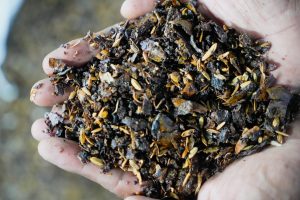
Astillas is a biomass fuel developed by Steamax for suitable industrial heating applications. It is made using biomass materials such as wood, de-oiled cashew cake (DOC), and sawdust, along with other selected feedstocks.
Its specifications make it an option worth evaluating for industrial users seeking a consistent biomass fuel.
Key Astillas Specifications
| Parameter | Astillas Specification |
|---|---|
| Calorific value | >4,200 kcal/kg |
| Ash content | <2% |
| Moisture content | <10% |
| Bulk density | Approximately 330 kg/m³ |
| Particle size | 5–25 mm |
What Makes Astillas Worth Considering?
- Combustion performance: Its stated calorific value and low moisture specification may support efficient heat generation in compatible systems.
- Ash management: A stated ash content below 2% can help reduce the quantity of ash requiring handling, subject to actual batch quality and combustion conditions.
- Fuel handling: Its specified particle size can support mechanised feeding where the equipment is designed for the material.
- Consistent sourcing: Using selected biomass feedstocks and defined specifications can help industrial users assess fuel quality more systematically.
Make the Right Biomass Fuel Choice
Choosing the right biomass fuel requires balancing energy content, moisture, ash, density, supply reliability, cost, and equipment compatibility. A fuel with a high calorific value may not be the best option if it creates feeding problems or isn't consistently available.Steamax Astillas is one option industrial users can evaluate against these requirements. Before deciding, compare its specifications with your process needs and arrange a technical assessment of your existing system.
To learn more, visit the Steamax Astillas product page or contact the Steamax team
Phone: +91 93151 24803
Email: info@steamaxindia.com