
Summary
- This blog explains the importance of controlling particulate emissions from industrial boilers. It covers efficient combustion, biomass fuel quality, pollution-control technologies, and regular maintenance.
- It also introduces Steamax’s Oil to Biomass Retrofit Kit and Astillas fuel as options for industries evaluating biomass-based heating.
Industrial air pollution is a major environmental and public-health concern, particularly in densely populated regions such as Delhi and the National Capital Region (NCR). Emissions from industries and power plants contribute to poor air quality, making effective pollution control an important priority.
Particulate matter (PM) and nitrogen oxides (NOx) are among the key pollutants industrial facilities must manage. Regulatory authorities have introduced emission standards and directions for different industrial sectors to control these pollutants.
For industries considering biomass as an alternative fuel, the challenge isn’t simply switching fuels. They must also ensure that their combustion systems operate efficiently and that suitable pollution-control equipment is installed.
Let’s explore how industries can reduce particulate emissions and how Steamax’s biomass solutions can help.
Understanding Particulate Emissions and Industrial Pollution
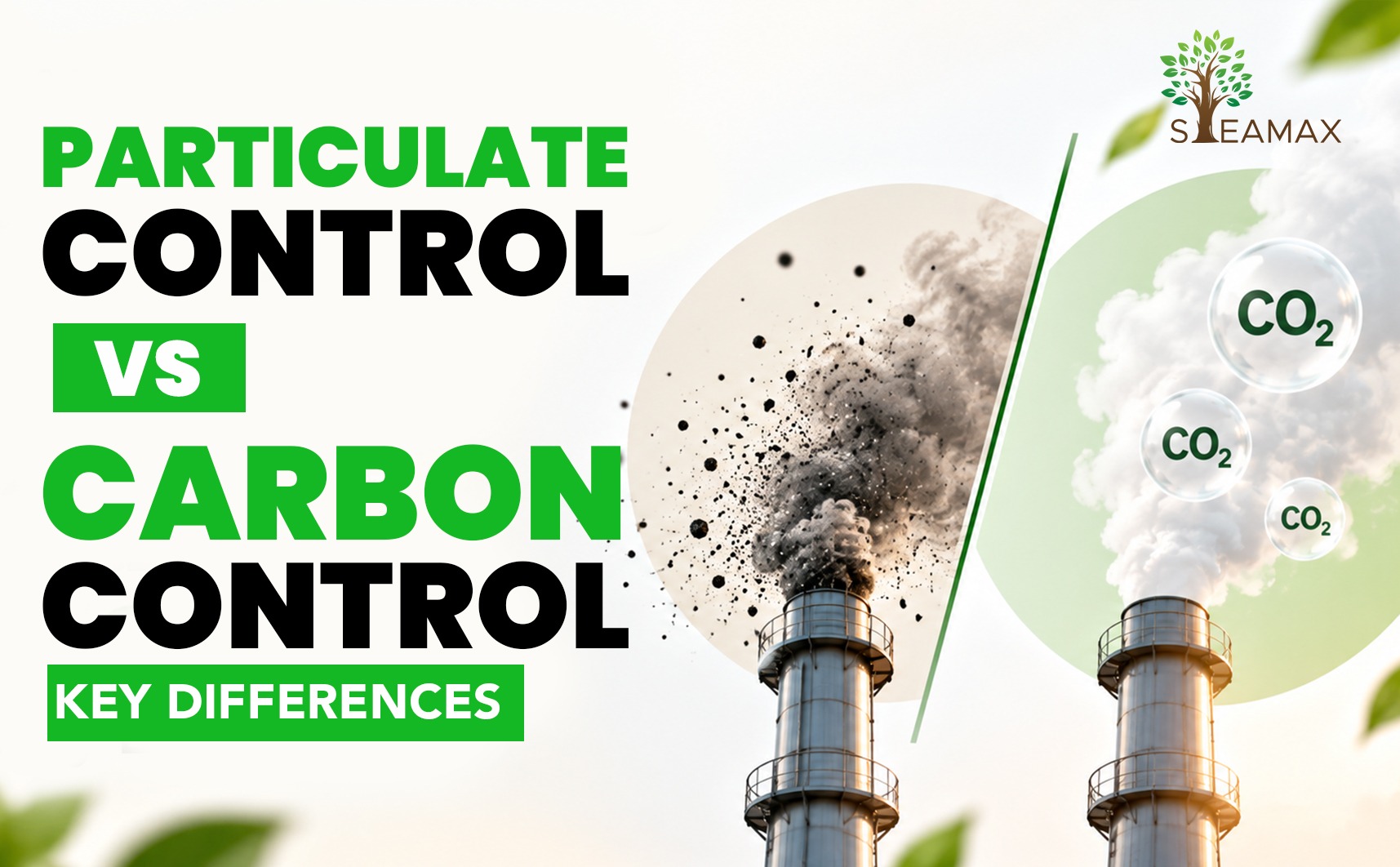
Particulate matter consists of tiny solid particles and liquid droplets suspended in the air. Industrial combustion can release particles such as fly ash, soot, and other fine material.
Two important pollutants are:
- Particulate Matter (PM): Fine particles that can enter the respiratory system and contribute to respiratory and cardiovascular health problems.
- Nitrogen Oxides (NOx): Gases produced during high-temperature combustion that contribute to ground-level ozone and other air-quality problems.
Emission limits vary according to industry category, boiler or plant capacity, fuel type, location, and applicable regulatory directions. Therefore, industries should verify the standards that apply to their specific installation rather than relying on a single emission limit for every facility.
For further background on air pollution in Delhi, see The Wire’s coverage of India’s air pollution challenge.

How to Achieve Low Particulate Emissions with Biomass
Reducing particulate emissions from biomass combustion can be challenging but achievable with the right strategies. Here are some key measures to help industries meet the new emission standards:
- Install Efficient Biomass Combustion Systems: Using advanced combustion systems that entirely burn biomass can significantly reduce particulate emissions. These systems are designed to optimize the combustion process, leading to fewer emissions.
- High-Quality Biomass Fuel: Opting for biomass fuel with low moisture and ash content results in cleaner combustion and fewer particulate emissions.
- Emission Control Technologies: Cyclone separators, bag filters, electrostatic precipitators, and scrubbers can effectively control particulate emissions.
- Conduct Regular Maintenance and Inspections: Regular maintenance and inspections ensure combustion systems operate efficiently without malfunctions that could increase emissions.
Achieve Lower PM Emissions with Steamax
Steamax has developed an innovative Oil to Biomass Retrofit (OBR) Kit that enables industries to switch from oil and gas-fired boilers to biomass. This transition reduces fuel consumption and carbon emissions and helps maintain particulate emissions below 80 mg/Nm³.

1. Efficient Biomass Combustion Systems
Steamax designs biomass combustion systems for industrial applications. The OBR Kit is intended for facilities looking to move from conventional oil-fired boilers to compatible biomass-based heating.
Proper combustion control can help reduce incomplete burning, but actual emissions depend on fuel quality, system settings, and operating conditions.
2. Automatic Fuel-Feeding Systems
The OBR Kit includes an automatic fuel-feeding arrangement that controls biomass supply to the combustion system.
Consistent fuel feeding helps maintain stable furnace conditions and reduces manual handling. Steamax reports more than 100 installations of its biomass feeding systems.
3. High-Quality Biomass Fuel: Astillas
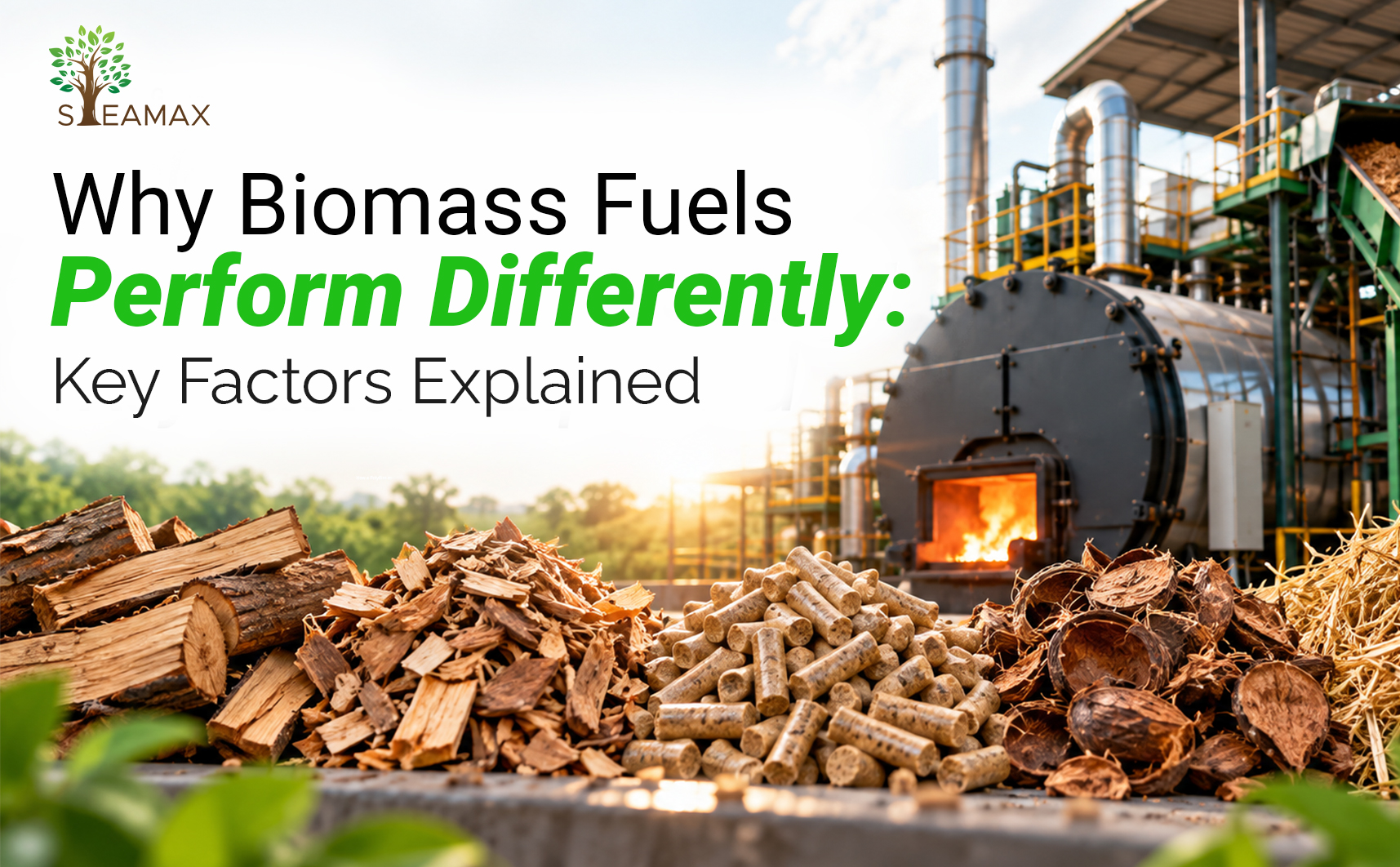
Steamax’s Astillas biomass fuel is developed using materials such as cashew nut shells, de-oiled cashew cake, sawdust, groundnut shells, and other suitable biomass residues.
Steamax’s stated product specifications include:
Parameter Astillas Specification
- Calorific value Above 4,200 kcal/kg
- Moisture content Below 10%
- Ash content Below 2%
- Bulk density Approximately 330 kg/m³
These characteristics can support fuel handling and combustion performance in compatible systems. Actual batch specifications should be confirmed through laboratory reports.
4. Emission-Control Technologies
Steamax provides pollution-control equipment such as cyclone separators, bag filters, and scrubbers, depending on the installation.
The equipment must be selected according to the fuel, boiler capacity, flue-gas characteristics, and applicable pollution-control requirements.
5. Boiler Operation and Maintenance Services
Steamax also provides boiler operation and maintenance support. Regular maintenance helps keep combustion equipment, feeding systems, fans, and pollution-control devices functioning as intended.
Join Steamax in Supporting Cleaner Industrial Air
Reducing industrial air pollution requires more than changing the fuel. Industries need suitable combustion systems, consistent fuel quality, effective pollution-control equipment, and regular maintenance. Steamax brings together biomass combustion technology, Astillas fuel, automatic feeding systems, and pollution-control solutions to help suitable industrial facilities explore biomass-based heating.
If your industry is planning to transition from oil to biomass or wants to improve its existing combustion system, contact Steamax to discuss your requirements.
Phone: +91 93151 24803
Email: info@steamaxindia.com