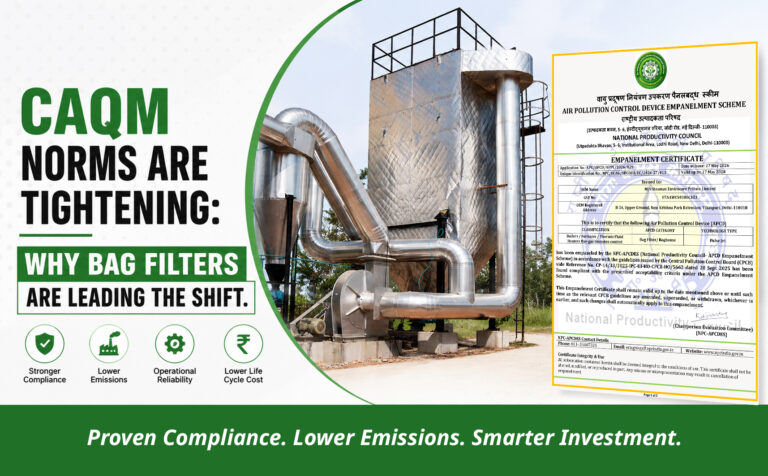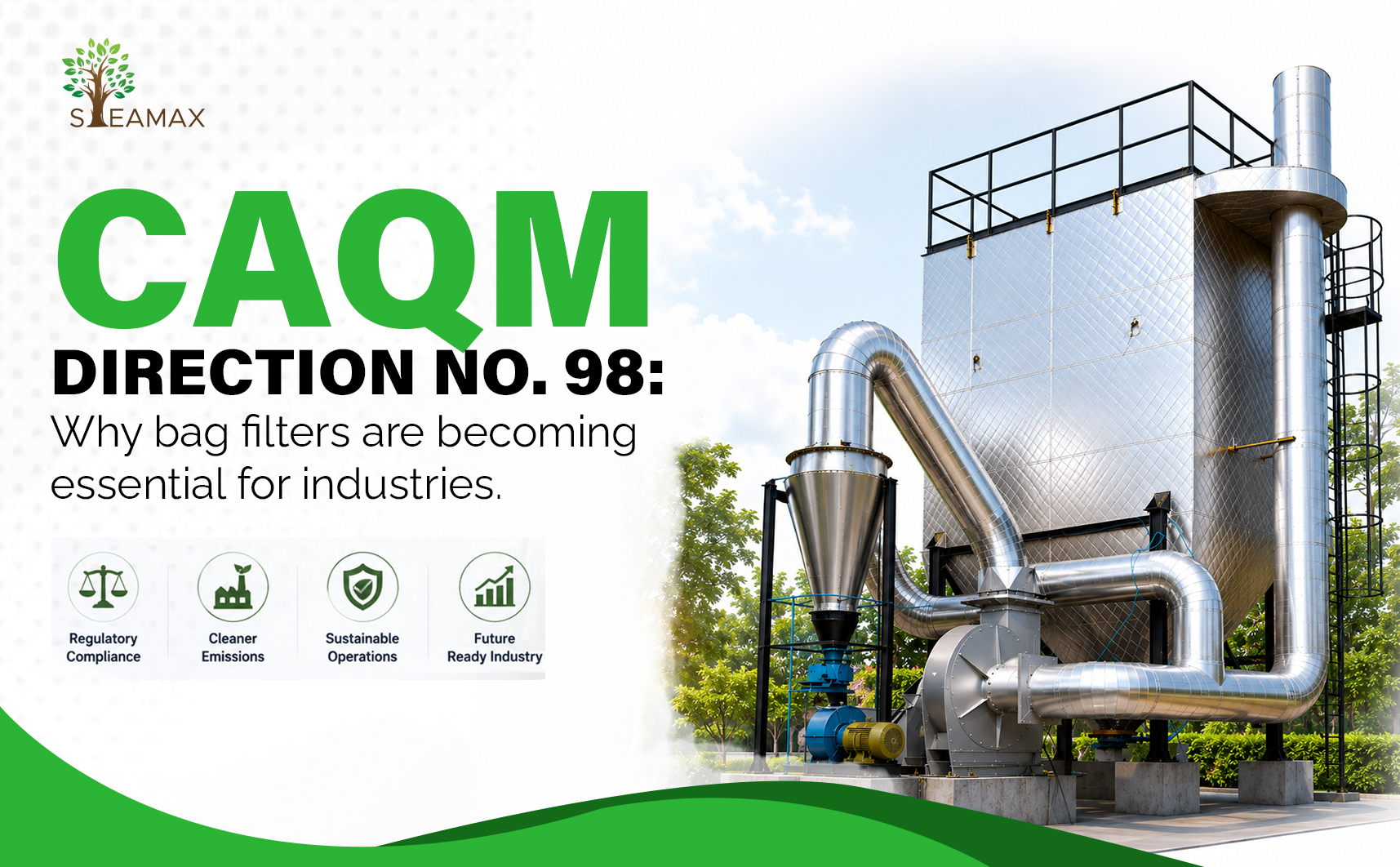
Air pollution continues to be one of the biggest environmental challenges facing the Delhi-NCR region. While vehicular emissions often dominate public discussion, industrial emissions remain a significant contributor to particulate matter (PM) levels across the region. In response, regulators are tightening emission norms and increasing scrutiny of industrial operations. One of the most important developments in this direction is CAQM Direction No. 98, which signals a clear move toward stricter particulate emission control standards.
For industries operating boilers, furnaces, and process heating systems, this is more than just another compliance update. It represents a shift toward modern pollution control technologies and higher performance expectations.
What Is CAQM Direction No. 98?
The Commission for Air Quality Management (CAQM) introduced Direction No. 98 as part of broader efforts to improve air quality across Delhi-NCR.
The direction focuses on reducing industrial particulate matter emissions and encourages industries to adopt more effective Air Pollution Control Devices (APCDs).
The objective is simple: achieve cleaner industrial operations and reduce the environmental impact of particulate emissions that contribute to poor air quality.
For many industries, this means evaluating whether existing emission control systems are capable of meeting increasingly stringent expectations.
Key Highlights of CAQM Direction No. 98
One of the most notable aspects of the direction is the push toward tighter particulate-matter controls.
While many industries have historically operated around emission levels of 80 mg/Nm³, the focus is now shifting toward achieving 50 mg/Nm³ or lower.
To achieve these levels, industries are being encouraged to adopt proven pollution control technologies such as:
- Bag Filters
- Electrostatic Precipitators (ESPs)
- Cyclonic Filters
- Wet Scrubbers
Among these options, bag filters are gaining significant attention, particularly in biomass-fired applications where fine particulate control is critical.
Why This Direction Matters for Industrial Operations
Many industrial operators view emission regulations primarily as compliance requirements. However, CAQM Direction No. 98 reflects a broader shift in how industrial pollution is being managed.
Particulate matter emissions affect more than just regulatory reporting.
They contribute to:
- Poor regional air quality
- Public health concerns
- Secondary particulate formation
- Environmental degradation
As governments intensify their efforts to improve air quality, industries can expect:
- Greater environmental scrutiny
- More rigorous inspections
- Increased pressure to modernize pollution control systems
For businesses, non-compliance risks now extend beyond penalties and can potentially affect operational continuity and corporate reputation.
Why Bag Filters Are Emerging as the Preferred APCD Solution
As emission standards become more stringent, many industries are finding that traditional systems struggle to achieve lower PM levels consistently.
This is where bag filters offer a significant advantage.
Bag filters use fabric filtration to capture particulate matter before flue gases are released into the atmosphere. Their ability to remove fine particles makes them highly effective in applications involving biomass combustion and industrial boilers.
Key advantages of bag filters include:
- High particulate collection efficiency
- Capability to achieve emission levels below 50 mg/Nm³
- Excellent performance with fine fly ash
- Lower water dependency compared to wet scrubbers
- Reliable operation under fluctuating boiler loads
- Compatibility with future emission requirements
For biomass-fired industries, these benefits make bag filters one of the most practical long-term investments for compliance and operational reliability.
The Technical Factors That Determine APCD Performance
Installing a bag filter alone does not guarantee compliance. Performance depends heavily on proper engineering and system design.
Several technical parameters influence efficiency:
- Air-to-Cloth Ratio: The relationship between gas volume and filter media area directly affects filtration efficiency and bag life.
- Flue Gas Temperature: Excessively high temperatures can damage filter bags and reduce APCD effectiveness.
- Dust Loading: The quantity and characteristics of particulate matter determine filter sizing and cleaning requirements.
- Hopper Design: Proper hopper design ensures smooth ash collection and prevents dust accumulation problems.
- Pulse Jet Cleaning: Efficient cleaning systems maintain filter performance while minimizing pressure drop.
- ID Fan Balancing: Correct fan selection and balancing help maintain stable gas flow through the APCD.
- Online Monitoring: Continuous monitoring improves compliance visibility and helps identify operational issues before they become serious.
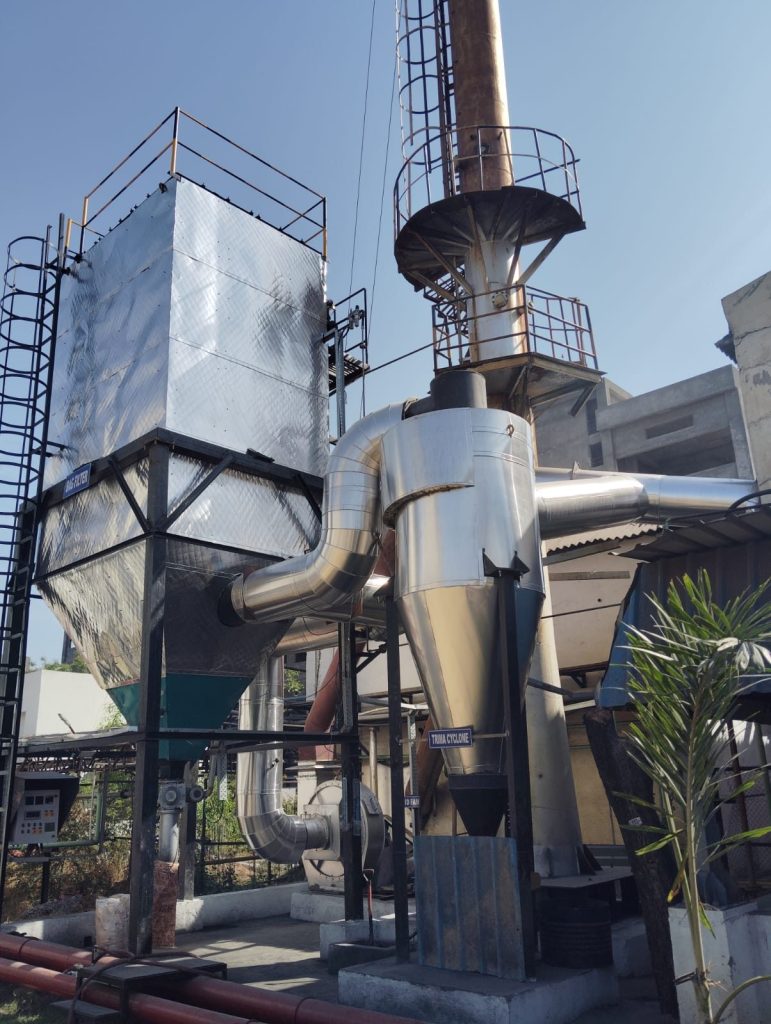
How Steamax Is Aligning with CAQM Requirements?
As industries prepare for tighter emission norms, the need for well-engineered pollution control systems is becoming increasingly important.
Steamax approaches APCD design with a strong focus on both compliance and operational efficiency.
Its solutions emphasize:
- Advanced bag filter engineering
- Site-specific APCD design
- Biomass-focused emission control solutions
- Optimized pressure drop management
- Automated pulse jet cleaning systems
- Energy-efficient operation
Rather than offering standard, one-size-fits-all equipment, the focus is on designing systems around actual process conditions, fuel characteristics, and emission targets.
This approach helps industries achieve compliance while maintaining efficient boiler and process operations.
Industries That Should Pay Immediate Attention
CAQM Direction No. 98 affects a wide range of industrial sectors, particularly those operating combustion-based systems.
Industries likely to be most impacted include:
- Sugar mills
- Food processing plants
- Textile manufacturing units
- Paper and pulp industries
- Biomass-fired boiler operations
- Steel reheating furnaces
- Agro-processing facilities
For these sectors, emission control is becoming a strategic operational requirement rather than just an environmental obligation.
The Road Ahead for Industrial Emission Control
CAQM Direction No. 98 is about more than achieving a specific emission number.
Is your current APCD ready for stricter emission norms?
Steamax provides engineered bag filter solutions designed for biomass boilers, process industries, and compliance requirements. Contact our team for an APCD assessment and discover how your plant can stay ahead of evolving environmental regulations. Visit: https://steamaxindia.com/