For years, many industries viewed energy simply as an operating expense. As long as fuel was available and costs remained predictable, there was little reason to think beyond day-to-day consumption. That mindset is changing.
Over the last few years, businesses around the world have experienced fuel price spikes, supply chain disruptions, geopolitical conflicts, and growing environmental regulations. Events happening thousands of kilometres away can suddenly affect fuel availability, transportation costs, and production planning.
As a result, energy is no longer just a utility requirement. It has become a strategic business concern. It is why more companies are focusing on a concept that was once discussed mainly at the national level: energy independence.
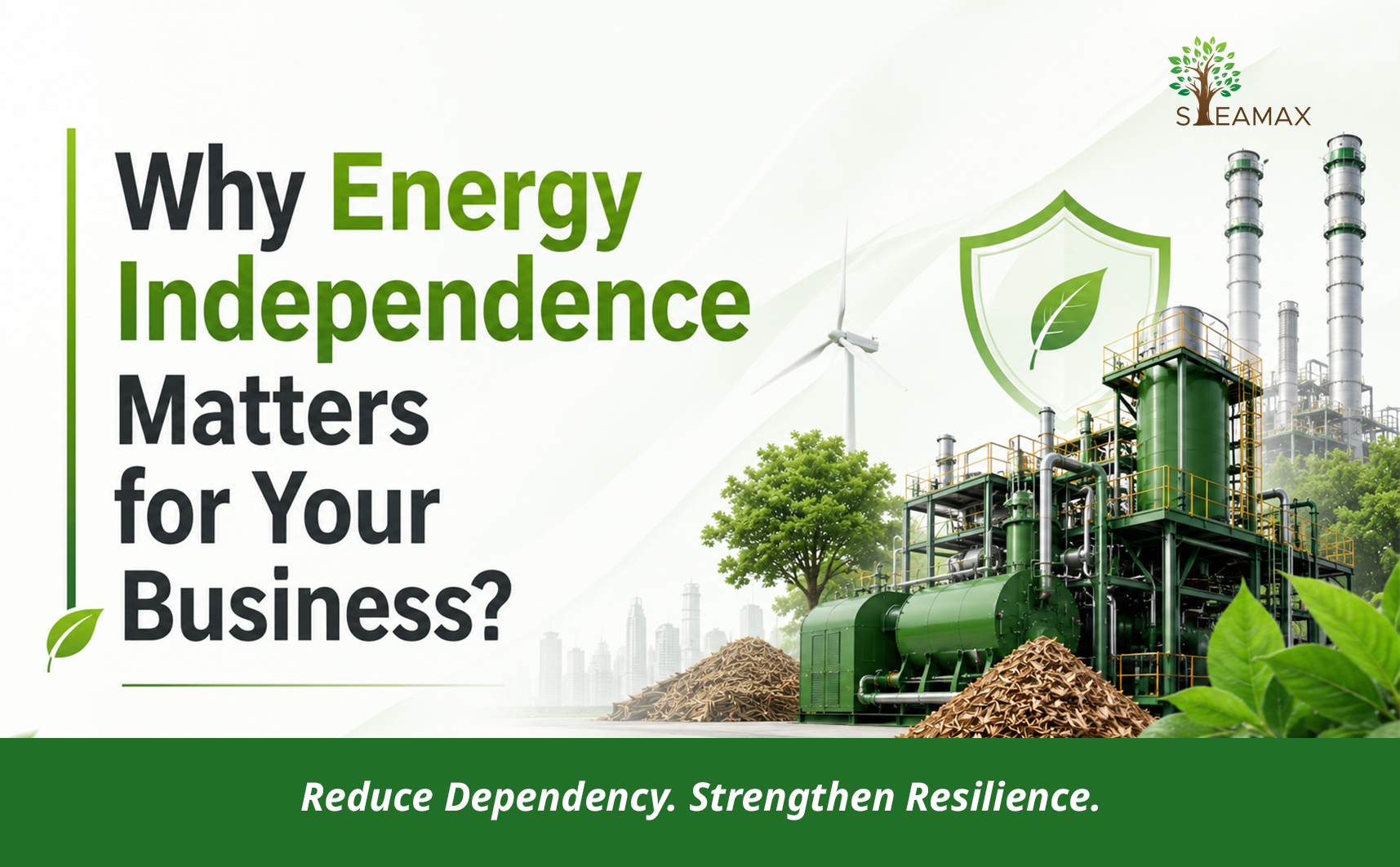
What Does Energy Independence Mean for a Business?
Energy independence does not mean producing all your own energy. For most industries, it means reducing dependence on a single fuel source and creating a more flexible, resilient energy strategy.
An energy-independent business can continue operating efficiently even when fuel prices rise, supply chains are disrupted, or market conditions change.
It could involve:
- Switching to locally available fuels
- Adopting biomass-based energy systems
- Creating multi-fuel capabilities
- Improving energy efficiency
- Reducing reliance on imported fuels
The Hidden Risks of Fuel Dependence
Many industries continue to rely heavily on a single fuel source such as natural gas, furnace oil, diesel, or coal.
While this may seem convenient, it creates significant risk.
When fuel markets become unstable, businesses can face:
- Unexpected cost increases
- Supply shortages
- Production disruptions
- Reduced profitability
- Difficulty forecasting operating expenses
The challenge is that these factors are often outside the control of plant managers and business owners.
A company may run an efficient operation and still suffer because of events occurring elsewhere in the world.
Energy Independence Improves Business Resilience
One of the biggest advantages of energy independence is resilience.
Businesses with diversified energy strategies are generally better prepared to handle market disruptions.
For example, if one fuel becomes expensive or difficult to source, operations can continue using alternative options.
This flexibility helps industries:
- Maintain production continuity
- Reduce exposure to fuel price volatility
- Improve planning accuracy
- Strengthen operational stability

Why Biomass Is Becoming Part of the Energy Conversation
Many industries are exploring biomass as a practical way to reduce dependence on traditional fossil fuels.
Unlike imported fuels that can be affected by global events, biomass is often sourced from local agricultural and forestry residues.
It offers several advantages:
- Greater supply security
- Reduced exposure to international fuel markets
- Stable long-term fuel planning
- Lower carbon footprint
With modern combustion technologies and boiler retrofitting solutions, biomass is becoming a viable option for a growing number of industrial applications.
For many companies, it is not simply an environmental decision—it is a business decision.
Supports Sustainability Goals
Today, customers, investors, and regulators are paying closer attention to how businesses manage energy and emissions.
Companies that reduce dependence on carbon-intensive fuels are often better positioned to meet:
- ESG targets
- Sustainability commitments
- Customer expectations
- Future environmental regulations
Energy independence and sustainability are increasingly connected.
Businesses that take action today are likely to find it easier to adapt to future requirements.
The Financial Benefits Go Beyond Fuel Savings
Many people associate energy independence with lower fuel costs.
While cost savings are important, the benefits often extend much further.
A stronger energy strategy can contribute to:
- Better cost predictability
- Reduced operational risk
- Improved budgeting
- Stronger long-term planning
- Increased business confidence
Energy Independence Is Becoming a Competitive Advantage
The industrial landscape is changing. Fuel markets are becoming more volatile, environmental expectations are increasing, and businesses are under constant pressure to improve efficiency.
Companies that rely entirely on a single energy source remain vulnerable to factors beyond their control. Those who invest in energy independence gain something valuable: flexibility.
And in today’s business environment, flexibility often determines who adapts and who struggles.
Final Thoughts
Energy independence is no longer just a national policy objective. It is becoming a practical business strategy.
The question is no longer whether energy markets will change.
The question is whether your business is prepared when they do.
Are you looking to reduce fuel dependency and build a more resilient energy strategy? Steamax helps industries explore biomass solutions, boiler retrofits, fuel flexibility, and energy-efficient systems that support long-term operational stability.
Connect with Steamax today to discuss your energy transition roadmap.