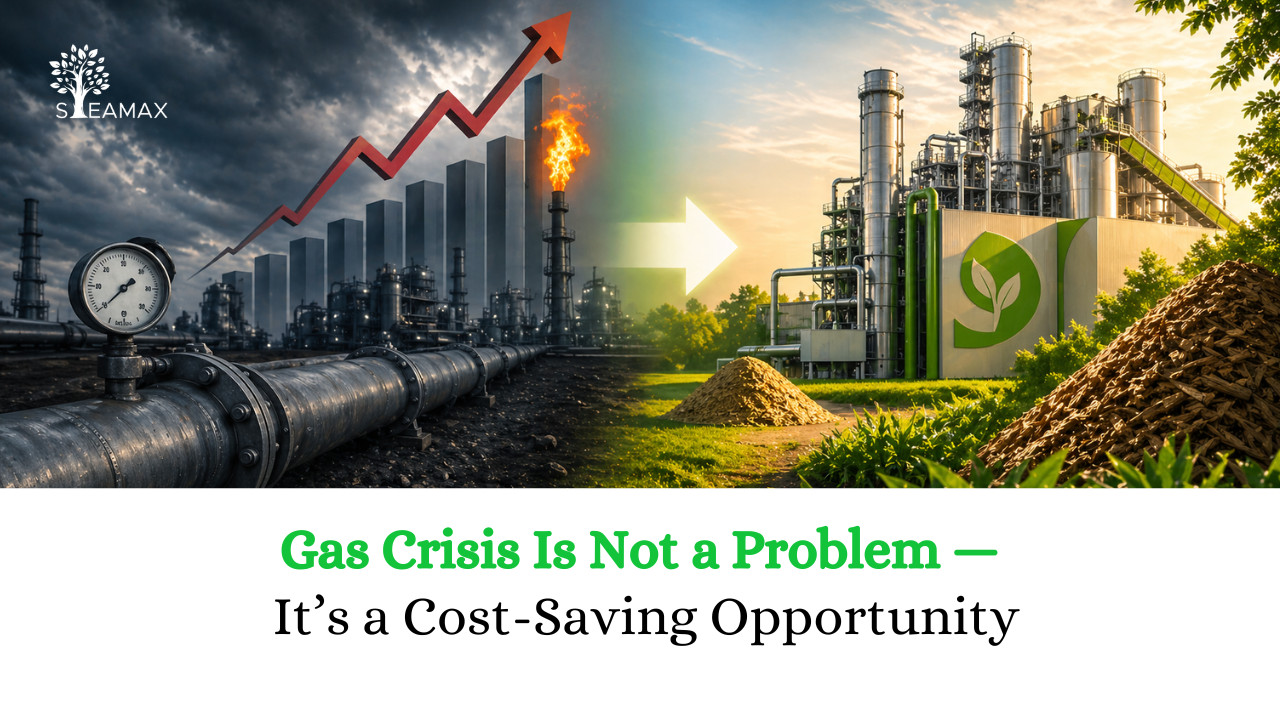
Over the past few years, industries reliant on PNG have begun to face a new reality: fuel is no longer predictable. Gas supply disruptions, allocation priorities, and global price fluctuations are making it harder for industries to depend on a single fuel source. On top of that, rising crude oil prices are pushing gas prices upward, increasing operational costs.
For many plants, this has created serious challenges:
- Sudden increase in fuel costs
- Restricted or inconsistent gas supply
- Production planning difficulties
- Reduced cost competitiveness
At first glance, this looks like a crisis.
But for some industries, it has become an opportunity to rethink energy strategy—and significantly reduce costs.
The Real Problem: Dependency on a Single Fuel
Industries that rely entirely on gas often face three key risks:
1. Price Volatility
Gas prices are linked to global markets. Any geopolitical tension or supply disruption can quickly increase costs.
2. Supply Uncertainty
During shortages, gas supply may be prioritized for essential services, leaving industries with limited or inconsistent availability.
3. No Cost Control
Unlike local fuels, industries have little control over pricing or supply conditions.
This combination makes gas dependency not just expensive—but risky.
The Shift: Turning Crisis into Opportunity
Many industries are now exploring alternative fuel strategies.
One of the most practical and scalable solutions is biomass-based fuel systems, especially fuels like Astillas.
The idea is simple:
- Reduce dependency on imported fuels
- Shift to locally available energy sources
- Stabilise long-term fuel costs
Case Study: From High Gas Cost to Controlled Energy Spend
A leading packaging company in Kashipur faced exactly this situation.
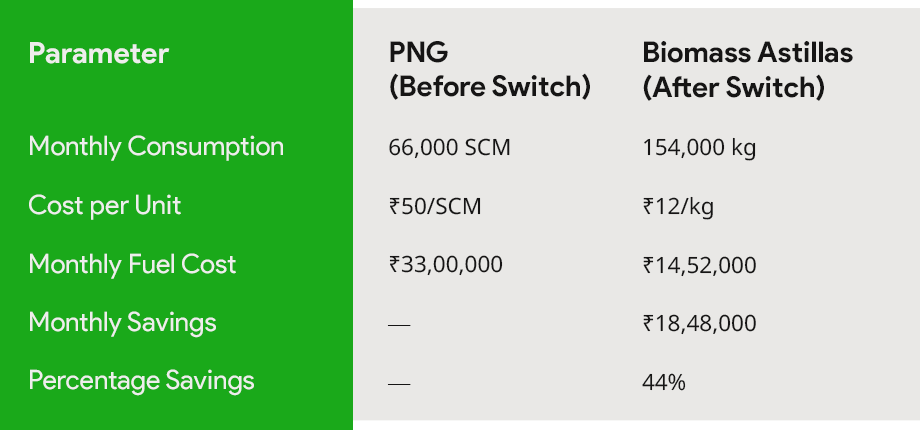
They were operating a 10-lakh kcal/hr thermic fluid heater on PNG, with the following fuel profile:
- Monthly gas consumption: 66,000 SCM
- Cost per SCM: ₹50
- Monthly fuel cost: ₹33 lakh
With rising prices and uncertainty, the company decided to explore alternatives.
The Solution: Switching to Biomass (Astillas)
After evaluation, the system was transitioned to biomass fuel using Astillas, along with necessary system optimisation.
The result was a significant shift in fuel economics.
Fuel Cost Comparison: PNG vs Biomass (Astillas)
What Changed After the Switch?
The shift was not just about fuel replacement. It improved the overall energy strategy:
- Fuel cost reduced by ₹18+ lakh per month
- Greater control over fuel sourcing
- Reduced exposure to global price fluctuations
- Improved long-term cost predictability
Why Biomass Is Becoming a Practical Alternative
Biomass is gaining traction because it solves multiple problems at once:
- Locally available fuel reduces dependency on imports
- Stable pricing compared to global fuels
- Scalable solutions for different industrial needs
- Supports sustainability and emission goals
When implemented correctly, it becomes both a cost-saving and strategic decision.
The Bigger Lesson for Industries
The gas crisis is not just about a shortage or a price increase.
It highlights a deeper issue: a lack of flexibility in the fuel strategy.
Industries that depend on a single fuel source remain exposed to:
- Market volatility
- Policy changes
- Supply disruptions
Those who diversify gain:
- Cost control
- Operational stability
- Better long-term planning
Final Thoughts
What appears to be a crisis often leads industries to rethink old decisions.
The shift from gas to biomass is not just about saving money—it’s about building a more resilient and predictable energy system. The companies that act early don’t just survive market changes; they succeed. They use them to their advantage.
To explore cost-effective and flexible industrial energy solutions, visit: https://steamaxindia.com/