India ranks as the third-largest producer and processor of cashew nuts globally, following behind Vietnam and Nigeria. The country contributes roughly 23% of the world’s total cashew output. While cashew nuts are prized for their edible value, cashew shells, which account for around 67.5% of the fruit, often remain unused after processing. However, these shells undergo further treatment to extract Cashew Nut Shell Liquid (CNSL), leaving behind a Cashew de-oiled cake (DOC) residue.
The De-Oiled Cake occasionally used as fuel in brick kilns, has an impressive calorific value of 4500 Kcal/kg, surpassing other biomass fuels like groundnut shells, firewood, and rice husk. But the question is: Can it be a reliable fuel for industries? A high calorific value alone is not enough to determine its viability. Let’s dive deeper into what makes up Cashew DOC.
What’s Inside the Cashew De-Oiled Cake?
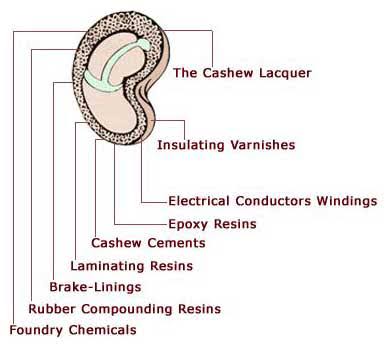
Cashew nutshells contain between 15% and 25% of a dark, reddish-brown viscous liquid known as Cashew Nut Shell Liquid (CNSL). This liquid is a cost-effective phenol source with several applications in polymer-based industries, such as paints, brake linings, and epoxy resins. CNSL boasts a calorific value of approximately 11,380 Kcal/kg, similar to light furnace oil (LFO). Its acidic nature, with a pH of 4.5 to 5.2, is due to anacardic and cardol acids. Cashew DOC has between 10% and 20% of CNSL, with 90% anacardic acid and 10% cardol acid.
Why Cashew De-Oiled Cake Is Not Ideal for Industrial Fuel Use?
Despite its high calorific value, using Cashew DOC as a fuel presents several challenges:
- Furnace Damage: Cashew shells are rich in phenols, which attack refractory bricks and reduce the lifespan of furnaces.
- Toxic Fumes: The acidic nature of CNSL releases toxic fumes during combustion. It can damage equipment and pose health risks to workers and the environment.
- Handling Issues: Due to its acidity, handling DOC can be problematic. Workers have reported skin irritation, itching, and peeling after prolonged exposure.
- Black Smoke Emission: Cashew DOC’s high carbon content can cause black smoke emissions if not burned with sufficient air supply.
- Operational Difficulties: The high oil content in Cashew DOC can lead to issues with hoppers and feeders, while its acidic nature complicates safe handling and storage.
A Case Study from Britannia Industries
In 2016, Britannia Industries Ltd. (BIL) in Orissa trialled Cashew DOC as a stand-alone fuel in their thermic fluid heater. After 10 to 15 days of use, the heater’s coils were damaged beyond repair, forcing a one-month shutdown for replacement. This incident underscores the risks of using Cashew DOC as an industrial fuel without further processing.
The Safer Alternative: Astillas
Given the challenges posed by Cashew DOC, Steamax has developed a safer, more efficient alternative called “Astillas.” Astillas still incorporates Cashew DOC as a raw material, but it is processed to reduce CNSL content and toxicity, making it a safer and more reliable option for industrial applications.
How Astillas Differs from Cashew De-Oiled Cake?
- Lower Acidity: Astillas contain less than 8% CNSL oil, compared to the 10-20% found in regular DOC. It is achieved by screw-pressing the DOC to extract more oil and mixing it with other high-quality biomass fuels such as debarked wood chips, sawdust, and groundnut shells.
- Improved Handling: Astillas are packaged in reusable bags, making them easier to handle and store. These durable bags ensure long-term reusability.
- Worker Safety: The reduced acidity in Astillas makes it safer for workers to handle without causing skin irritation or other issues.
- Clean Combustion: Astillas have a lower oil content, significantly reducing carbon emissions and eliminating black smoke.
Conclusion
While Cashew oiled cake offers a high calorific value, its direct use as an industrial fuel is risky due to its acidic properties and high carbon content. Astillas addresses these problems by reducing CNSL content and improving both safety and handling. Thus offering a more reliable and environmentally friendly alternative to industrial fuel.
Feel free to contact us for more information on Astillas and how it can benefit your operations.