Biomass fuels are gaining traction as a renewable energy source, mainly as many countries aim to reduce their dependence on fossil fuels. However, the quality of biomass fuels can vary significantly due to factors like moisture content, which is a critical consideration when selecting the right fuel for your system. Since biomass is a natural product, it can contain anywhere from 5% to 60% moisture by weight. This article will explore how moisture affects biomass fuel quality and why keeping moisture levels low is essential.
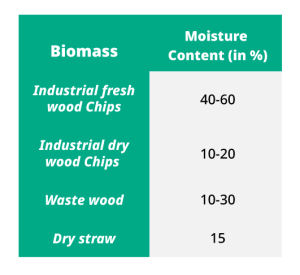
The Role of Moisture in Determining Fuel Quality
Moisture content is a critical factor that influences the combustion properties of biomass fuel, impacting its overall quality in several ways:
- Reduction in Calorific Value: High moisture content diminishes biomass fuel’s calorific value. Water does not contribute to the fuel’s energy output, so the higher the water content, the lower the calorific value. During combustion, much energy is wasted in evaporating the water rather than generating heat.
- Impact on Combustion Efficiency :For biomass fuel to burn efficiently, it must undergo complete combustion. High moisture content can hinder this process, as the water in the fuel absorbs heat and lowers the combustion temperature, resulting in inefficient fuel use and increased emissions.
- Challenges in Storage and Handling: Biomass fuels can absorb moisture from their surroundings, especially when stored in humid environments. This absorption can degrade fuel quality over time, making it less effective for combustion.
- Increased Transportation Cost: Due to its added weight, transporting biomass fuel with a high moisture content is less economical. Relying on fossil fuels for transportation contributes to greenhouse gas emissions, making the process less environmentally friendly.
Maintaining a low moisture content is crucial to ensuring high-quality biomass fuel. The optimal moisture level depends on the type of biomass fuel and its intended use, but less than 20% is generally recommended.
Why Steamax’s Biomass Fuel “Astillas” Stands Out
Steamax has developed a premium biomass fuel known as Astillas, which addresses many of the challenges associated with high moisture content in biomass fuels:

- Superior Combustion Characteristics: Astillas have a high calorific value of over 4200 Kcal/kg and a low moisture content of less than 10%. These features contribute to more efficient combustion, maximizing energy output.
- Clean Burning: Astillas burn wholly and cleanly, leaving no black or acidic smoke. It reduces the environmental impact and ensures safer, more efficient energy production.
- Consistency and Reliability: Manufactured from industrial waste, Astillas is available year-round, with consistent properties that don’t change with the season. It makes it a reliable fuel source for various applications.
- Cost-Effective and Versatile: Astillas are produced using low-cost local biomass sources. This versatility and its low cost make it an attractive option for industries seeking to transition to biomass.
Conclusion
High moisture content in biomass fuels can reduce calorific value, decrease combustion efficiency, and lead to storage and handling issues. Proper storage and handling practices are vital to maintaining low moisture levels to ensure high-quality biomass fuel. Steamax’s Astillas meets all these requirements, offering a premium biomass fuel that guarantees efficiency and reliability.
If you want to learn more about Astillas and its benefits to your energy systems, CONTACT US today.