Biomass briquettes have gained significant traction in India over the last decade due to their cost-effectiveness and availability. If you’re familiar with Steamax’s journey, you’d know that we were the nation’s first organized supplier of biomass briquettes. Over the past 20 years, our team has successfully transitioned numerous industries from fossil fuels to biomass briquettes. Since 2010, we’ve supplied these briquettes to multiple industries nationwide. However, our extensive experience has identified several drawbacks in using biomass briquettes despite their benefits in improving fuel handling and characteristics.

The Drawbacks of Biomass Briquettes
- Fuel Feeding Automation
Solid fuel can either be fed manually or through automated systems. Unfortunately, manual feeding of biomass briquettes is labour-intensive and hazardous. Workers face significant risks, including backfires and overheating. Over the years, numerous accidents have been reported in manual briquette-fired boilers, emphasizing the dangers associated with this practice.
Additionally, manual fuel feeding leads to efficiency losses. When briquettes are fed through fire doors, heat escapes, and excess air enters the system. This decreases the boiler’s efficiency and exacerbates pollution issues, often resulting in black smoke emissions from chimneys.
Automating fuel feeding could improve safety and efficiency, but briquette feeding is challenging. Due to its large size, briquettes are generally not compatible with existing coal feeding systems, screw feeders, and pneumatic systems. Crushing the briquettes to make them suitable for automatic feeding is often not preferred, especially in industries like food processing and pharmaceuticals. Automating briquette feeding often requires replacing existing systems with new, capital-intensive technologies.
- Combustion Properties
Manual feeding reduces system performance and increases pollution. Moreover, briquetting impacts biomass combustion characteristics. Smaller particles typically have better combustion properties than larger ones, allowing for improved air-fuel mixing and higher combustion temperatures.
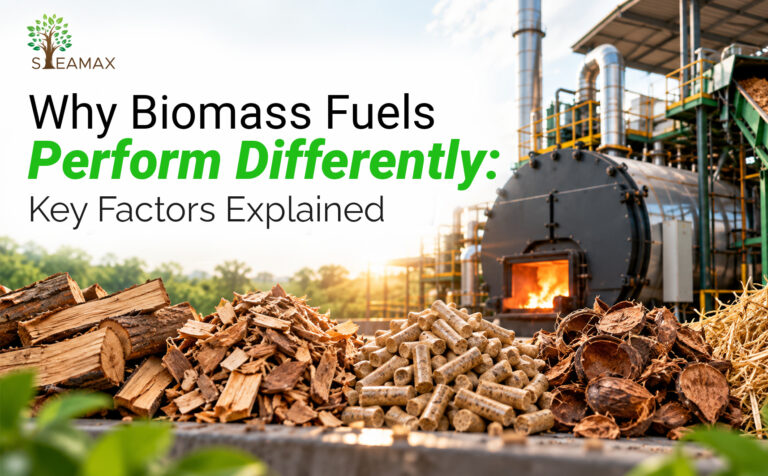
As a result, smaller-sized biomass fuels, such as pellets, loose biomass, or Astillas, tend to offer better combustion characteristics and overall system performance than larger briquettes.
Conclusion
While biomass briquetting has its merits, it also comes with several challenges. Briquettes are only sometimes suitable for automatic fuel feeding and may lead to suboptimal combustion compared to other fuels. As industries increasingly shift towards automation, biomass briquettes could need to help maintain relevance. Other fuels, such as pellets, Astillas, and certain types of loose biomass, offer better efficiency and cost-effectiveness, making them more suitable for modern industrial applications.
If you’re considering switching to a more efficient and cost-effective fuel alternative, Steamax is here to help.