
Summary
- This blog examines common misconceptions about biomass, including its emissions, environmental impact, and reliability as an industrial fuel.
- It explains why biomass is not automatically carbon-neutral and introduces Steamax’s Oil to Biomass Retrofit (OBR) Kit, which helps compatible industrial boilers transition from liquid fossil fuels to biomass with automated fuel feeding and ash removal.
Industries need reliable, cost-effective energy to generate steam and heat. While fossil fuels have traditionally powered many industrial boilers, concerns about air pollution, greenhouse gas emissions, and fuel costs are encouraging businesses to explore alternatives.
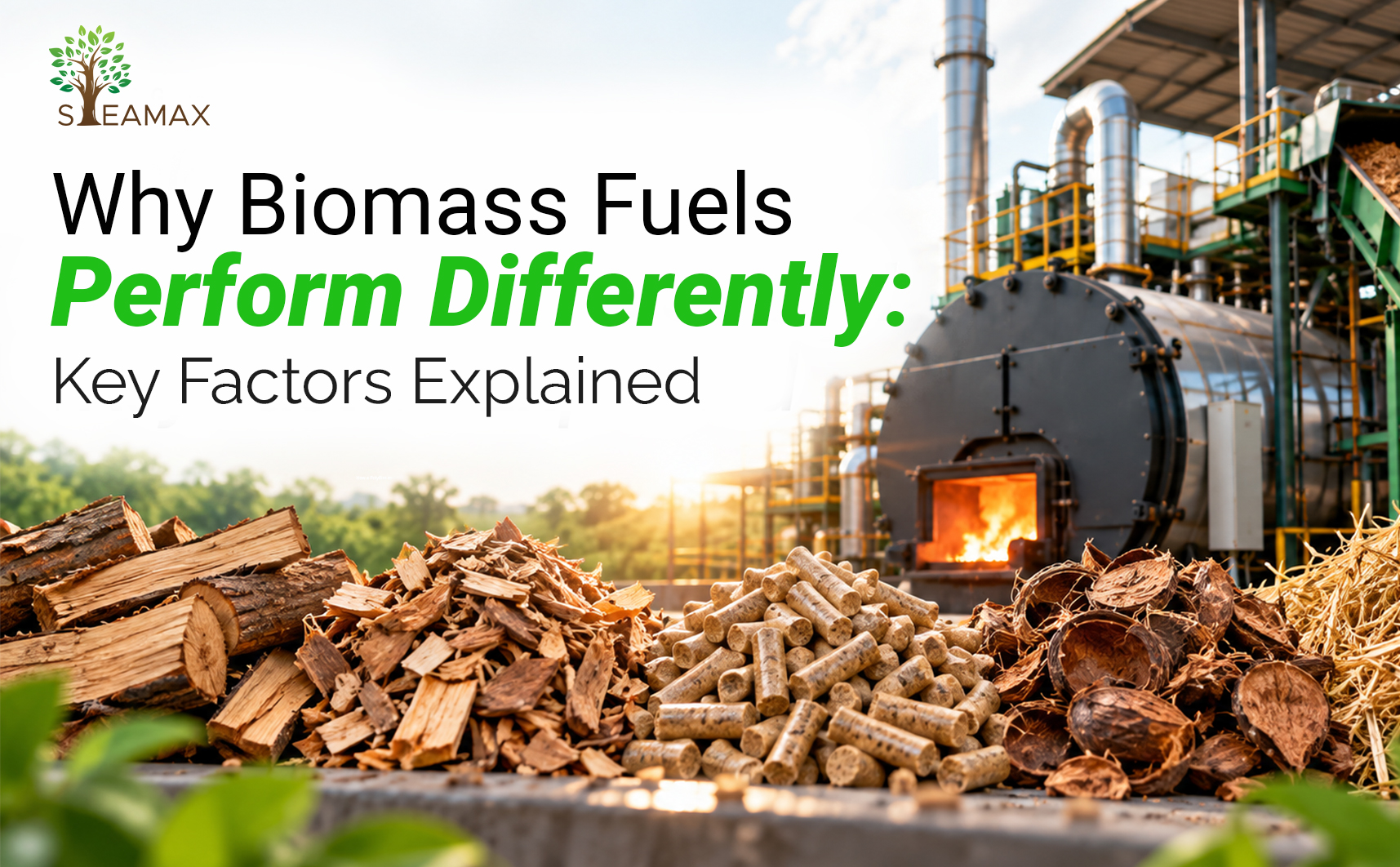
Biomass, made from organic materials such as wood residues and agricultural waste, is one option. However, you need to understand its benefits and limitations before switching.
Myths and Facts About Biomass
Myth 1: Biomass Is Always More Polluting Than Fossil Fuels
Fact: Biomass combustion releases carbon dioxide (CO₂), particulate matter, and other pollutants. However, sustainably sourced biomass can offer climate benefits compared with fossil fuels under appropriate conditions.
While biomass does emit carbon dioxide when burned, it is considered carbon-neutral because the carbon released is balanced by the carbon absorbed during the plant’s lifecycle. In contrast, fossil fuels release carbon that has been trapped for millions of years, contributing to increased atmospheric carbon levels and exacerbating climate change.
Myth 2: Fossil Fuels Are Environmentally Harmless
Fact: Burning fossil fuels can release CO₂, sulfur oxides, nitrogen oxides, and particulate matter. The quantity depends on the fuel and combustion system.
These pollutants contribute to climate change and can harm human health. Replacing fossil fuels with biomass may reduce some emissions, but the outcome depends on the fuels being compared and the equipment used.
Industries should assess both greenhouse gas emissions and local air pollutants when evaluating alternative fuels.
For additional background, see this guide to biomass advantages and disadvantages.
Myth 3: Biomass Is Not a Reliable Industrial Fuel
Fact: Biomass can provide industrial heat when the fuel supply, storage, feeding system, and combustion equipment are properly designed.
However, moisture, particle size, calorific value, and ash content can affect performance. Reliable operation requires consistent fuel specifications and equipment suited to the chosen biomass.

Steamax’s Oil to Biomass Retrofit (OBR) Kit
Industrial boilers consume substantial amounts of fuel to generate steam for manufacturing processes. Replacing an entire boiler can require significant investment and installation time.
Steamax’s OBR Kit offers a retrofit approach for compatible systems, helping industries evaluate a switch from liquid fossil fuels to biomass.
Key Benefits of the OBR Kit
- Automated fuel feeding: Reduces manual fuel handling and supports a more consistent fuel supply.
- Ash removal: An integrated ash-handling arrangement helps manage solid residue from biomass combustion.
- Potential fuel-cost savings: Steamax advertises savings of up to 30–60% in some applications. Actual results depend on fuel prices, calorific value, boiler efficiency, and operating conditions.
- Lower conversion investment: Retrofitting a compatible boiler may cost less than replacing the complete system.
- Alternative fuel option: Biomass can reduce reliance on fossil fuels, although emissions and regulatory compliance must be assessed for each installation.
Is Biomass the Right Choice for Your Industry?
Before switching, compare the current fuel with the proposed biomass using:
- Delivered fuel cost and calorific value.
- Fuel consumption per tonne of steam produced.
- Moisture, ash content, and handling requirements.
- Boiler efficiency and maintenance needs.
- Emissions performance and regulatory compliance.
Make an Informed Move Towards Biomass Energy
Biomass can offer industries an alternative to fossil fuels, but its economic and environmental benefits depend on responsible sourcing, consistent fuel quality, and efficient combustion.
Steamax’s OBR Kit provides a potential retrofit solution for compatible industrial boilers, combining automated fuel feeding and ash handling to support the transition to biomass.
Interested in switching your industrial boiler to biomass?
Contact Steamax at +91 93151 24803 or visit
Steamax contact page.