In every industrial setup where dust is a by-product—think cement, biomass, power plants, steel or carbon processing—bag filter are the silent protectors of efficiency and air quality. But while they’re often treated as “set-it-and-forget-it” equipment, neglecting the differential pressure (DP) across bag filters can quietly drain performance, spike energy costs, and lead to unscheduled shutdowns. This blog walks you through the role of bag filter, why DP matters, the common problems, and how to stay ahead with innovative maintenance practices—with insights inspired by Steamax India.

What is a Bag Filter & Why DP Matters?
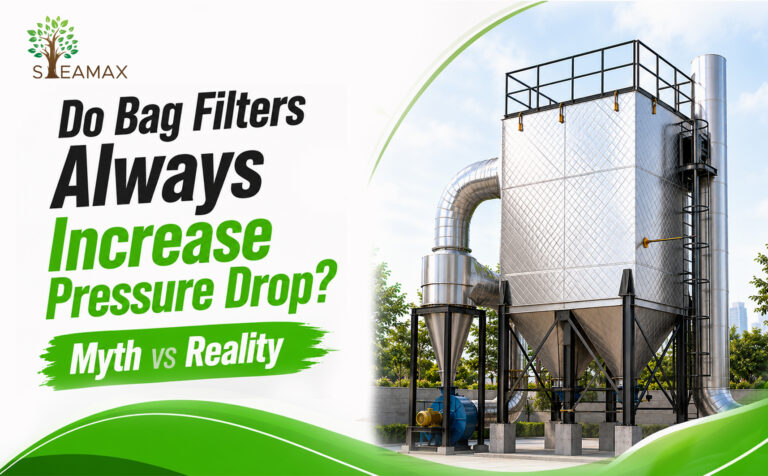
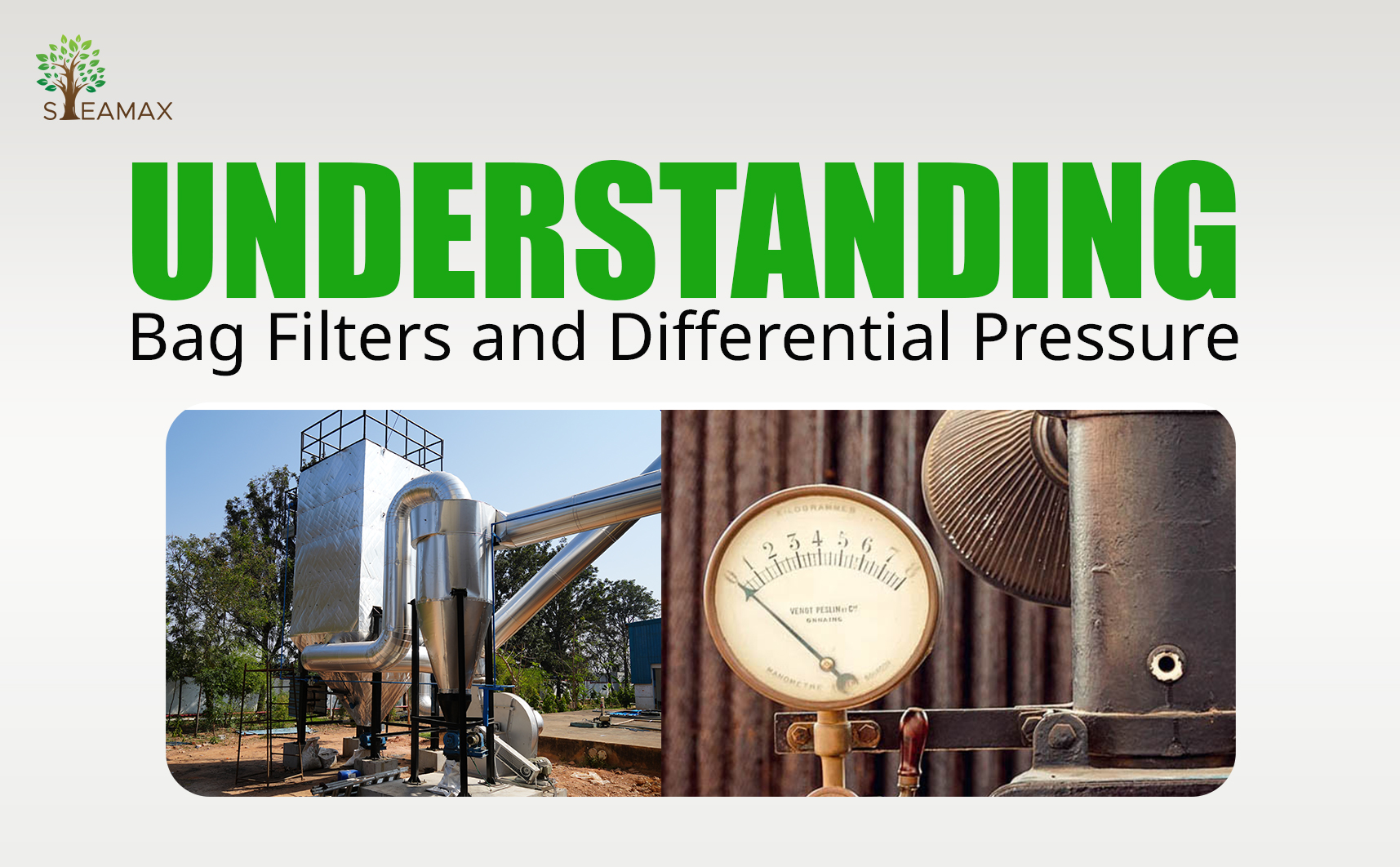
A bag filter is a dust collection system that traps airborne particles(pm10 and pm2.5) from flue gases using filter bags. Clean gas exits through the bag pores while dust accumulates outside. The system periodically cleans the bags using pulse jets to maintain performance.
Here’s the key: the differential pressure (DP) is the pressure difference between the dirty and clean sides of the filter. It tells you how clogged your bags are.
Ideal DP Range for Clean Filters:
- 100–150 mmWC (or 4–6 inches of H₂O)
- Keeps airflow steady and ensures energy-efficient operation
DP Danger Zone:
- 180 mmWC = Your filters are choking.
- Beyond 200 mmWC, you risk significant flow losses and unplanned shutdowns.
Major Problems Found in Bag Filter
Here’s what typically goes wrong in bag filter systems and why your DP might be spiking:
1. Filter Bag Choking
- Familiar with sticky fine dust like biomass ash, cement, and carbon black.
- DP gradually rises, and airflow drops.
- Fix: Regular cleaning cycles, switch to pleated bags for sticky dust.
2. Improper Bag Material Selection
- Using polyester bags for high-temperature flue gas? Bad idea.
- Some dusts need PTFE membrane or Nomex bags for better heat and stick resistance.
- Fix: Match bag type to your dust load and flue gas temperature.
3. Inadequate Pulse-Jet Purging
- Short shot duration (<0.1 sec) = weak pulse
- Long pulse interval = dust builds up before cleaning happens
- Ideal pulse duration: 0.1–0.3 sec
- Ideal interval: 20–60 sec, depending on dust load
- Fix: Calibrate pulse-jet controller and check solenoid valves
4. Moisture in Compressed Air
- Wet air causes mud-caking on bags
- Sticky dust clumps together and clogs the pores
- Compressed air must be dry, with dew point ≤ -40°C
- Fix: Use inline moisture traps and desiccant dryers
5. Spark or Fire Inside the Baghouse
- High-risk if handling wood, biomass, plastic, or rubber dust
- A single spark can ignite accumulated dust
- Fix: Install spark arrestors and temperature sensors and ensure NFPA compliance
6. Solenoid Valve Shot Shade Malfunction
- When the shade inside the valve is stuck, the air pulse is blocked or weak
- Results in poor cleaning and choking over time
- Fix: Replace or clean the shot shade regularly
7. Reverse Air / Mechanical Vibration Failures
- In shaker-type systems, poor RPM or weak motors can reduce cleaning efficiency
- Fix: Use pneumatic vibrators or maintain motor RPM through scheduled checks
- Re-calibrate every 3–6 months
Maintenance & Monitoring Tips
Regular checkups make a huge difference. Here’s a sample schedule:
| Frequency | What to Check |
|---|---|
| Weekly | Solenoids, diaphragms |
| Monthly | DP trend analysis, pulse controller calibration |
| Quarterly | Filter bag condition, cage corrosion, alignment |
| Annually | Full system inspection – fans, manifolds, seals |
Are you looking for a Reliable Bag Filter System? Here’s Where to Start
If you’re dealing with high dust loads, inconsistent airflow, or frequent DP spikes, it may be time to upgrade your filtration system.
Steamax India offers high-performance bag filter systems tailored for demanding industrial environments like biomass, cement, and power generation. Their solutions come equipped with:
- Low-DP design for energy efficiency- 100–150 mm WC
- Heavy-duty pulse jet systems with intelligent controls
- Support for pleated filters and high-temperature fabrics
- Remote monitoring options for predictive maintenance
Final Thoughts
Ignoring differential pressure is like ignoring your car’s check engine light. It might seem fine until it’s not. A slight rise in DP can be the first sign of a big problem—clogged filters, inefficient combustion, high energy bills, or worse, a fire hazard.
Contact us for a system audit or filter upgrade consultation. Let’s get your dust under control—before it controls you.