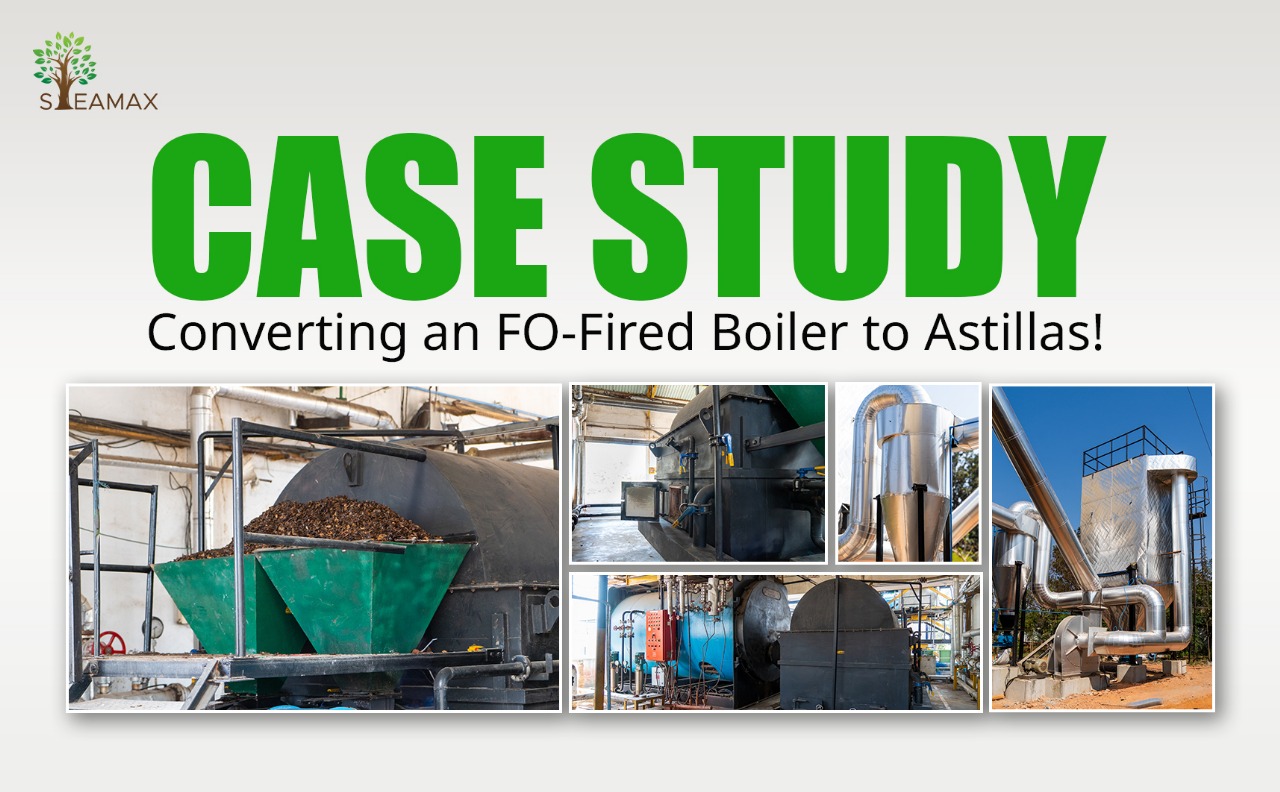
Converting an FO-Fired Boiler to Biomass Fuel Astillas!
Faced with soaring furnace oil prices and mounting environmental pressure, one facility made a bold move — converting its 5 TPH boiler from fossil fuel to biomass (Astillas). The result? A staggering 48% drop in monthly fuel costs and a sharp cut in CO₂ emissions, all without compromising production. Behind this success was a seamless retrofit, intelligent automation, and the courage to embrace change — proving that sustainable choices aren’t just better for the planet but also for business.
Therefore, let’s break down what went into this conversion, the challenges, how they were solve, and the real numbers behind the savings.
Why Consider a Switch from FO to Biomass?
For decades, industries have relied on Furnace Oil (FO) and High-Speed Diesel (HSD) to power their boilers. But with rising costs, growing carbon footprints, and tightening government emission norms, these fuels are becoming harder to justify. As global efforts intensify to limit warming to 1.5°C and companies commit to net zero targets, continuing with fossil fuels is not just unsustainable — it’s a liability.
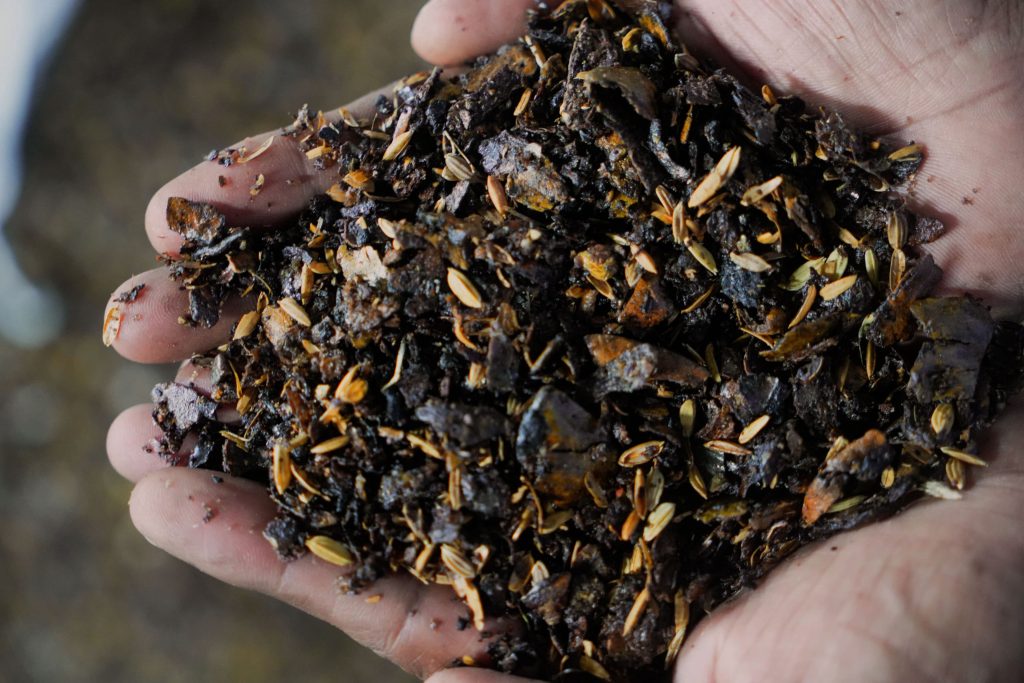
So, Astillas offers a future-ready alternative. This renewable, low-ash, low-moisture biomass fuel delivers cleaner combustion, lower emissions, and significant cost savings. It helps industries stay compliant, competitive, and climate-responsible while aligning with national regulations and global climate goals.
Initial Challenges in the Transition
Switching fuel types isn’t just about lighting a new fire. It’s a system-wide change that requires planning, adjustments, and a bit of trial and error.
- Fuel Handling & Storage
Unlike FO, which is pump from tanks, Astillas need dry, covered storage and a conveyor or feeding system to move the fuel into the boiler.
- Efficiency Gap
FO-fired boilers generally run at 85% efficiency. Switching to biomass dropped that to around 75%, so steps were needed to balance performance.
- Fuel Quality Fluctuation
Biomass fuels can vary. But Astillas used here had a stable calorific value (~4300 kcal/kg), moisture under 10%, and ash content below 2%, which helped ensure steady combustion.
- Retrofitting the Boiler
An OBR (Oil to Biomass Retrofit) kit was install, making the boiler compatible with solid fuel — all without replacing the central system.
- More Maintenance
Biomass combustion creates ash. Without regular cleaning, this could affect heat transfer and cause slagging issues. A maintenance plan was put in place.
The Numbers: Fuel Cost Comparison (FO vs. Astillas)
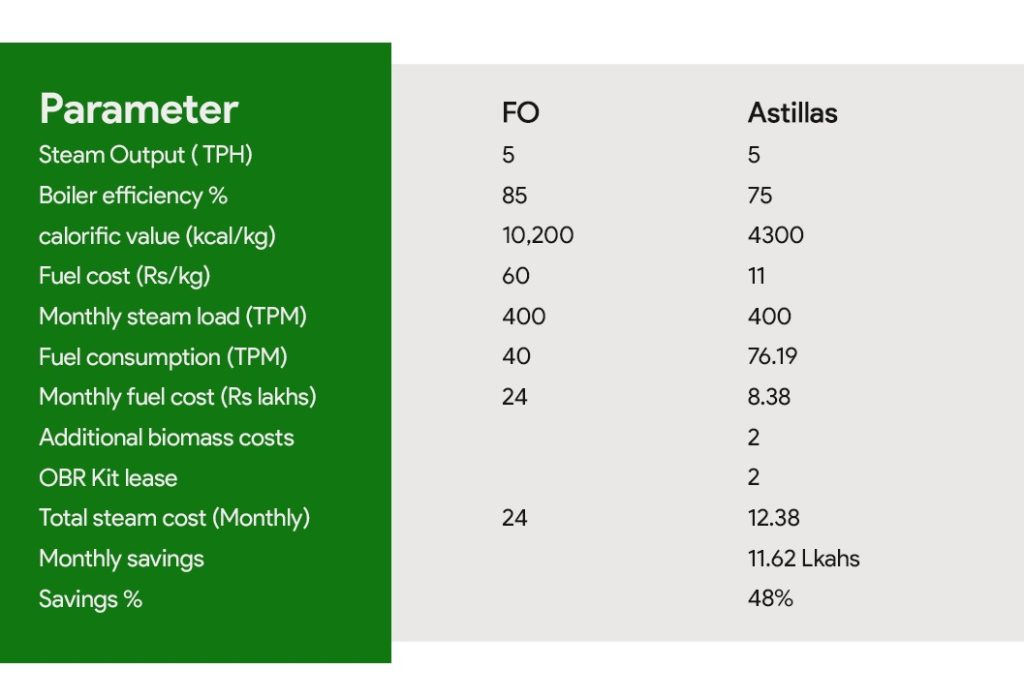 Here’s a side-by-side look at how the switch impacted fuel consumption and cost:
How the Switch Was Done
To make the transition smooth and efficient, the following upgrades and systems were implemented:
- OBR Kit Installed: The retrofitting kit allowed the same boiler to run on solid biomass. Installation was quick — just 6–8 hours of downtime.
- Automated Feeding System: Astillas were fed into the boiler through an automated conveyor system, ensuring consistent feed rates and reducing manual labour.
- Air-Fuel Ratio Tuning: Combustion settings were optimize to match the characteristics of biomass, improving burn quality and minimizing fuel loss.
- Ash Management System: With 2–3% ash, a regular cleaning schedule was implemented to keep the system running efficiently and avoid clinker buildup.
Environmental Benefits: Massive CO₂ Reductions
It’s not just about the money. Thus, the environmental impact was significant:
| Fuel Type | CO₂ Emissions |
|---|---|
| FO | ~2.64 kg CO₂ per liter |
| Astillas | Carbon-neutral |
Replacing 40 tons per month of FO with 76.19 tons of Astillas results in:
4,500 tons of CO₂ saved annually. That’s like removing 1,000+ cars off the road yearly regarding emissions.
As a result this change directly supports net-zero goals and is a big step toward a greener industrial future.
The Big Picture: Why This Move Makes Sense: Let’s wrap it up:
- Fuel costs reduce to nearly half
- Payback within months due to massive monthly savings
- Easy retrofit with minimal downtime
- Significant carbon footprint reduction
Biomass, especially low-ash, low-moisture options like Astillas, offers a reliable, sustainable, and scalable fuel for the future of industrial energy. So, are you looking to switch your boiler to biomass? Want help understanding the numbers and retrofitting options? Reach out for guidance — your savings could be just one switch away.