India’s exports have been one of the country’s biggest economic success stories, touching $778 billion in FY2023–24 (goods and services combined). But behind the celebration, a quieter storm is brewing — carbon headwinds. Global markets are rolling out carbon border taxes and stricter environmental norms. For exporters relying on energy-intensive manufacturing, this could mean higher compliance costs, reduced competitiveness, or even losing access to lucrative markets.

The Tightening Net-Zero Rules
1. EU Carbon Border Adjustment Mechanism (CBAM)
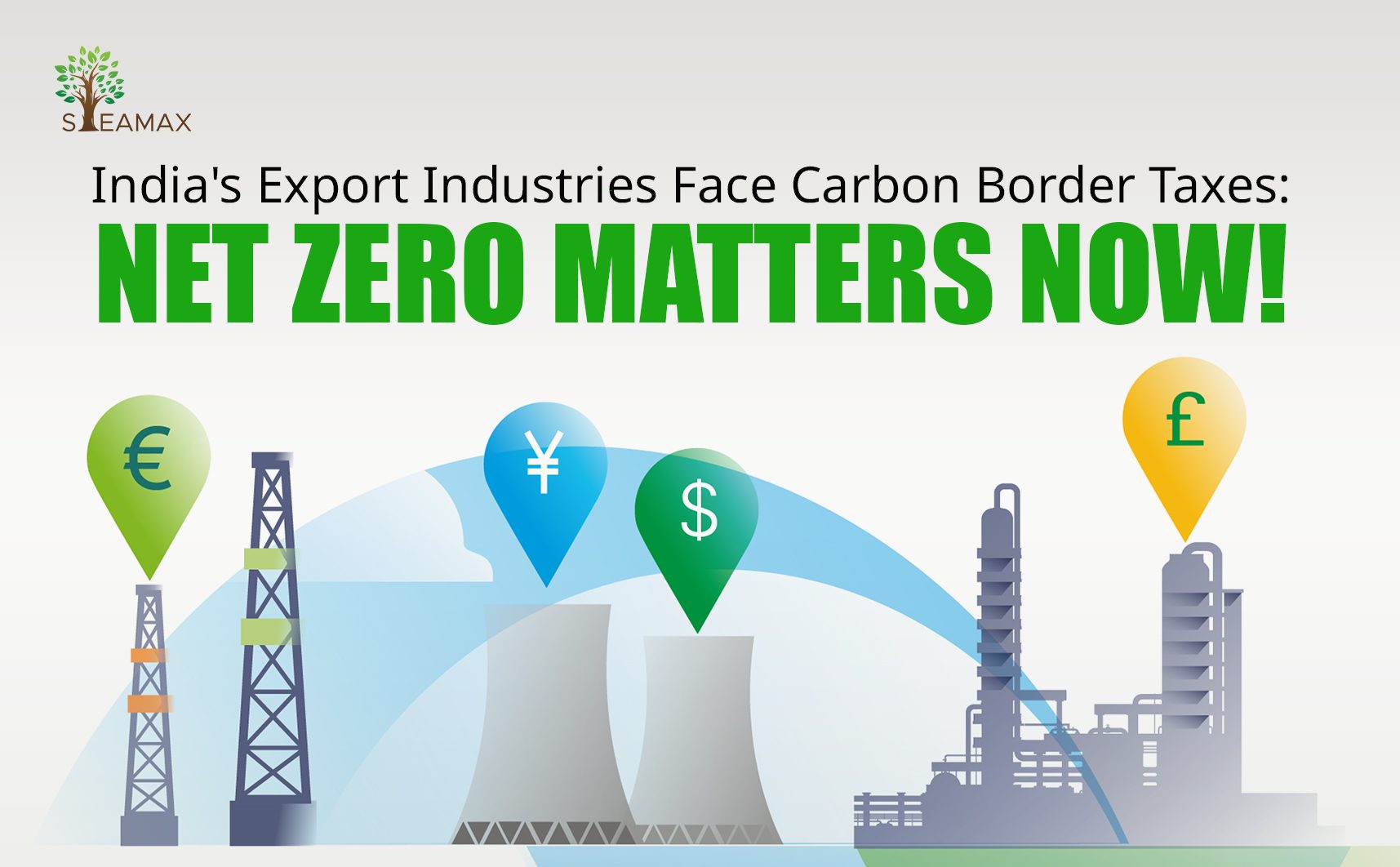
The European Union’s CBAM is one of the most high-profile examples. It requires importers to pay a carbon levy equivalent to the cost EU manufacturers bear under their emissions trading system.
While the first phase (2023–2025) focuses on reporting, from 2026 onwards exporters will need to pay for every tonne of CO₂ embedded in their products. For sectors like steel, cement, aluminium, fertilisers, and power, this is a direct cost addition.
2. Buyer-Driven Sustainability Mandates
Major global retailers, FMCG giants, and industrial buyers are demanding carbon transparency in their supply chains. It means exporters have to track, verify, and cut emissions across Scope 1, 2, and 3 — even if their sector isn’t directly regulated.
3. Domestic Policy Push
India has pledged to achieve net-zero by 2070 and cut the emission intensity of GDP by 45% by 2030 (compared to 2005 levels). Policies like Renewable Purchase Obligations (RPOs) and green hydrogen incentives are nudging exporters to clean up their operations.
Why Carbon Border Taxes Hit India Hard
- High Carbon Intensity in Manufacturing – Many Indian export sectors still rely on coal, furnace oil, and PNG for process heating.
- Legacy Equipment – Old, inefficient boilers and kilns push up emissions per unit of product.
- Limited Carbon Data – Many exporters lack systems to measure and report emissions accurately, creating compliance risks.
A study by the Council on Energy, Environment and Water (CEEW) warns that without cleaner industrial heat, India’s exporters could lose billions in potential revenue due to carbon-linked trade barriers.
Key Sectors at Risk
- Metals & Mining: Steel, aluminium, and copper face direct CBAM exposure.
- Chemicals & Fertilisers: High-energy processes and fuel use make them carbon-heavy.
- Textiles & Apparel: Energy use in dyeing, finishing, and processing is under scrutiny from fashion buyers.
- Food Processing & Beverages: Steam and heat from fossil fuels increase embedded emissions.
How Exporters Can Get Ahead of the Carbon Border Taxes
1. Switch to Low-Carbon Heating
Transition from coal, furnace oil, or LSHS to biomass, biogas, or electric boilers. Retrofitting existing boilers with biomass kits can cut Scope 1 emissions by 60–80%.
2. Adopt Energy Efficiency Measures
Upgrade to automation in fuel feeding, optimise combustion, and reduce steam leaks to improve energy efficiency.
3. Invest in Renewable Energy for Power Needs
Solar PV, wind, or hybrid systems can help reduce Scope 2 emissions, improving your carbon profile.
4. Implement Carbon Accounting Systems
Start tracking and reporting emissions today. This not only prepares you for compliance but also boosts buyer confidence.
The Competitive Edge of Going Green
Companies that invest in clean energy and net-zero aligned production are already seeing benefits:
- Preferential contracts with global buyers
- Access to green financing and lower cost of capital
- Stronger ESG ratings and brand value
For exporters, going green is no longer optional — it’s a market survival strategy.
Final Word: The Carbon Clock is Ticking
India’s export story has been built on competitiveness, scale, and resilience. But the next decade will add another benchmark: carbon competitiveness. Those who act now to decarbonise will not only avoid trade penalties but will also secure a stronger foothold in global markets.
The bottom line? Your export future depends on your carbon strategy today.