
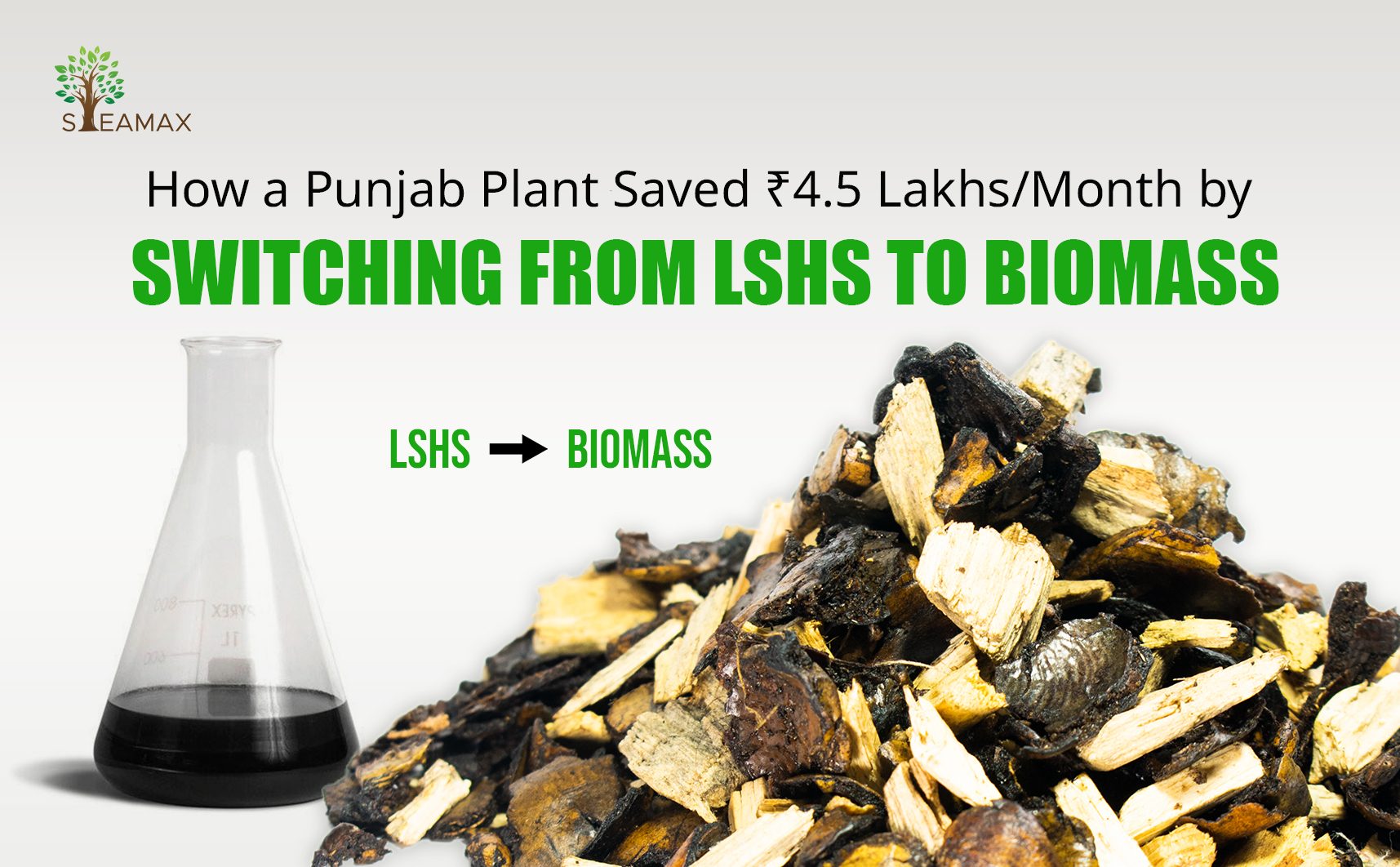
In today’s fast-paced industrial world, sticking to old fossil fuel systems is like driving a luxury car with a leaking fuel tank — expensive, inefficient, and harmful to the environment. A manufacturing plant in Punjab was a prime example. It relied on Low Sulphur Heavy Stock (LSHS) — a petroleum-based fuel known for its high calorific value but notorious for skyrocketing costs and environmental impact. The client needed a solution that cut costs, reduced emissions, and avoided replacing the entire boiler system — that’s where biomass energy came in.
The Challenge: A Boiler That Burned Money
The plant operated a 10 TPH Thermax TD-100 boiler, running day in and day out to meet a steam demand of around 350 tonnes per month. But there was a catch:
- Fuel Price: Rs 55 per kg
- High Emissions: SOx, NOx, and particulate matter well above ideal norms
- Clean Energy Gap: No alignment with decarbonisation or ESG targets
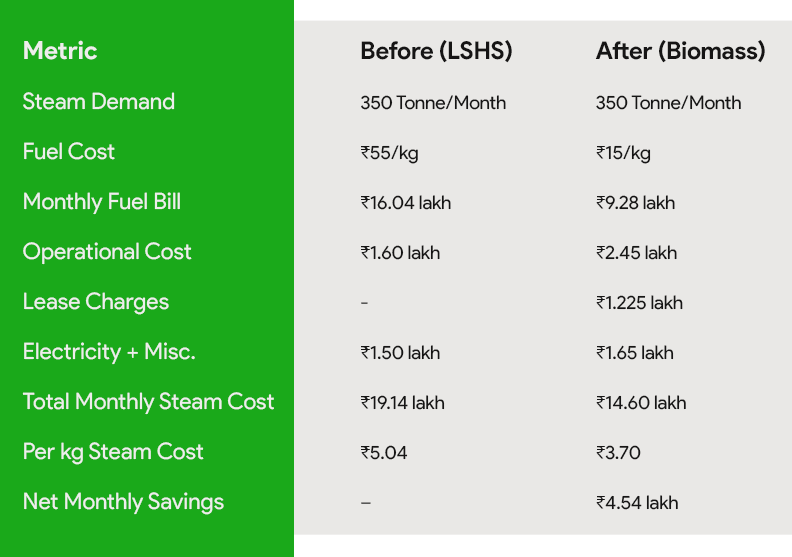
The monthly fuel bill alone was Rs 16.04 lakh, and when you added operational costs, the total monthly steam cost ballooned to Rs 19.14 lakh.
The Steamax Solution: OBR Kit Retrofit
Instead of replacing the boiler, Steamax offered a smarter path — the OBR Kit, a proven oil-to-biomass retrofit system. This technology allowed the existing oil-fired boiler to run efficiently on renewable biomass energy.
Key Retrofit Components:
- Biomass-Compatible Furnace Modifications – Adapted the furnace for biomass combustion.
- Automated Fuel Feeding System – Ensured a consistent and safe fuel supply.
- Fuel Calibration for Biomass – Optimised settings for Astillas (wood shreds) and woodchips.
The entire conversion took just four weeks, causing minimal downtime and no significant disruption to operations.
Before vs. After: The Big Shift in Numbers
Beyond the Numbers: Environmental Wins
The shift wasn’t just about money — it brought significant environmental benefits:
- Reduced greenhouse gas emissions
- Lower SOx and NOx levels
- Improved compliance with pollution norms
- Better ESG alignment, making the plant more attractive to global buyers
Why This Matters for Indian Industry
For many industries, the boiler room is the largest source of direct (Scope 1) emissions and a significant operating expense. Retrofitting with biomass is low-hanging fruit in the journey toward net zero.
With the Steamax OBR Kit, industries can:
- Cut fuel costs by 20–40%
- Switch to renewable biomass without replacing boilers
- Reduce emissions without compromising output
Final Word: Savings, Sustainability, and Scalability
This Punjab plant’s story proves that industrial decarbonisation isn’t just a climate responsibility — it’s a wise business decision. By making the switch from LSHS to biomass, the plant is now saving Rs 4.5 lakh every month while reducing its carbon footprint. For industries facing high fuel costs and tightening environmental norms, the question isn’t if they should switch to biomass energy — it’s when.

Excelent innovative initiative for decarbonisation .
Thanks for feedback.
please contact