In the last decade, environmental compliance has gone from being a nice-to-have to a non-negotiable requirement for exporters. Today, multinational buyers demand that their suppliers meet strict sustainability and carbon-reduction standards, and energy use is at the centre of this conversation. Enter biomass heating — a renewable, cost-effective alternative to fossil fuels like coal, furnace oil, and PNG. Across sectors like textiles, food processing, chemicals, and beverages, exporters are ditching fossil fuels in favour of biomass to secure contracts and maintain competitiveness in global markets.
Why Exporters Can’t Ignore Biomass Heating
1. Meeting Carbon Compliance for Export Markets
Major export destinations — from the EU to North America — have rolled out strict climate policies. For example, the EU’s Carbon Border Adjustment Mechanism (CBAM) will require importers to account for embedded emissions in products. High-carbon steam from coal or oil-fired boilers could make your goods more expensive or even ineligible in specific markets.
Biomass heating offers a low-carbon alternative that can slash Scope 1 emissions and help maintain export eligibility.
2. Cost Savings in a Volatile Fuel Market
Fossil fuel prices fluctuate wildly. In contrast, locally sourced biomass (like briquettes, pellets, or torrefied) offers stable and predictable pricing.
In many Indian industrial clusters, switching to biomass can reduce fuel bills by 20–40%, depending on the baseline fuel. That’s not just environmental good sense — it’s innovative business.
3. ESG Ratings and Investor Confidence
If you’re a global supplier, your ESG score directly affects buyer interest and investor confidence. Biomass heating helps boost ESG performance by lowering direct emissions, improving energy efficiency, and aligning with net-zero roadmaps.
Better ESG ratings can mean:
- Access to green financing
- Stronger brand reputation
- Preference in procurement by multinational clients
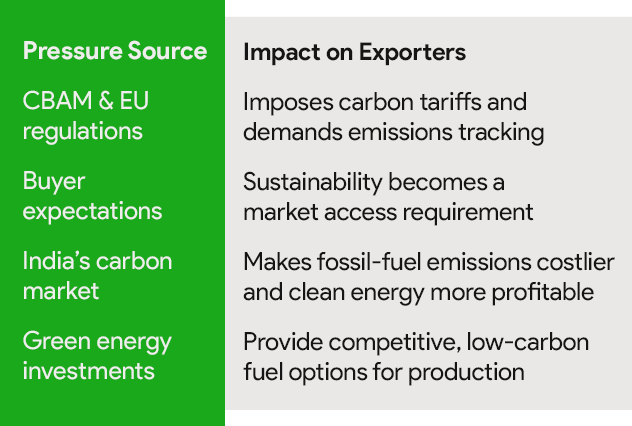
What’s Driving the Biomass Trend in Exporters Industries
- Stringent Import Regulations: Exporters are under pressure to show carbon transparency.
- Global Buyer Policies: Many FMCG and retail giants mandate renewable heat in their supply chains.
- National Incentives: Countries like India are rolling out policies to encourage renewable energy in manufacturing.
- Technology Availability: Retrofit kits, automated feeding, and efficient biomass combustion systems make switching easier than ever.
How to Transition Without Disrupting Operations
Switching to biomass doesn’t have to mean buying a new boiler. Many exporters are retrofitting their existing systems to run on biomass — a faster, cheaper, and lower-risk approach.
Steps to Make the Switch:
- Assess Current Boiler System – Identify compatibility and potential modifications.
- Choose the Right Biomass Fuel – Briquettes, pellets, or torrefied biomass, based on availability and cost.
- Install Retrofit Kits – Solutions like Steamax’s OBR Series can convert oil or gas boilers to biomass within weeks.
- Automate Fuel Feeding – Reduce human error, improve combustion consistency, and lower emissions.
- Add Pollution Control Devices – Bag filters, ESPs, or cyclones to meet global emission norms.
Real-World Example: Exporters Success Story
A textile exporter in Gujarat switched from PNG to biomass pellets, reducing fuel costs by 28% and emissions by over 70%. The move not only cut costs but also secured a major EU buyer contract that required a verified low-carbon supply chain.
Why You Should Act Now
Waiting too long to transition could cost you market share. Buyers are already making sourcing decisions based on sustainability metrics, and those still using fossil fuels risk being left behind.
With fuel savings, ESG benefits, and market access all pointing toward biomass, the real risk is in not switching.
Final Takeaway: Biomass Heating is Your Competitive Advantage
The exporters winning in today’s market aren’t just the ones with the best prices — they’re the ones with the cleanest production processes. Biomass heating delivers on both fronts: lower operating costs and better compliance with global carbon norms.
Whether you retrofit your boiler or start fresh with biomass-ready technology, the time to act is now. In the race for sustainable exports, green steam is the fuel for growth.