
Summary
- A central tyre manufacturing plant in Delhi-NCR faced a major operational challenge in January 2023 when restrictions on coal combustion made its existing 5,200 kg/hr coal-fired boiler unsuitable for continued coal operation.
- Initially, the plant considered installing a new PNG-fired boiler, but rising gas costs made this option financially difficult. S
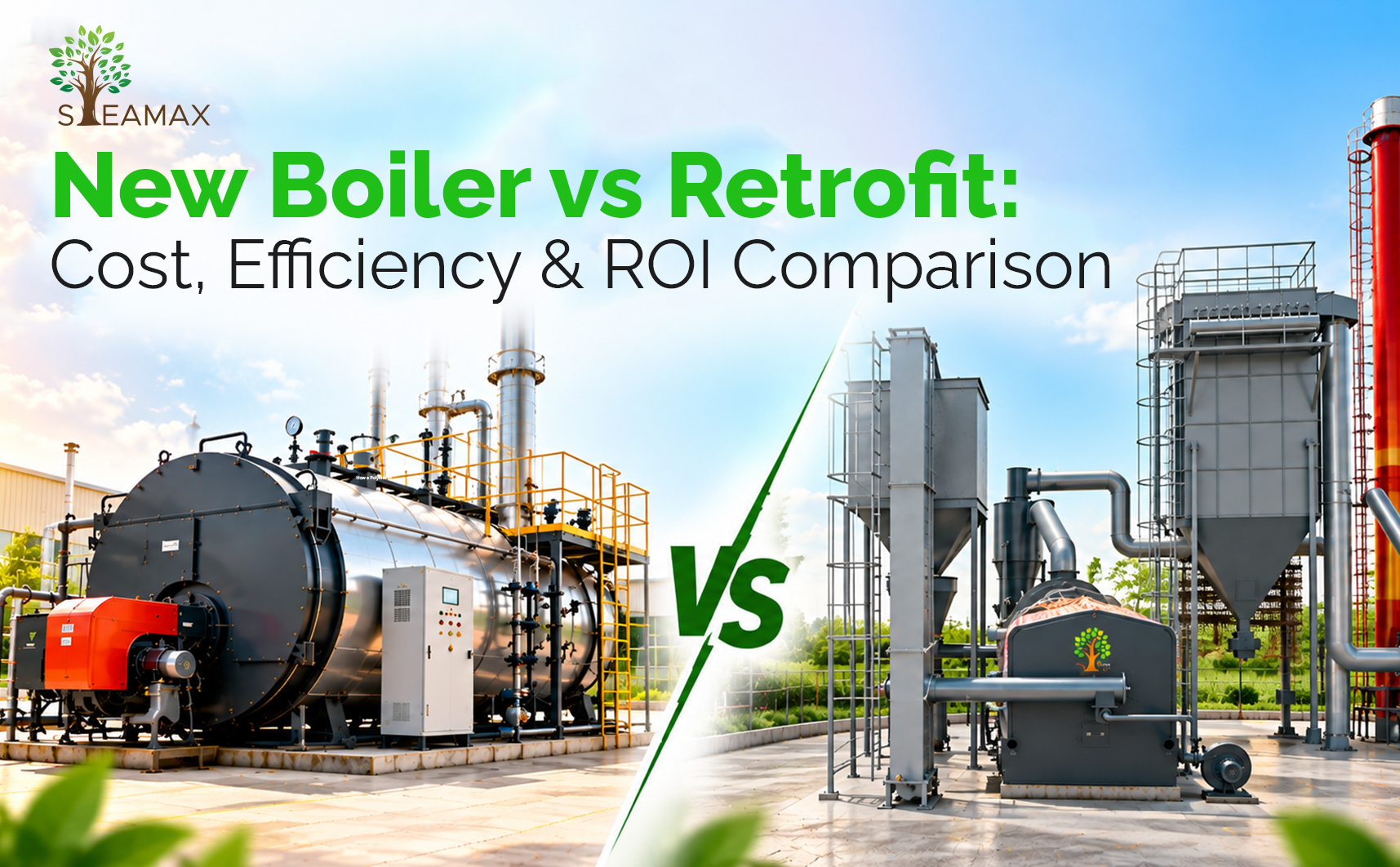
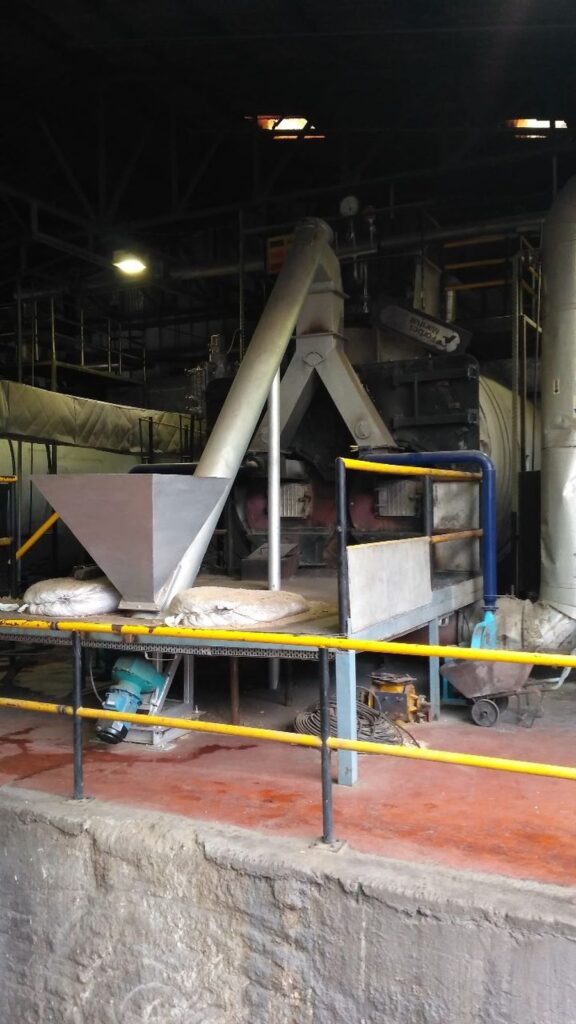
- teamax proposed retrofitting the existing boiler to operate on biomass instead of replacing the entire system. The project included automated fuel feeding, grate modifications, secondary air injection, ash handling improvements, combustion optimisation, and bag filter installation.
- Following the retrofit, the plant reportedly maintained its 5,200 kg/hr steam output while using biomass at ₹12/kg.
In January 2023, industries across the Delhi–NCR region faced a sudden operational roadblock — the complete ban on coal combustion. For a central tyre manufacturing plant dependent on coal-fired steam for curing, vulcanising, and thermal conditioning, this regulation halted their primary fuel source overnight. The plant’s long-standing, high-performing 5200 kg/hr of steam generated coal boiler was now unusable. Production could not stop, customer commitments could not be delayed, and steam still had to be generated reliably.
The immediate solution seemed straightforward: Install a new PNG-fired boiler. But within months, the cost of switching to gas became unsustainable. Steamax proposed an innovative alternative: Retrofitting the existing coal boiler to run on biomass. To learn more about the case, read the blog below.
Steamax’s Breakthrough Insight: “Your Coal Boiler Is Still an Asset.”
During a detailed technical audit, Steamax engineers identified something most industries overlook:
The old coal-fired boiler — although banned from using coal — was structurally sound, pressure-ready, and fully capable of combustion with modifications. Instead of investing in a brand-new biomass boiler, Steamax proposed a more innovative alternative: Retrofitting the existing coal boiler to run on biomass. A simple idea with massive technical and financial impact.
How Steamax Engineered the Transformation
The retrofit was built on three engineering pillars:
1. Auto Fuel Feeding System
Manual feeding was replaced with a fully automated system to ensure:
- Consistent combustion
- Stable steam pressure
- Safer operation
- Reduced workforce
Automation alone significantly improved fuel efficiency and steam consistency.
2. High-Efficiency Bag Filters for Emission Compliance
Delhi–NCR has some of the most stringent particulate emission norms in India.
Steamax installed:
- Designed high-efficiency bag filters
- A compliant stack system
- Dust-handling mechanisms
This ensured smooth PCB approvals and continuous operation without emission violations.
3. Combustion & System Upgrades
To optimise biomass burning, Steamax executed:
- Grate modifications
- Secondary air injection
- Ash handling upgrades
- Insulation improvements
- Air–fuel ratio optimisation
- Flue gas path adjustments
The old coal boiler was reborn as a modern biomass combustion system.
Project Overview
| Parameter | Project Details |
|---|---|
| Industry & Location | Tyre Manufacturing, Delhi-NCR |
| Original Boiler & Fuel | 5,200 kg/hr Coal-Fired Boiler |
| Retrofit Solution | Biomass Conversion with Automated Feeding, Combustion Upgrades & Bag Filter |
| Post-Retrofit Performance | 5,200 kg/hr Steam Output; 950 Tonnes Biomass/Month at ₹12/kg |
| Reported Financial Benefit | ₹67 Lakh Monthly Savings; Approx. ₹8 Crore Annually |
The New Fuel Regime: Biomass at Just ₹12/kg
Post retrofit, the tyre plant shifted entirely to biomass:
- Biomass Consumption: 950 tons/month
- Biomass Price: ₹12/kg
- Monthly Biomass Fuel Cost: ₹1.14 crore
- Steam Output: Same — 5200 kg/hr
The impact was immediate and measurable.
Minimal CAPEX, Maximum ROI
The brilliance of Steamax’s solution lies in its simplicity:
- No new boiler purchase
- No major civil modifications
- Rapid installation timeline
- Leveraged existing infrastructure
This retrofit delivered one of the fastest ROI cycles seen in industrial boiler upgrades — with the investment recovered in just a few months.
A New Benchmark in Industrial Energy Engineering
This tyre manufacturer’s transformation shows a powerful truth: You don’t always need new equipment to achieve breakthrough savings. Sometimes, the best solution is already in your plant—waiting to be reimagined.
Steamax turned an idle coal boiler into a high-performance biomass system, saving: ₹67 lakhs every month₹8 crore every year.
This case sets a new benchmark for energy engineering in India — proving that intelligent retrofits can outperform full replacements in both cost and performance.