If you’ve worked with biomass-fired boilers, you’ve probably faced the dreaded moment when the fuel stops moving. One minute, your hopper is complete, and the next, the fire dies down due to a blockage or obstruction. These interruptions don’t just waste time — they reduce efficiency, cause inconsistent combustion, and can even damage the feeding equipment. Understanding why biomass bridging occurs and how to prevent it through improved fuel handling, storage design, and maintenance practices is crucial to running a smooth and reliable operation.
What Is Biomass Bridging and Why Does It Happen?
Bridging occurs when biomass fuel particles interlock or compact inside the storage hopper or silo, forming an arch that prevents material from flowing down into the feeder or screw conveyor.
Common reasons include:
- Irregular fuel size and shape (exceptionally long or fibrous biomass)
- High moisture content causes clumping
- Poor hopper design with steep or sticky walls
- Temperature variations cause compaction over time
When the bridge forms, the material below continues to feed until the void empties; then, the flow stops, and manual intervention becomes necessary.
Common Causes of Hopper Blockages
1. Fuel Quality Variations
Inconsistent fuel size, high ash content, or high moisture levels increase the likelihood of bridging. Biomass with a moisture content of more than 15% or irregular geometry tends to compact easily.
2. Improper Hopper Design
Hoppers with shallow angles or rough inner surfaces make it harder for biomass to slide freely. The wrong slope can create stagnant zones where material sticks and piles up.
3. Poor Storage Conditions
Humidity, temperature fluctuations, and inadequate ventilation in biomass storage areas can cause materials to absorb moisture and clump.
4. Neglected Maintenance and Cleaning
Over time, the buildup of fine particles or ash at the bottom of hoppers reduces free flow, increasing the frequency of bridging.

How Steamax Helps Keep Biomass Flowing Smoothly
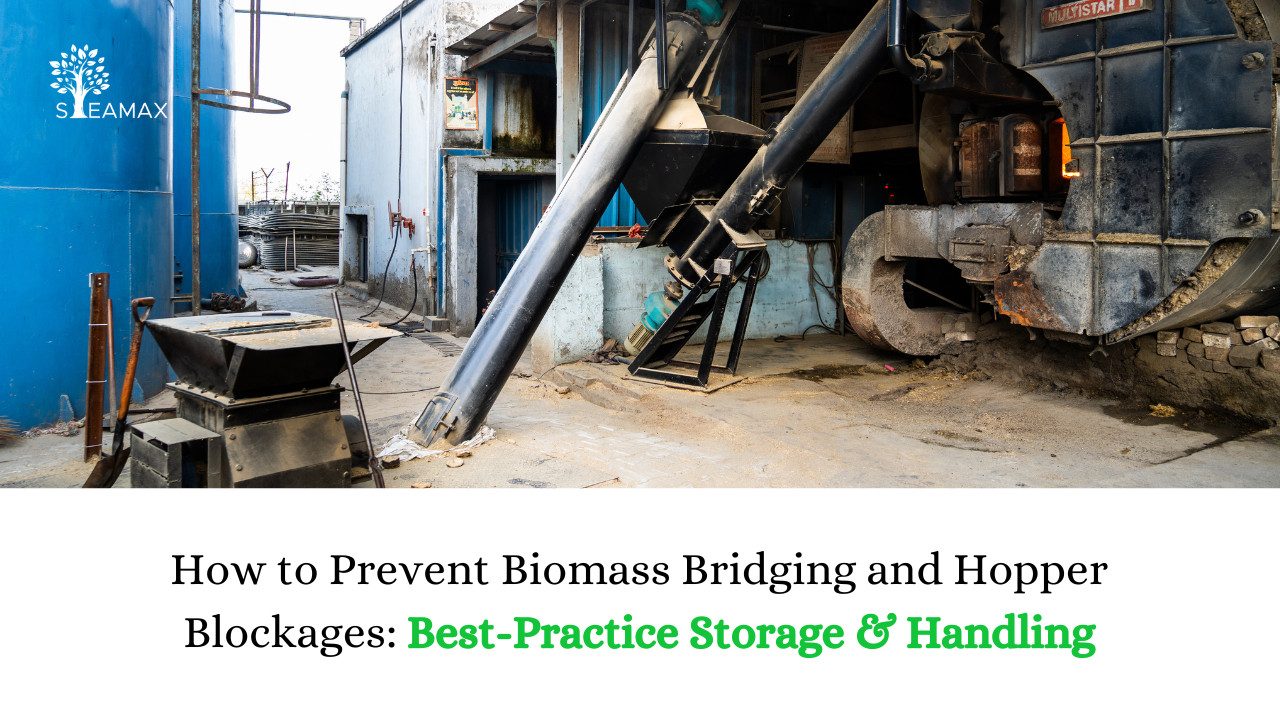
At Steamax, we understand that even the most efficient boiler won’t perform if the fuel feeding system isn’t reliable. That’s why our fuel handling and feeding systems are designed to prevent biomass bridging from the ground up.
Our solutions include:
- Auto Fuel Feeding Kits (AFK): Fully automated systems that ensure smooth, uniform biomass feeding to the combustion chamber.
- Customised Hopper Design: Optimised angles and materials suited for each fuel type.
- Live Bottom & Agitation Systems: For continuous flow in large-capacity storage.
- Preventive Maintenance Plans: Regular inspections and adjustments to ensure uninterrupted operation.
These solutions have already helped several biomass users achieve zero manual intervention, reduced downtime, and higher combustion efficiency.
Final Thoughts: Keep It Moving, Keep It Efficient
Biomass is a powerful, sustainable alternative to fossil fuels — but only when it’s handled right. A blocked hopper or a bridged silo can bring your operations to a halt faster than a fuel shortage. By adopting best practices in fuel preparation, hopper design, and maintenance, industries can ensure steady fuel flow, higher efficiency, and fewer shutdowns.
For industries looking to upgrade or retrofit, Steamax provides end-to-end biomass handling and feeding solutions engineered to eliminate biomass bridging and ensure consistent, reliable operation.
Explore more on orangered-antelope-537718.hostingersite.com to learn how we can help optimise your biomass system.