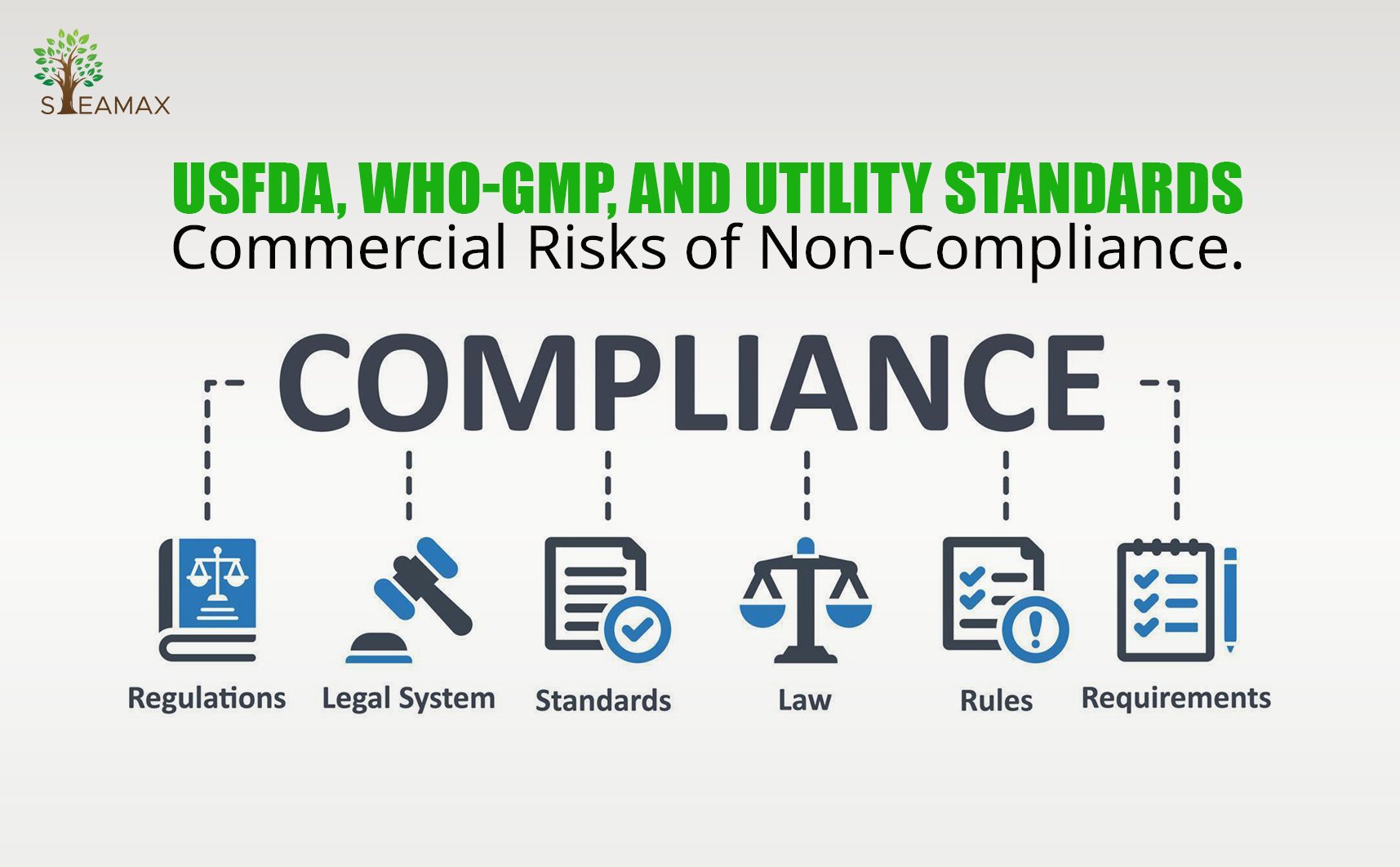
For years, standards like USFDA (United States Food and Drug Administration) and WHO-GMP (World Health Organisation – Good Manufacturing Practices) have been perceived as export-driven obligations. In reality, these regulations were established to safeguard patient health, ensure product quality, and maintain consistency across global supply chains. Far from being formalities, they embody a framework of safety, transparency, and trust—ensuring that every product manufactured meet rigorous scientific and ethical benchmarks. Companies that embrace these standards not only comply with global compliance but also build resilience, credibility, and competitive advantage in a rapidly evolving marketplace.
Today’s global buyers, regulators, and investors look for more than just quality products — they expect end-to-end compliance across manufacturing and supporting utilities such as boilers, clean steam systems, water treatment, and HVAC. Far from being a box-ticking exercise, robust compliance protocols demonstrate operational excellence, protect brand reputation, and open doors to premium markets. Companies that proactively maintain these standards don’t just avoid penalties or bans — they build trust, attract high-value contracts, and secure a sustainable competitive edge.
Let’s break down what these standards really mean and why ignoring them could cost you more than just a fine.

What Do USFDA and WHO-GMP Standards Cover?
- USFDA – Oversees compliance for food, pharma, and healthcare products sold in the US—their focus: product safety, process validation, and utility standards.
- WHO-GMP – Global benchmark for pharma manufacturing. It sets strict rules for how products are made, stored, and tested — ensuring quality and consistency.
- Utility Standards – Often overlooked but critical. Clean steam, purified water, compressed air, and boiler operations must meet international benchmarks, or the final product is at risk.
In simple terms: if your utilities aren’t compliant, your product isn’t compliant.
Where Can Companies Improve?
1. Non-Compliant Steam and Boiler Systems
- Using coal-fired or unfiltered boilers in pharma or food units.
- Poor steam quality – contamination risk.
- Direct violation of GMP standards.
2. Inadequate Documentation
- USFDA and WHO-GMP auditors don’t just check your equipment — they check your records.
- Missing logs result in a failed audit, even if the systems are working fine.
3. Cutting Corners on Utilities
- Failing to invest in water purification, HVAC, and pollution control.
- Although seen as “cost-saving”, it leads to product rejection and export losses.
The Commercial Risks of Non-Compliance
1. Lost Export Opportunities
Failing a USFDA audit means your products can’t enter the US market. The same applies to WHO-GMP with buyers in Europe, Africa, or Asia. That’s contracts worth crores gone overnight.
2. Brand Reputation Damage
Once you’re flag for non-compliance, it spreads fast in global supply chains. Even local buyers start doubting your reliability. Rebuilding trust takes years.
3. Financial Penalties and Delays
- Product recalls = massive costs.
- Export shipment delays result in lost clients.
- Re-audit expenses = lakhs more in overheads.
4. Investor and Buyer Concerns
Global investors now demand ESG and compliance alignment. Non-compliance lowers your ratings and makes you less attractive to green financing or multinational buyers.
Real-World Example
A mid-sized pharma exporter in Gujarat was disqualified from a USFDA contract because their boiler-generated steam didn’t meet clean utility standards. They lost a million-dollar export deal and had to invest in a complete retrofit before even being reconsidered.
On the flip side, a beverage company in Maharashtra upgraded to GMP-compliant clean steam systems. Not only did they clear WHO-GMP audits, but they also secured long-term contracts with two multinational clients.
How to Stay Ahead of Compliance
- Audit Your Utilities – Boilers, clean steam generators, water systems, and HVAC must meet standards.
- Invest in Retrofitting – Cheaper than losing contracts. Biomass retrofits with emission control can make your boilers compliant.
- Strengthen Documentation – Logs of pressure, temperature, water quality, and emissions should be readily available.
- Train Your Staff – Compliance isn’t just equipment — it’s culture.
- Partner with Experts – Technology partners like Steamax provide retrofit and compliance-ready solutions for industries under audit pressure.
Final Takeaway: Compliance is Profit Protection
USFDA and WHO-GMP audits are not just about ticking regulatory boxes. They directly decide whether your business grows globally or stays behind. Non-compliance risks your contracts, reputation, and profits.
In today’s market, compliance is not a cost — it’s an investment. And the companies that understand this are the ones securing exports, green financing, and long-term growth. If your next audit is around the corner, don’t wait for surprises. Get your utilities and clean fuel systems aligned now — and protect your commercial future.