Pharmaceutical manufacturing demands precision and reliability. Boilers must deliver steam consistently to support production, and downtime isn’t an option. But when you’re burning furnace oil, costs can skyrocket, and emissions can threaten compliance. This was the reality for a pharma manufacturer in Roorkee, where monthly FO bills hit ₹12 lakhs, putting pressure on profitability and long-term competitiveness.
The Challenge
- Furnace oil dependency with volatile pricing.
- Fuel expenditure of ₹12 lakhs/month.
- High carbon footprint and compliance risks.
- There is a need to reduce costs without compromising reliability.
The Biomass Retrofit
Steamax offered a turnkey solution under an OPEX model — Steam at Cost — that required zero capital investment from the client.
Key steps included:
- Fuel switch: FO boiler retrofitted to run on biomass briquettes.
- End-to-end management: Steamax handled fuel supply, operations, and maintenance.
- DBR Model: Design, Build, Run ensured reliable performance and zero downtime.
The Results
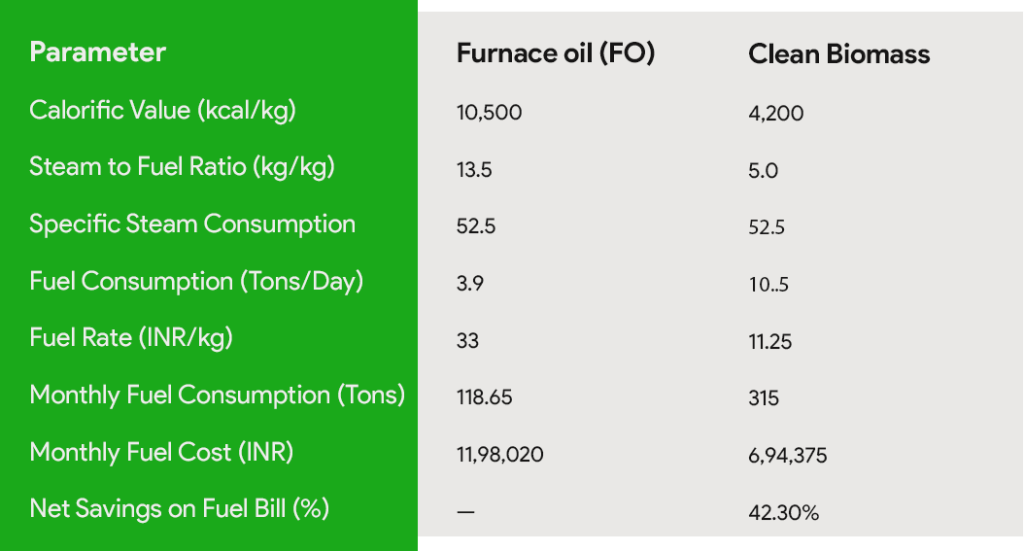
- Fuel bill dropped: from ₹12 lakhs to ₹6.9 lakhs.
- Net savings: ₹5.1 lakhs/month (42% savings).
- Environmental benefits: significant CO₂ reduction and greener operations.
- Operational reliability: uninterrupted steam with full O&M responsibility handled by Steamax.
Strategic Benefits
Cost Advantage: Direct savings improved profitability.
Compliance Advantage: Stronger ESG profile attracted global buyers.
Risk Reduction: Protected business from fuel price volatility.
Sustainability Edge: Positioned as a responsible, future-ready manufacturer.
Why This Matters for Pharma Exporters?
For pharma exporters, compliance and cost-efficiency are both critical. With this retrofit, the manufacturer achieved both — reducing operating costs while strengthening their ESG credentials, a key factor in winning contracts with global buyers.
Final Thoughts
This case shows that biomass retrofits under OPEX models can deliver substantial savings and sustainability benefits without upfront capital costs. For industries under pressure from fuel prices and compliance audits, it’s a practical, low-risk path to future-ready operations.