Geopolitical conflicts rarely stay confined to borders. Their effects travel quickly through global trade, supply chains, and energy markets.
One of the first sectors to feel the impact is the energy sector. Recent tensions in the Middle East have begun to influence LNG shipments and international gas markets, creating uncertainty about supply and increasing price volatility. It has also pushed global crude oil prices upward, adding another layer of uncertainty to industrial energy planning.
Oil markets often react quickly to geopolitical instability, and rising crude prices tend to influence the broader energy ecosystem, including natural gas and LNG markets. For industries dependent on fossil fuels, this combination of supply uncertainty and rising prices makes energy strategy an increasingly critical operational decision.
Why the Middle East Matters to Global Gas Supply
The Middle East plays a crucial role in global LNG production and export. Several countries depend heavily on gas imports from this region to meet industrial and domestic energy demand.
When geopolitical tensions increase, multiple risks emerge:
- Production disruptions
- Shipping and maritime security risks
- Trade restrictions or sanctions
- Supply chain delays
Even small disruptions can create ripple effects across international gas markets.
As supply tightens, prices fluctuate and importing countries may begin prioritising essential consumption.
Rising Oil Prices Are Adding to Energy Market Pressure
Alongside LNG supply concerns, global crude oil prices have also shown upward movement in response to geopolitical tensions. Energy markets are closely interconnected, and fluctuations in oil prices often influence gas pricing, shipping costs, and broader fuel markets.
For industries that rely on imported fuels, this means operational costs can rise quickly even if supply disruptions are temporary. As a result, many manufacturers are beginning to evaluate energy strategies that provide both cost stability and supply resilience.
The Hidden Risk of Single-Fuel Dependence
This situation highlights an important reality for modern manufacturing: fuel strategy is no longer only about price.
For years, many industries have adopted natural gas because of its convenience and relatively cleaner combustion. However, a heavy reliance on a single fuel source exposes plants to global events beyond their control.
When international conflicts affect supply chains, industries with limited fuel flexibility have very few alternatives.

Why Energy Security Is Becoming a Strategic Priority
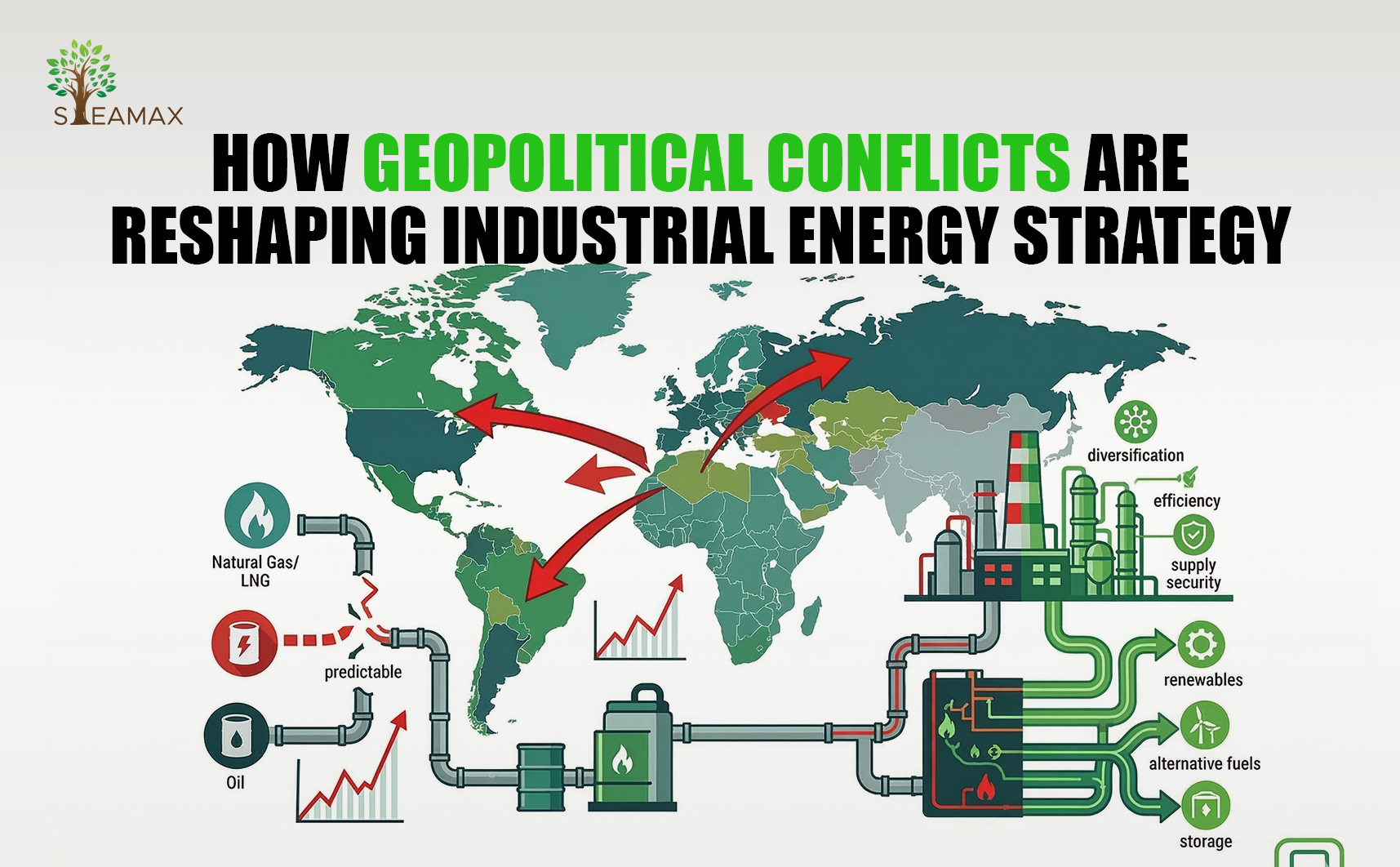
Energy security is now becoming a core part of industrial planning. Companies are increasingly looking at ways to reduce exposure to global market disruptions.
A resilient strategy focuses on both cost control and supply stability.
Many manufacturers are now exploring options such as:
- Diversified fuel strategies to reduce reliance on a single source
- Alternative process heating solutions where feasible
- Improved combustion efficiency to reduce fuel consumption
- Local fuel supply chains that are less dependent on international markets
These measures allow plants to continue operations even when global markets become unstable.
The Role of Local and Renewable Fuels
One emerging trend is the shift toward locally available energy sources. Fuels sourced regionally are often less exposed to geopolitical disruptions than imported fuels.
For example, renewable and biomass-based fuels are gaining attention in industrial heating applications because they provide:
- Greater supply stability
- Reduced exposure to global fuel markets
- Lower carbon emissions
- Improved long-term energy planning
Preparedness as an Advantage
Energy disruptions do not affect all industries equally. Plants that rely on rigid fuel systems often face higher costs, production uncertainty, or supply interruptions.
On the other hand, companies that invest in resilient strategies are better positioned to handle market volatility.
Preparedness allows industries to:
- Maintain stable operations during supply disruptions
- Protect production schedules
- Avoid sudden cost spikes
- Strengthen long-term competitiveness
Final Thoughts
Global markets are becoming increasingly unpredictable. Industries that depend on a single fuel source remain vulnerable to supply disruptions and price shocks.
Exploring diversified fuel strategies, improving combustion efficiency, and securing reliable local sources can help plants maintain operational stability.