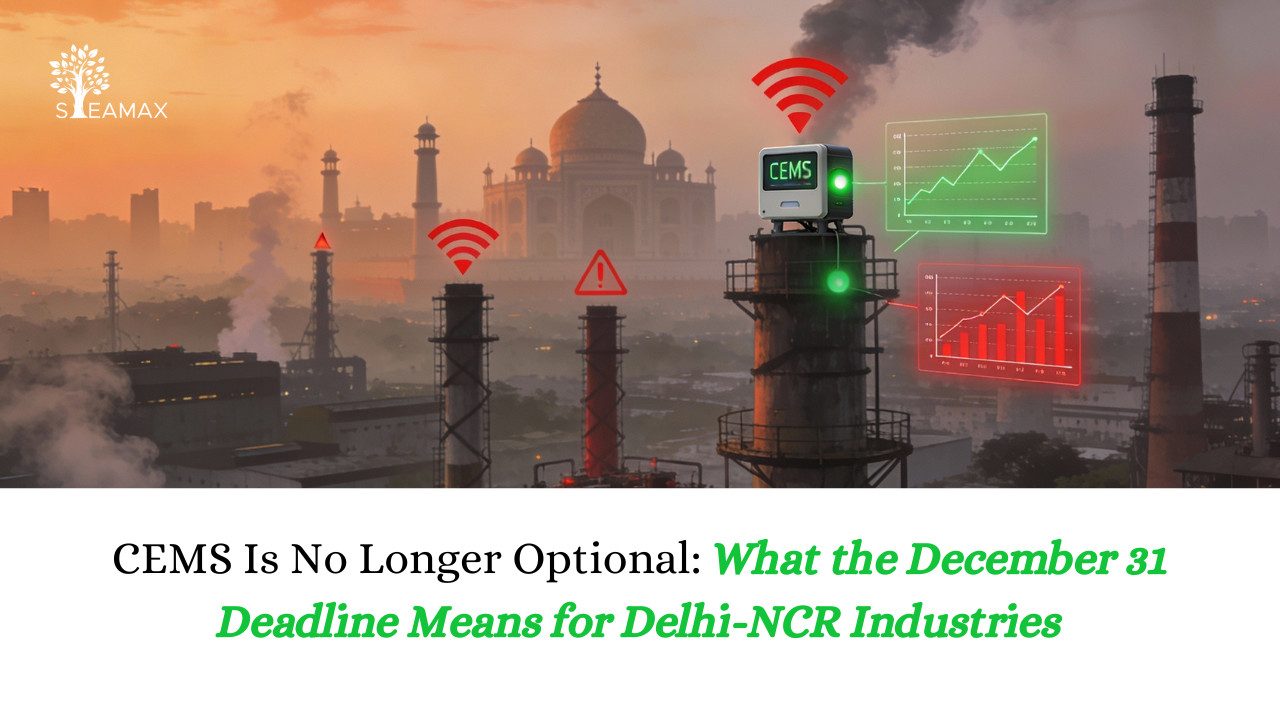
Delhi-NCR industries are under a clear and final warning from the Central Government. Install emission monitoring systems (CEMS) by December 31 or face closure. This is not a routine advisory. It is a direct enforcement action linked to worsening air quality, public health concerns, and rising pressure on regulators to act decisively. Authorities have made it clear that industries operating without real-time emission monitoring will no longer be allowed to continue operations.
For plant heads engineering heads, compliance heads, and operations managers, this deadline is not negotiable. Decisions delayed now can result in shutdown notices, financial losses, and long-term reputational damage.
What the Government Mandate Clearly States
The directive applies to medium- and large-scale industries operating in Delhi-NCR, especially those under CPCB and CAQM monitoring.
Industries are required to ensure:
- Installation of Online Continuous Emission Monitoring Systems (OCEMS / CEMS)
- Functional pollution control equipment
- Real-time data transmission to CPCB / CAQM servers
- Uninterrupted data availability and accuracy
Authorities have also clarified that non-compliant units may face immediate closure, along with penalties and legal action.
What Is CEMS and Why Is It Now Mandatory
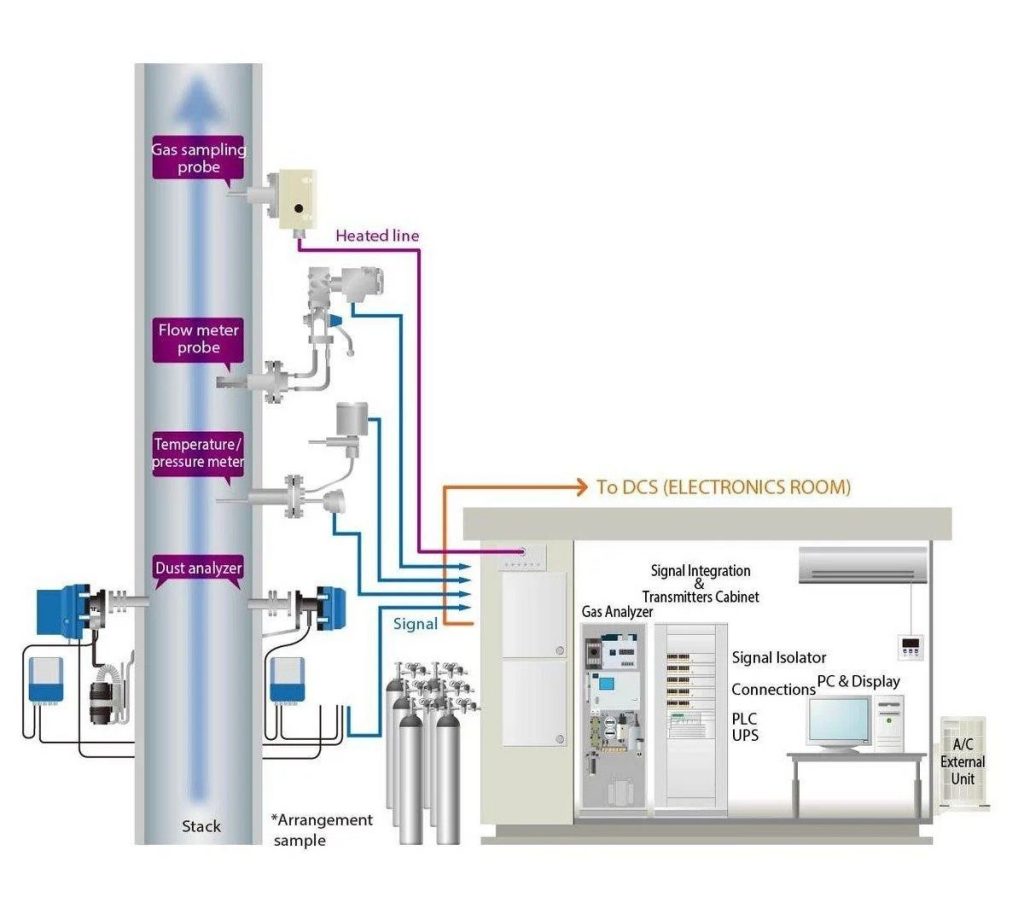
A Continuous Emission Monitoring System (CEMS) is an online system that measures emissions directly from the stack in real time.
It continuously tracks parameters such as:
- Particulate Matter (PM)
- Sulphur Dioxide (SO₂)
- Nitrogen Oxides (NOx)
- Carbon Monoxide (CO)
- Oxygen and flue gas flow (as applicable)
Unlike manual testing, which only provides periodic snapshots, CEMS delivers live, continuous data directly to government servers.
This shift ensures:
- Transparent reporting
- Real-time regulatory oversight
- Immediate identification of emission violations
For regulators, CEMS removes guesswork. For industries, it becomes a compliance lifeline — if done correctly.
Key Compliance Challenges Industries Are Facing Right Now
Installing CEMS is not plug-and-play. Common challenges include:
- Selecting CPCB-approved and certified equipment
- Integrating sensors with existing stack configurations
- Maintaining data accuracy and uptime
- Calibration and validation under tight timelines
- Stable and secure connectivity with CPCB / CAQM servers
- Completing installation before the December 31 deadline
Without technical planning, even installed systems can fail compliance audits.
How Steamax Helps Industries Meet the Deadline
Steamax works as an end-to-end CEMS compliance partner.
What Steamax delivers:
- CPCB-compliant CEMS systems
- Site assessment and stack feasibility checks
- Engineering design and system integration
- Installation, calibration, and commissioning
- Real-time data connectivity with CPCB servers
- Annual Maintenance Contracts (AMC) and technical support
Why Industries Choose Steamax
Partnering with Steamax offers clear advantages:
- Faster deployment before the deadline
- Reduced shutdown and penalty risk
- Accurate, auditable emission data
- One accountable partner instead of multiple vendors
- Proven experience in environmental compliance and pollution control
This approach allows plant teams to focus on operations while compliance is handled professionally.
What Happens If You Delay
Delaying action now can result in:
- Immediate plant shutdown orders
- Financial penalties and legal notices
- Disruption in production schedules
- Loss of customer confidence
- Long-term compliance scrutiny
The cost of non-compliance will be far higher than the cost of installation.
Compliance Cannot Wait! CEMS is mandatory.
Industries that act now can still achieve compliance smoothly—those who delay risk forced shutdowns. If you operate in Delhi-NCR and require urgent CEMS installation or compliance assessment, now is the time to act.
Contact Steamax today for a rapid site assessment and installation plan. Book your CEMS compliance solution before December 31.