
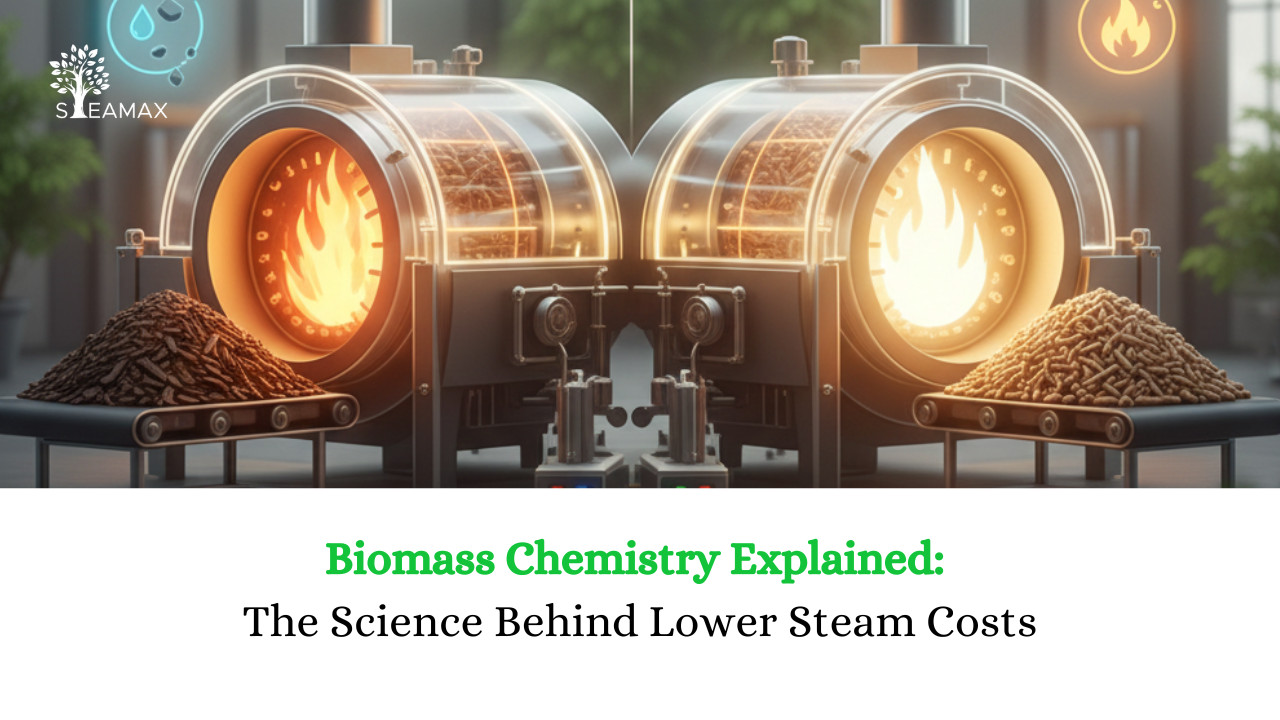
When industries switch to biomass, the first thing they look at is fuel price per kilogram. But plant managers know something important — cheap biomass does not always mean cheap steam. The fundamental economics of biomass lie deeper, in its chemistry. Parameters such as moisture content, ash percentage, volatile matter, and calorific value determine how efficiently a boiler converts fuel into usable steam. Two plants may buy biomass at the same price, yet one spends significantly more on steam generation simply because the biomass chemistry is wrong.
Understanding biomass chemistry is the difference between theoretical savings on paper and actual savings on your monthly energy bill.
Why Biomass Chemistry Matters in Industrial Boilers
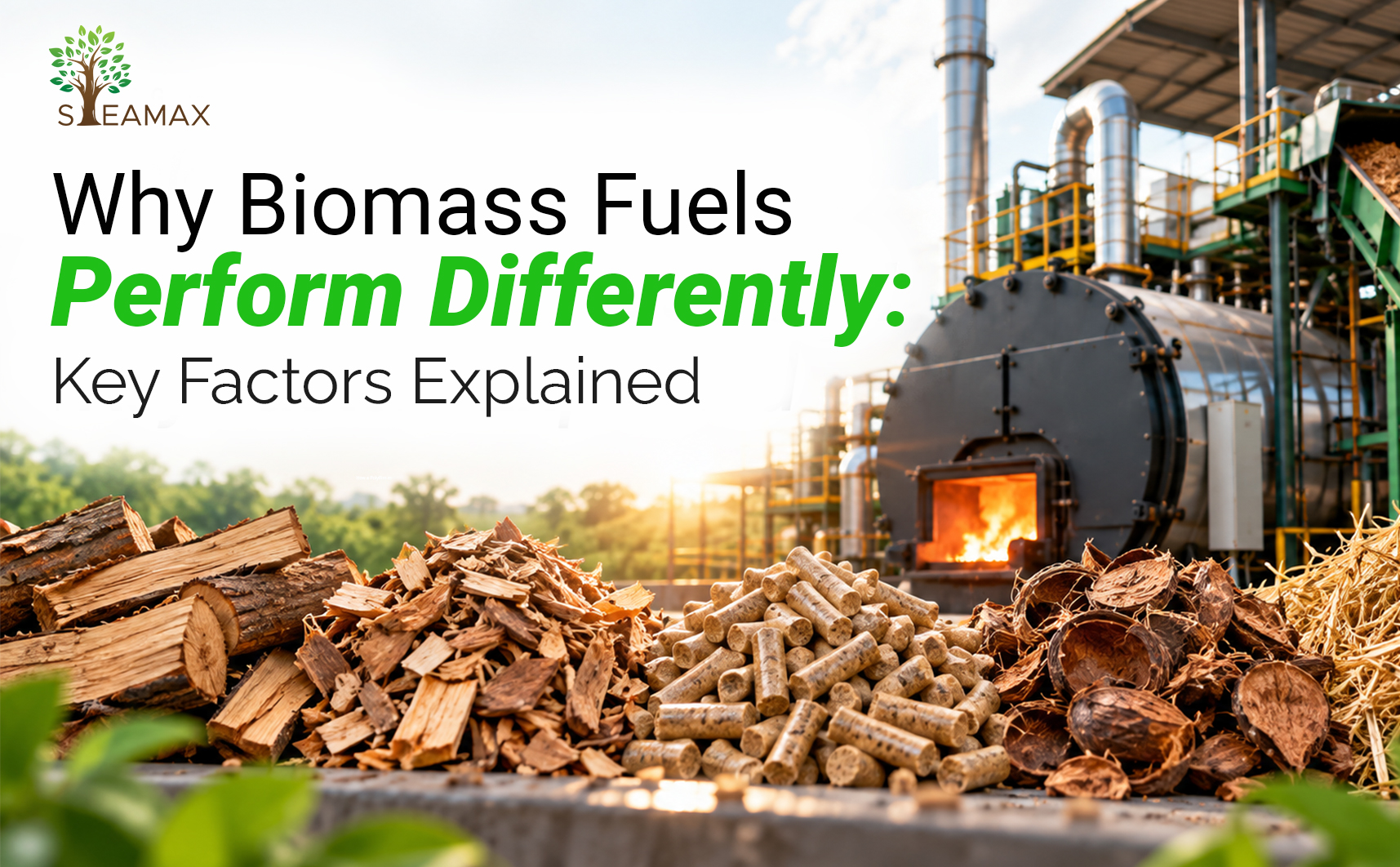
Biomass is not a uniform fuel. Unlike furnace oil or gas, its properties change based on:
- Raw material source
- Season and storage conditions
- Processing method
- Pellet or briquette quality
Every chemical characteristic influences how the fuel burns, how much heat it releases, and how much of that heat is actually converted into steam.
In short, biomass chemistry controls your boiler efficiency, and boiler efficiency controls your steam cost.
The Core Chemical Properties That Define Energy Economics
1. Moisture Content: The Silent Cost Multiplier
Moisture is the biggest enemy of biomass efficiency.
When biomass contains excess moisture:
- A large portion of heat is wasted evaporating water.
- Furnace temperature drops
- Combustion becomes unstable
- More fuel is required for the same steam output.
Even a 5% increase in moisture can raise fuel consumption by 8–10%. That extra biomass directly translates into higher operating costs, greater ash-handling requirements, and lower boiler efficiency.
2. Calorific Value: Energy You Actually Get
Calorific value (CV) represents the usable energy inside the fuel.
Higher CV means:
- Less fuel is required per ton of steam.
- Stable combustion
- Faster load response
Lower CV biomass forces the boiler to burn more fuel, increasing:
- Fuel handling effort
- Ash generation
- Wear on feeding systems.
3. Ash Content: Cost Without Energy
Ash carries no energy value. It is waste from an energy perspective.
High ash biomass leads to:
- Lower combustion efficiency
- Frequent cleaning and shutdowns
- Airflow restriction inside the furnace
- Higher particulate emissions
Every extra percentage of ash increases:
- Maintenance cost
- Downtime
- Auxiliary power consumption
4. Volatile Matter and Fixed Carbon
Volatile matter determines how easily biomass ignites and how readily it sustains a flame.
- High volatile matter supports quick ignition and stable flames.
- Balanced fixed carbon ensures steady heat release.
Poor balance leads to:
- Flame instability
- Pressure fluctuations
- Higher unburnt losses
5. Ash Fusion Temperature: Protecting Efficiency
Ash fusion temperature (AFT) decides whether ash stays powdery or melts into clinkers.
Low AFT fuels cause:
- Clinker formation
- Blocked airflow
- Uneven combustion
- Forced excess fuel feeding
Clinkers are not just an operational headache—they are a direct indicator of lost energy and higher steam costs.
Why Many Plants Fail to Achieve Expected Savings
Common mistakes include:
- Buying biomass only based on price
- Ignoring moisture variation across seasons
- Not testing ash and calorific value regularly.
- Using fuel chemistry unsuitable for the boiler design
- Skipping combustion tuning
When chemistry and combustion are mismatched, expected savings disappear quietly.
The Real Metric That Matters: Cost per kg of Steam
Fuel price alone is misleading. What matters is:
- How much fuel is required
- How stable the steam output is
- How often does the system need intervention?
When biomass chemistry is right, plants typically see:
- 10–30% reduction in steam cost
- Improved boiler availability
- Lower maintenance load
- Better emission performance
That is where true energy economics begins.
Final Takeaway: Biomass Chemistry Decides Profitability
Biomass is not just a fuel — it is a chemical system feeding your boiler.
When its chemistry is understood, tested, and matched to the combustion system, biomass becomes one of the most economical and sustainable energy options available to industry.
If your steam costs are higher than expected, the answer may not be in buying cheaper fuel — but in understanding the chemistry of the fuel you already use.
To evaluate your biomass fuel and reduce steam cost effectively, visit: orangered-antelope-537718.hostingersite.com



4 Comments
Biomass chemistry plays a crucial role in improving efficiency and sustainability in industrial boilers. Understanding fuel composition helps reduce emissions, optimize combustion, and lower operating costs. From a digital marketing agency viewpoint, sharing technical insights like this builds industry trust and positions businesses as knowledgeable, forward-thinking leaders.
Thanks for feedback.
Thank you for this post, this post is very informative for me . I understand all the things that i need.
Thanks for your feedback.