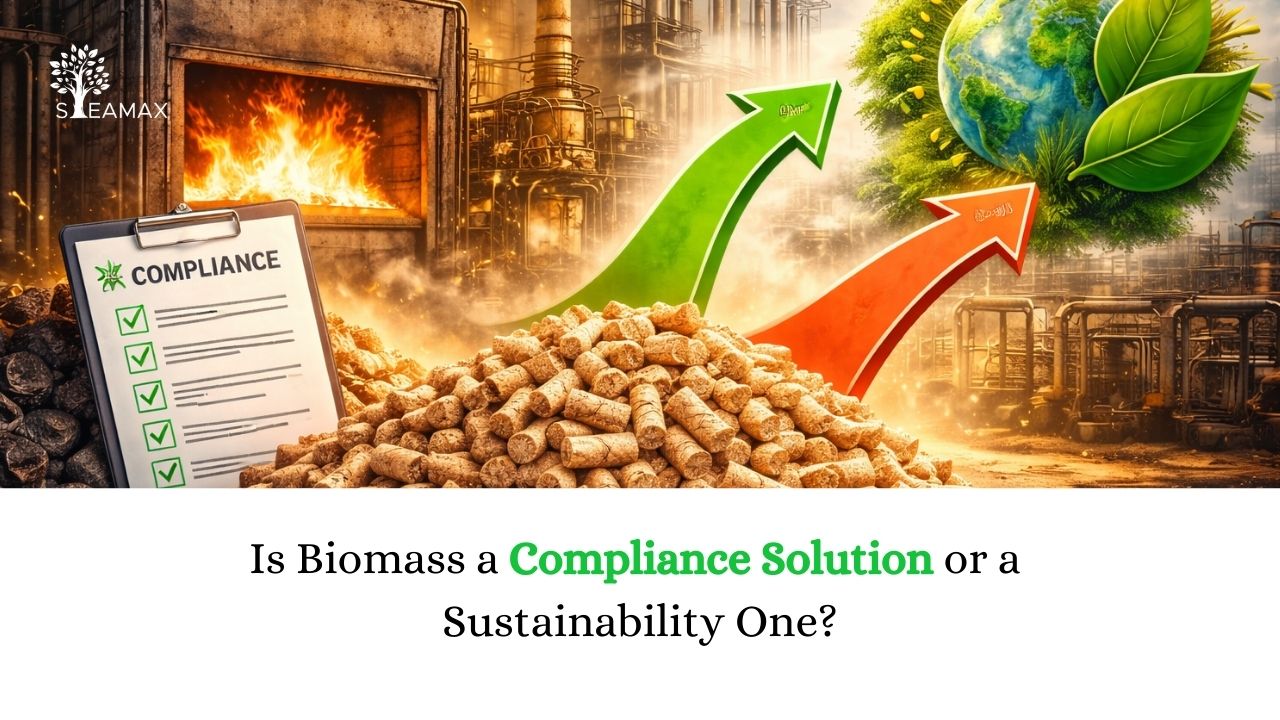
Across industries, biomass is often introduced during conversations about pollution control, board inspections, or tightening emission norms. Many plants switch fuels to stay on the right side of regulators and keep operations running without interruptions. But once the switch is made, a bigger question naturally follows — is biomass energy only a compliance-driven choice, or does it actually support long-term sustainability?
The answer matters more than it seem. Treating biomass as merely a regulatory fix can limit its benefits, whereas viewing it as a strategic energy decision can unlock lower costs, cleaner operations, and stronger future-readiness. Understanding where biomass truly fits — compliance, sustainability, or both — helps industries make more profitable energy choices.
How Environmental Rules Pushed Biomass Energy into the Spotlight
Across India, industries are facing tighter environmental regulations. Emission norms for particulate matter, SO₂, and NOx have become more stringent, especially for boilers and process heating systems.
For many plants, biomass appeared as an apparent compliance because:
- It produces lower net carbon emissions compared to fossil fuels
- It helps reduce dependence on coal, furnace oil, and petcoke
- It aligns better with state and central pollution control requirements

The Limitation of Viewing Biomass Only Through a Compliance Lens
When biomass is adopted purely to “tick the compliance box,” problems often follow.
Plants that treat biomass only as a regulatory requirement may:
- Choose fuel based on availability, not quality
- Ignore combustion tuning and system design
- Under invest in feeding and emission control systems
- Face efficiency losses and technical downtime
In such cases, biomass becomes a short-term fix rather than a stable energy solution. Compliance may be achieved on paper, but operational performance suffers.
Biomass as a Sustainability Strategy
When implemented thoughtfully, biomass goes far beyond regulatory compliance.
From a sustainability standpoint, biomass supports:
- Renewable energy use based on agricultural and forestry residues
- Reduction in fossil fuel dependence
- Lower lifecycle carbon footprint
- Support for local supply chains and rural economies
For export-oriented and ESG-driven companies, this matters. Buyers and investors increasingly look beyond basic compliance and ask:
- How clean is the energy source?
- Is it renewable and traceable?
- Does it support long-term decarbonization goals?
In this context, biomass becomes a strategic sustainability tool rather than just a regulatory workaround.
How Steamax Helps Industries Balance Compliance and Sustainability
Steamax approaches biomass not as a one-size-fits-all fuel switch, but as a system-level solution.
Support typically includes:
- Fuel compatibility and chemistry assessment
- Boiler retrofit or biomass-ready system design
- Combustion optimisation and automation
- Emission control and monitoring solutions
- Long-term performance and compliance support
So, Is Biomass a Compliance Solution or a Sustainability One?
The answer is simple:
Biomass starts as a compliance solution but becomes a sustainability strategy when done right. Industries that treat it as a short-term regulatory fix often struggle. If your plant is evaluating biomass energy only to stay compliant, you may be missing its bigger value. To explore how biomass can work as a long-term energy strategy for your plant, visit: steamaxindia.com