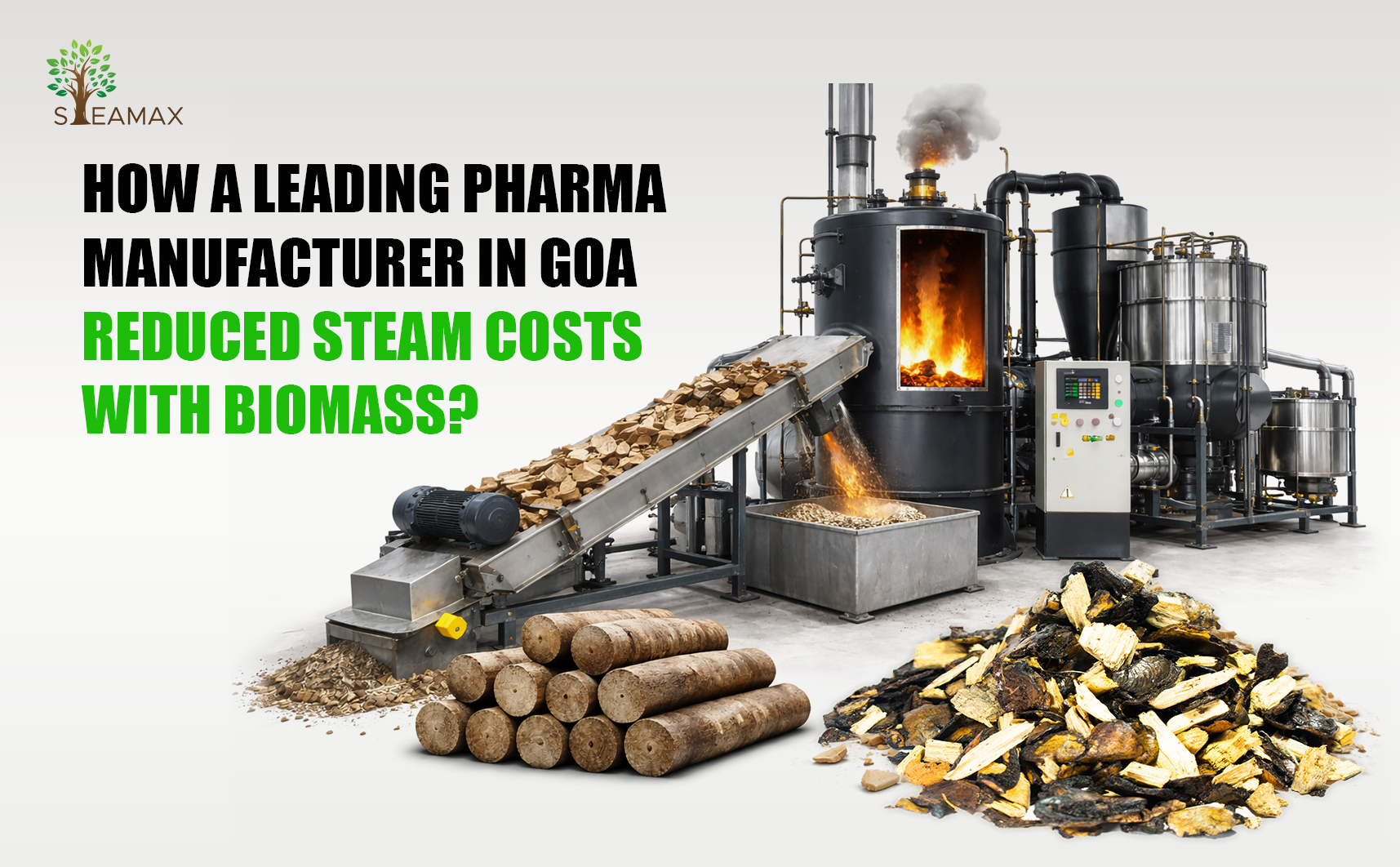
In the pharmaceutical industry, steam is not just a utility — it is a critical part of production. From sterilisation to process heating, consistent and reliable steam generation is essential. Any fluctuation directly impacts product quality, compliance, and output. A leading pharma manufacturing facility in Goa, with a production capacity of around 300 TPM, faced the challenge of maintaining reliable steam while managing fuel cost and operational efficiency. In 2025, the plant transitioned to a structured biomass-based steam solution built around biomass briquettes and Astillas fuel technology.
The results were measurable and operationally significant.
The Challenge: Efficiency Under High Compliance Pressure
Pharma plants operate under strict regulatory environments. Steam must be stable, clean, and reliable. At the same time, energy costs play a major role in overall manufacturing expenses.
The plant required:
- Stable and consistent steam output
- Improved fuel efficiency
- Reduced operational variability
- Compliance-ready emission performance
- A solution suitable for continuous pharma-grade operations
The Solution: AFK System with Astillas Integration
The plant adopted an AFK-based combustion system integrated with Astillas fuel, alongside biomass briquettes.
Astillas, as an engineered biomass fuel, was introduced to improve:
- Calorific consistency
- Combustion stability
- Reduced unburnt carbon
- Better fuel flexibility
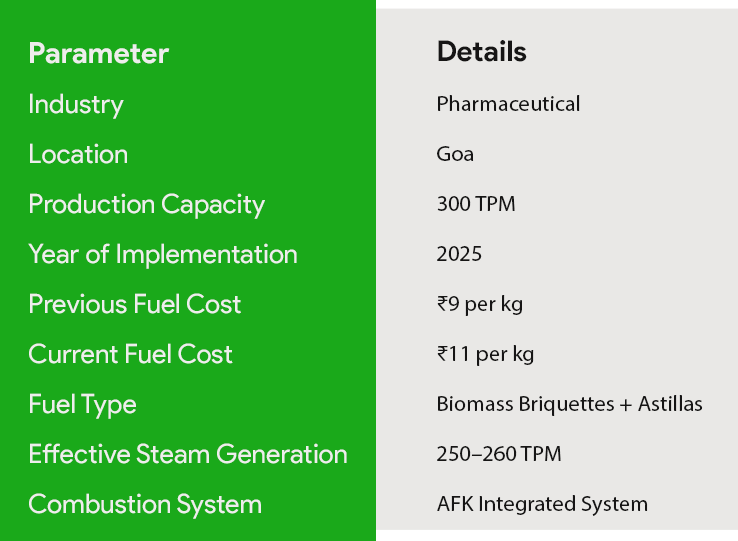
Project Overview
Measured Operational Improvements
1. Higher Steam Stability
The system consistently delivered 250–260 TPM steam output, ensuring reliable support for pharmaceutical processes.
2. Improved Load Handling
The upgraded system managed peak loads more efficiently without pressure drops.
3. Better Fuel Utilisation
More stable combustion reduced fuel wastage and improved specific fuel consumption.
4. Reduced Operational Fluctuations
Operators experienced fewer manual adjustments, improving day-to-day plant stability.
Why Biomass Matters in Pharma?
In pharmaceutical plants, reliability is more important than simply switching to renewable fuel. Fuel chemistry and combustion design must align perfectly.
Astillas helped by:
- Offering consistent fuel characteristics
- Improving combustion predictability
- Supporting higher thermal efficiency
- Enhancing operational confidence
Key Takeaway
This Goa-based pharmaceutical facility did not replace its entire boiler system. Instead, it optimised combustion using a structured biomass strategy and engineered fuel integration. The result was higher steam output, better efficiency, and improved operational stability — without production disruption.
Biomass, when properly designed and implemented, becomes a performance enhancer, not just a fuel alternative.
To explore engineered biomass steam solutions for your plant, visit: www.steamaxindia.com