

In India, shifting from fossil fuels to biomass as a boiler fuel is both a strategic choice and a pressing necessity. This transition, historically costly and requiring extensive boiler modifications, is now becoming urgent. Government plans to ban coal-fired boilers are already in effect in states like Delhi and the National Capital Region (NCR), with other states drafting similar policies. The declining quality of imported Coal, mainly from Indonesia, adds further pressure to accelerate this transition.
Converting a coal-fired boiler to biomass is challenging. Typically, it involves significant modifications, leading to substantial costs and operational disruptions. However, Steamax offers an innovative solution that bypasses these issues, paving the way for a greener future. Rather than altering the boiler, Steamax customizes the biomass fuel to work with existing coal-conveying and firing systems. This approach significantly reduces carbon emissions while minimizing downtime and conversion costs.
Challenges in Converting a Traditional Coal Boiler to Biomass.
Transitioning a traditional coal boiler to burn biomass is a complex process that presents numerous technical and operational hurdles. The inherent differences between Coal and biomass necessitate various modifications to the boiler to make it compatible with biomass. Here are some of the modifications needed:
- Differences in Bulk Density and Fuel Heating Value
Initially designed for Coal, traditional fuel feed systems require extensive modifications to handle biomass efficiently. It can involve a considerable capital investment and lead to boiler downtime. - Variances in Combustion Temperatures
Biomass burns differently which calls for adjustments in the heat transfer surfaces and firing systems. These changes are crucial for maintaining the boiler’s performance and efficiency after the conversion.

Steamax’s Solution: A New Biofuel
Steamax addressed all the above issues and came up with a solution! Instead of making all the above changes to the boiler, we invented a new biomass fuel, Astillas. Our idea was to retrofit the fuel, instead of the boiler with minimal investments and modifications. Astillas offers significant advantages:
- Astillas offer the possibility of either switching to biomass 100% or co-firing it with coal.
- Astillas burn more efficiently due to higher calorific value, low moisture content (<10%) and low ash content (<2%).
- Astillas are produced from low-cost, locally sourced biomass materials like cashew shells, rice husk, spent coffee grounds, and wood waste. It reduces reliance on imported Coal and significantly lowers the carbon footprint.
- Astillas is sulphur-free, ensuring it burns cleanly without leaving behind black or acidic smoke. This environmental advantage is vital for companies aiming to reduce their ecological impact.
- One of the most compelling features of Astillas is its compatibility with existing coal-feeding and firing systems. It enables a quick and seamless transition with minimal investment, making the switch to biomass straightforward and cost-effective.
Coal Vs Astillas Comparison
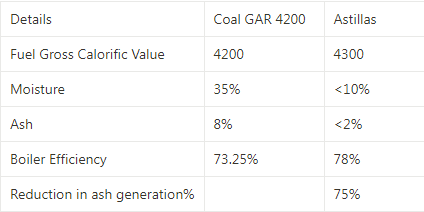
In conclusion, as India moves towards stricter environmental regulations and faces the challenges of declining coal quality, the transition to biomass is becoming inevitable. Steamax’s innovative approach, offers a practical and sustainable solution. By choosing Astillas, industries can significantly reduce carbon emissions and operational costs while contributing to a greener future.
If you’re ready to switch, Steamax is here to help you transition smoothly and efficiently. Want to know more? CONTACT US know!
Let us try it in South Africa
Thanks will connect soon.