If your business relies on boilers, heaters, kilns, or furnaces, you’ve probably heard of fixed bed combustion and fluidized bed combustion. Both are popular methods of burning solid fuels like biomass, coal, or agro – waste, and both come with their own strengths and trade-offs. But here’s the challenge: which one makes more sense for your operations? Do you stick with the simplicity and lower cost of a fixed bed, or do you invest in the higher efficiency and flexibility of a fluidized bed system?
In this blog, we’ll cut through the jargon and compare these two technologies so you can make a decision based on performance, costs, and long-term benefits.
What is Fixed Bed Combustion?
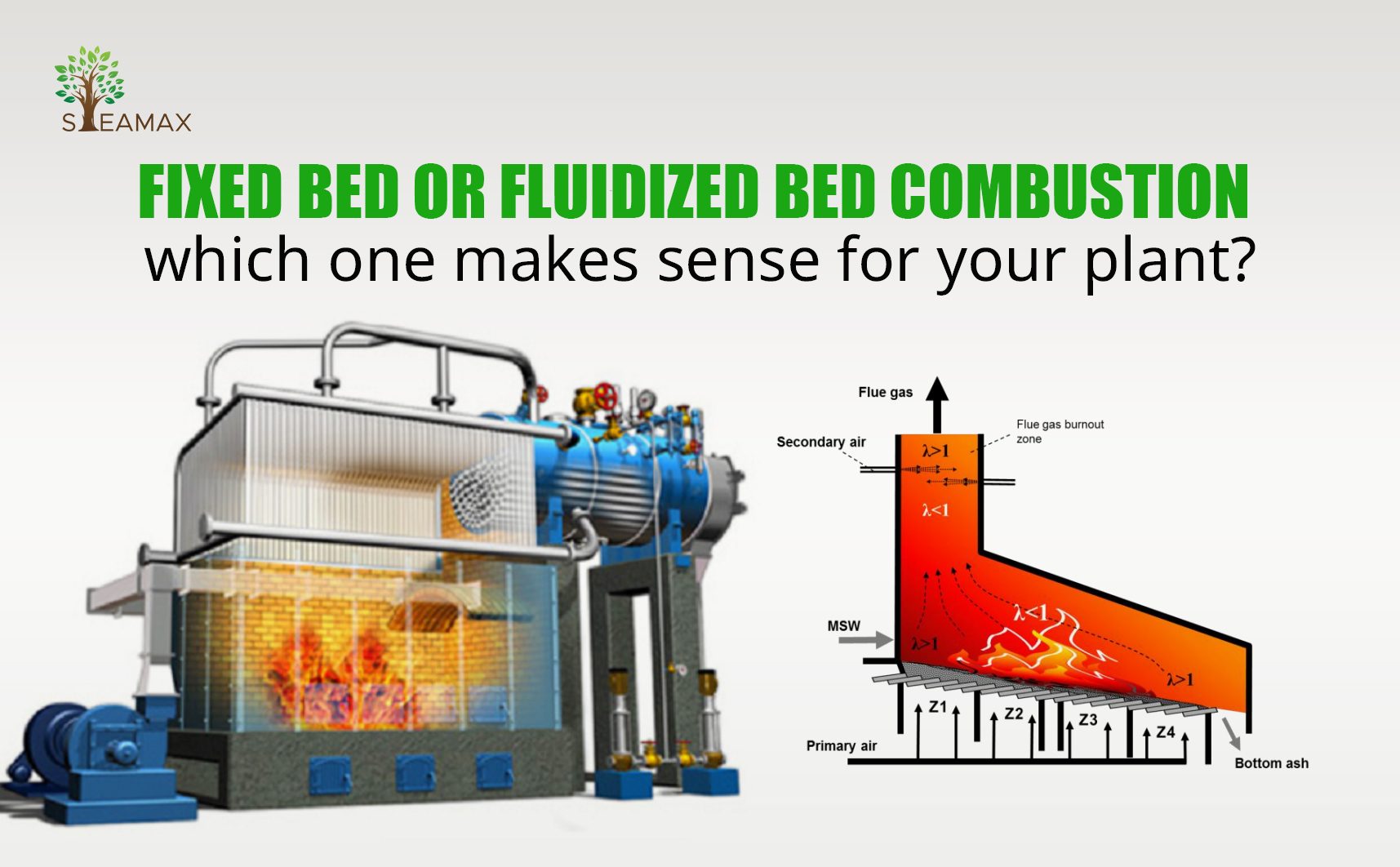
In fixed bed, fuel sits on a grate or bed, and air passes through it from below. It’s one of the oldest and simplest combustion methods. Think of it like a traditional campfire — the fuel stays put, and the air keeps it burning.
Pros of Fixed Bed Combustion
- Simple design – Easy to operate and maintain.
- Lower cost – Cheaper upfront investment.
- Best for small to medium industries, ideal when fuel demand isn’t massive.
- Handles larger fuel pieces – Works well with wood chips, briquettes, or uneven biomass.
Cons of Fixed Bed Combustion
- Lower efficiency- Uneven burning can waste fuel.
- Limited control -Harder to regulate temperature and emissions.
- Not great for high-capacity plants -Struggles when fuel demand is very high.
What is Fluidized Bed Combustion?
Fluidized bed combustion (FBC) takes a more modern approach. Here, the fuel particles are suspended in a hot, bubbling fluidity bed of ash and other particulate materials (sand, limestone etc.) through which jets of air are blown to provide the oxygen required for combustion almost like boiling liquid
This makes the combustion more uniform and efficient.
Pros of Fluidized Bed Combustion
- High efficiency – Better fuel utilization and lower wastage.
- Flexibility -Can burn a wide variety of fuels, even low-grade biomass.
- Lower emissions -Uniform combustion reduces CO₂, SOx, and NOx.
- Scalable – Suitable for medium to large industries with higher steam demand.
Cons of Fluidized Bed Combustion
- Higher upfront cost – More complex system, more investment.
- More maintenance is require for moving parts and specialize equipment.
- Skilled operation is required; trained staff are needed to run it effectively.
Fixed Bed vs. Fluidized Bed: Side-by-Side
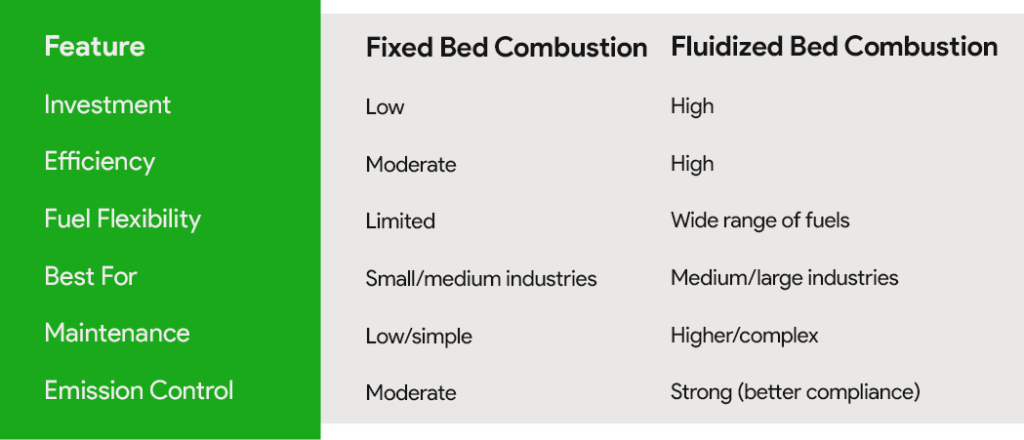
Which One Should You Choose?
- Opt for Fixed Bed if you’re a small or medium-size plant seeking a cost-effective, straightforward, and easy-to-operate solution. It’s perfect when you have consistent fuel quality and don’t need massive steam generation.
- Choose Fluidized Bed if you’re a larger operation with higher steam demand, stricter emission norms, or diverse fuel options. While it costs more upfront, it pays back in efficiency, compliance, and fuel flexibility.
Real-World Example
A textile unit in Rajasthan switched from a fixed-bed boiler to a fluidized-bed system. The result? Fuel savings of nearly 20%, emissions reduced by 60%, and faster compliance with buyer sustainability audits.
On the other hand, a smaller food processing unit in Madhya Pradesh opted for fixed-bed retrofits due to their moderate fuel use, as the payback from a fluidised bed wasn’t justifiable.
Final Takeaway: Efficiency vs. Simplicity
At the end of the day, there’s no one-size-fits-all answer. Fixed bed is your go-to if you need a straightforward, affordable setup. Fluidized bed is your partner if efficiency, compliance, and scalability matter more. The smart move is to evaluate your steam demand, fuel costs, and long-term growth plans — and then decide.
Still unsure? Steamax offers both retrofit and advanced combustion solutions to help industries balance cost with performance.