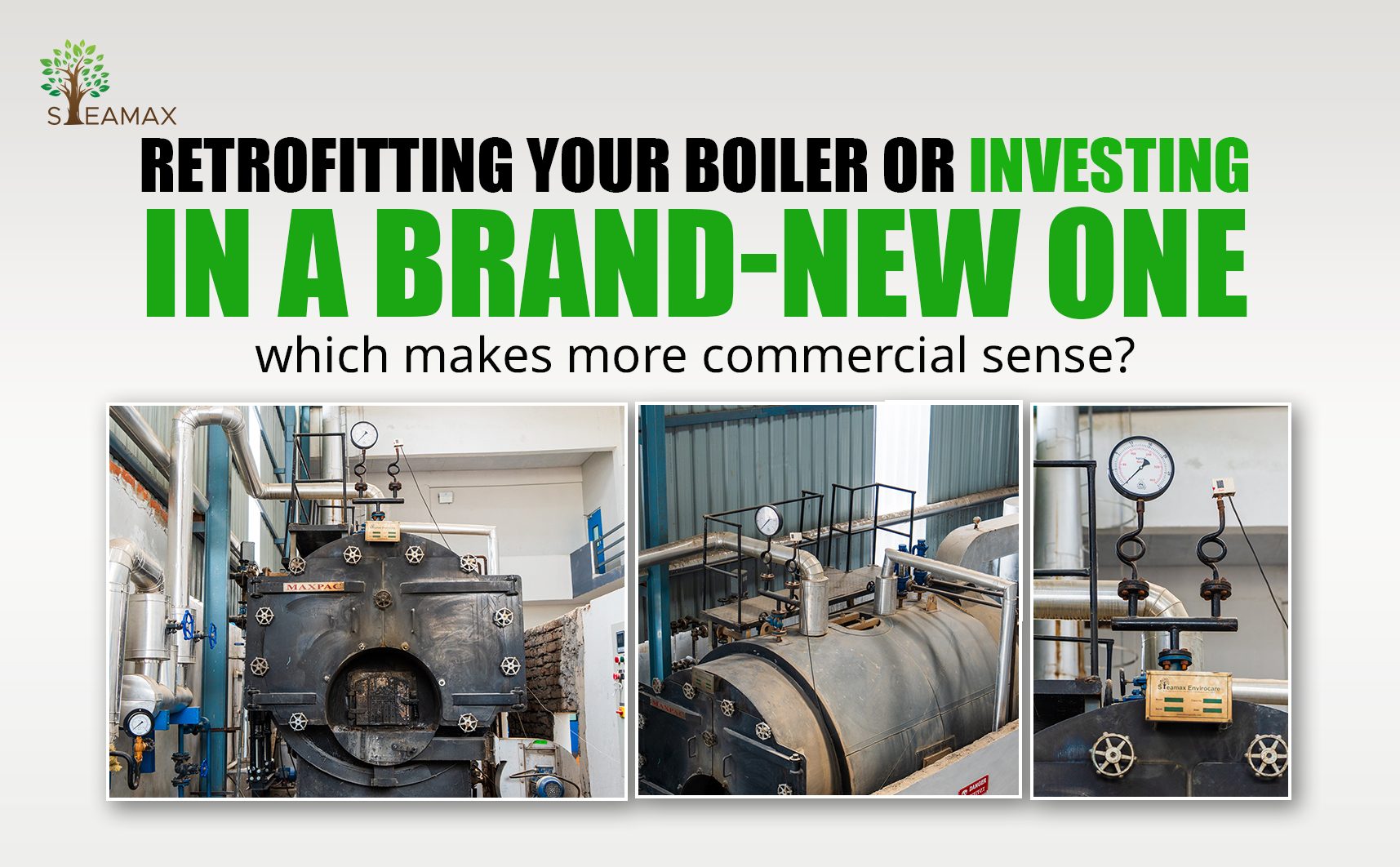
Should you retrofit your existing boiler or invest in a brand-new one? It’s a common dilemma for industries looking to cut energy costs and meet emission norms. In this blog, we’ll break down the real payback period of retrofitting vs. new boiler installations — so you can make the right financial and operational call. Every manufacturer knows the boiler is the heart of the plant — and one of the most significant expenses. With fuel costs climbing and emission rules getting tighter, the big question is: do you retrofit or invest in a new one?
The real game-changer? How fast does each option pay for itself? Let’s break it down.
Option 1: Retrofitting Your Existing Boiler
Benefits of Retrofitting
- Lower upfront cost – retrofit kits (like Steamax’s OBR Series) are much cheaper than a complete boiler replacement.
- Minimal downtime– most retrofits are completed in weeks, not months.
- Fuel flexibility– run on biomass instead of costly furnace oil/PNG.
- Quick compliance – helps meet emission norms without a complete system overhaul.
Payback Period of Retrofits
- Typical payback: 6–18 months (depending on fuel price savings).
- Example: A textile unit retrofitting from PNG to biomass cut costs by 25% — payback achieved in under a year.
Option 2: Installing a New Boiler
Benefits of a New Boiler
- Higher efficiency – modern biomass or hybrid boilers are designed for maximum combustion and heat transfer.
- Longer lifespan – new systems can run 15–20 years with proper maintenance.
- Future-ready – designed to meet stricter emission and efficiency standards.
Payback Period of New Installations
- Higher upfront cost (₹40–70 lakhs or more depending on the capacity).
- Typical payback: 3–5 years with fuel savings and efficiency gains.
- Suitable for situations where the old boiler is nearing the end of its life or is too inefficient for retrofitting
Real-World Example
- A food processing unit in Punjab retrofitted its oil boiler to biomass pellets, achieving ₹4.5 lakh/month savings and a full payback in 11 months.
- Another beverage company invested in a new biomass boiler, which offers higher efficiency, but the payback period stretched to 4 years.
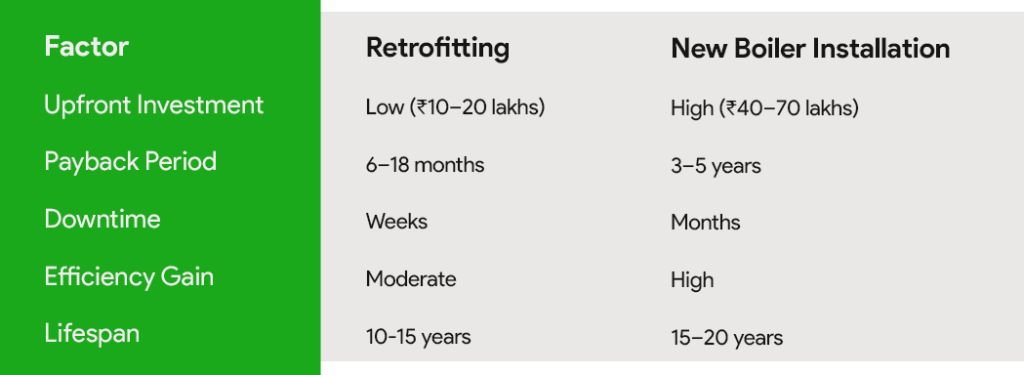
Lesson: Retrofit is a quick win, while a new boiler is a long-game solution.
So, Which Should You Choose? If your boiler is still structurally sound, retrofit first for the fastest ROI. If it is outdated, inefficient, or nearing retirement, Consider Investing in a new one for futureproofing. Many exporters choose a retrofit now and plan to install a new when expansion occurs.
Final Word: Think Payback, Not Just Purchase Price
The companies don’t just ask “What does it cost?” They ask, “How fast will it pay back?” At the end of the day, the right decision depends on your industry, load profile, and budget. But one thing’s particular: clean fuel adoption pays back faster than sticking with fossil fuels. Ready to calculate your own payback period? Contact Steamax for tailored retrofit solutions.