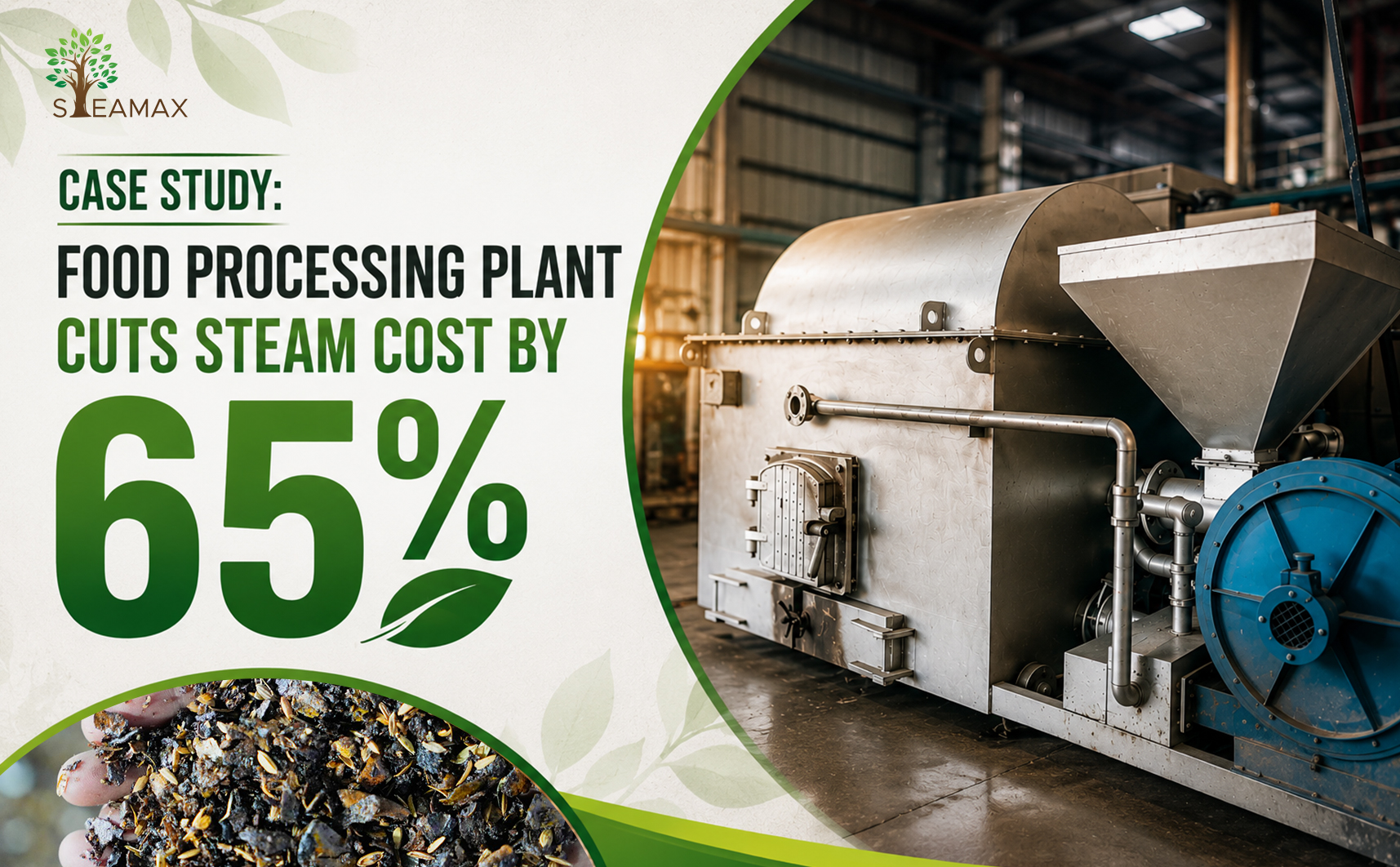
For many food processing industries, steam is one of the most critical utilities. It supports cooking, sterilisation, cleaning, and several other production processes. But when steam generation depends on expensive fossil fuels, operating costs can rise quickly. This case study highlights how a leading food processing plant transformed its steam generation by replacing furnace oil with biomass.
The result was not only a significant reduction in fuel costs but also cleaner emissions and a more sustainable energy solution.
Project Overview for food processing industry
This project involved a leading food processing company looking to improve the economics of its steam generation while reducing its dependence on furnace oil. To achieve this, Steamax implemented its OBR-LITE (Steam at Cost) solution, enabling the plant to switch to Astillas biomass without compromising production.
The project included:
- Industry: Food Processing
- Steamax Solution: OBR-LITE (Steam at Cost)
- Steam Generation Capacity: 400 TPM
- Fuel Before: Furnace Oil (FO)
- Fuel After: Astillas Biomass
- Air Pollution Control System: Cyclone + Bag Filter
- Emission Performance: Maintained below 50 mg/Nm³
The objective was clear—to lower fuel costs, maintain reliable steam generation, and ensure compliance with increasingly stringent emission standards. The result was a cleaner, more cost-effective steam generation system that delivered both operational and environmental benefits.
The Challenge: High Fuel Costs and Compliance Pressure
The plant was operating a 400 TPM steam system using furnace oil. While the system met production requirements, it came with several operational challenges.
The company was facing:
- High monthly fuel expenses
- Dependence on fluctuating furnace oil prices
- Higher carbon emissions
- Increasing pressure to meet stricter environmental norms
The Steamax Solution
To address these challenges, Steamax implemented its OBR-LITE (Steam at Cost) model, enabling the plant to transition from furnace oil to Astillas biomass fuel.
The solution included much more than a fuel change. It involved a complete steam generation approach designed for long-term efficiency and compliance.
The installed system featured:
- Optimized biomass combustion
- Reliable fuel handling
- Cyclone and Bag Filter for particulate emission control
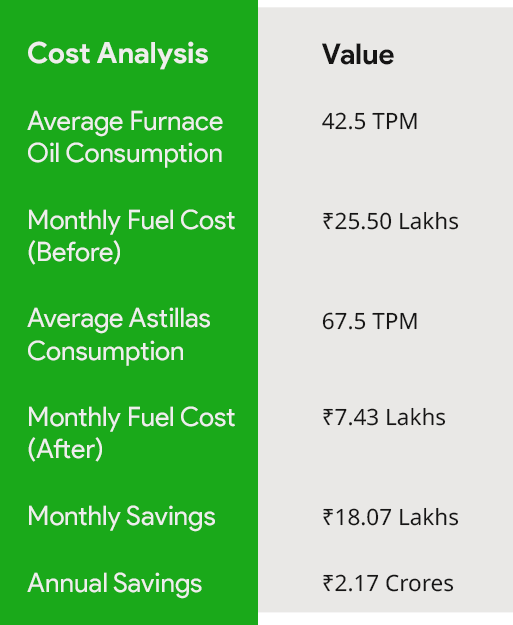
Performance Comparison
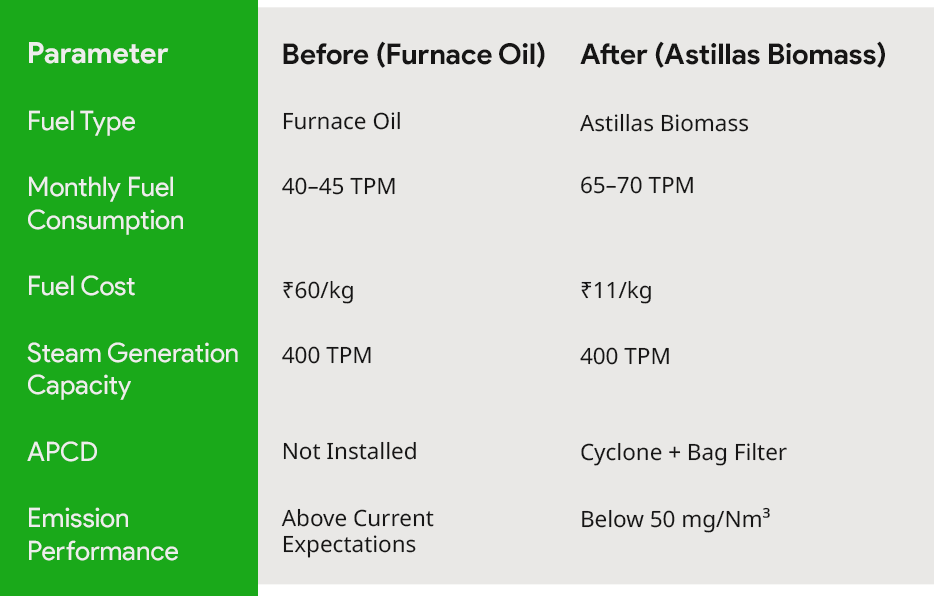
The numbers tell the story
The financial impact of the transition was substantial
Steam Cost Reduced by 65%
One of the most important outcomes was the reduction in steam generation cost.
The cost of producing steam dropped from:
₹6.00/kg using furnace oil
to
₹2.10/kg using Astillas biomass.
This represents an impressive 65% reduction in steam generation cost, improving the plant’s overall operating economics without compromising production.
Final Thoughts
As fuel prices continue to fluctuate and environmental regulations become more stringent, industries are looking for practical ways to improve both profitability and sustainability.
This food processing plant’s transition from furnace oil to Astillas biomass demonstrates that meaningful savings are possible without compromising steam demand or operational reliability.
With the right combustion technology, fuel strategy, and emission control system, biomass can become a powerful driver of both cost efficiency and long-term business resilience.