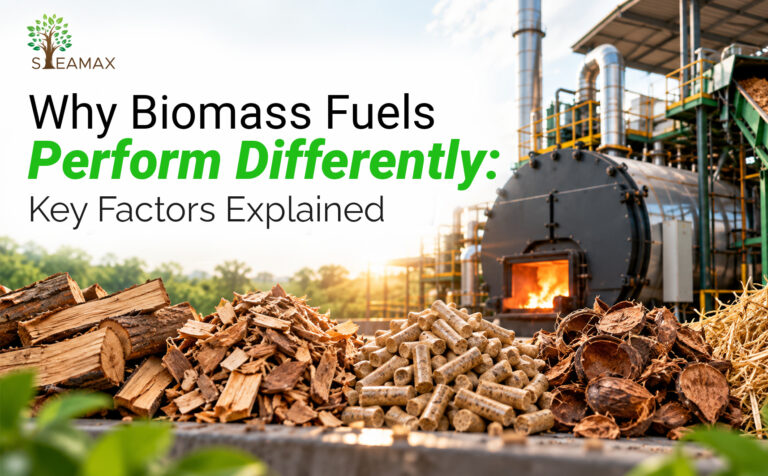
Biomass fuel is an ideal alternative to fossil fuels, especially regarding environmental sustainability. Steamax developed Astillas—a renewable biomass fuel created from natural products like cashew shells, de-oiled cashew cake, sawdust, groundnut shells, and seasoned wood chips to meet the rising demand for eco-friendly energy sources. With a pan-India presence, Steamax focuses on delivering localized services tailored to each client’s needs. But what sets Astillas apart from other biomass fuels? Let’s dive in and find out.
How is Astillas Different from Other Biomass Fuel?
Here are some key features that make Astillas stand out:
- Transparency: Astillas offers complete transparency in its constituents, unlike densified fuels like briquettes and pellets. You know precisely what you’re getting.
- Customization: Astillas can be customize in size and composition based on your location and specific requirements, ensuring optimal performance.
- Burnability: Astillas burn more efficiently due to their lower bulk density and higher calorific value, providing better energy output.
- Cost-effectiveness: Manufacture using low-cost, locally sourced biomass, Astillas requires minimal processing, making it an economical choice.

How is Steamax Biomass Fuel Different from Cashew’s De-Oiled Cake?
Astillas not only improves on other biomass options but also offers significant advantages over cashew’s de-oiled cake:
- Reduced Acidity: Astillas have an oil content below 8%, compared to 10-20% in de-oiled cake (DOC). This reduction in acidity makes Astillas safer to handle and better for combustion systems.
- Improved Handling: Astillas comes in reusable bags specifically design for longer life and more accessible storage, ensuring reusability and reducing waste.
- Clean Combustion: By lowering the oil content, Astillas also reduces carbon content, effectively eliminating black smoke emissions.
Specifications
| Parameter | Value |
| Calorific Value | >4200 Kcal/kg |
| Ash content | <2% |
| Moisture | <10% |
| Size | 5 to 25mm |
| Bulk density | 330kg/m3 |
Why Not Use Cashew Byproducts Directly?
Cashew nut shells undergo processing to yield cashew nut shell oil (CNSL) and a de-oiled cake (DOC). While these byproducts have high calorific values—5600 Kcal/kg for cashew shells, 8000 Kcal/kg for CNSL, and 4500 Kcal/kg for DOC—they are not ideal for direct combustion in industrial settings. Why? All three products contain high levels of anacardic acid, which can compromise system safety and release toxic fumes when burned directly.
Conclusion
Steamax’s biomass fuel blend, Astillas, is free from anacardic acid and phenol, making it a safer, more efficient alternative to traditional fossil fuels and other biomass options. Astillas is not just another biofuel; it’s a well-engineered solution designed to meet the unique challenges of industrial fuel consumption. Want to learn more about how Astillas can benefit your industry? Contact us today.